Riding Free

Its like you’re throwing away your canoe and oars and are riding the waves of emptiness. Its scary at first, you’ve no control. You feel vulnerable and completely without knowledge of where you are going, or even where you are. So you have to surrender completely to the waves when they come. It may take a while. It may take weeks or months or years. You may ask, “what if I drown?” Then I ask you, “who and what drowns? What do you lose? And what might you gain?”

You may decide to climb back into your canoe if you can. But if you’re truly on this path, the water will draw you in again and again until finally you drown and then you’re riding the waves and those waves are you, and you are the waves, there’s really no difference any more, and you arrive exactly where you need to be, where you always have been, but just didn’t know it until now. You are home.

~Lisa Ernst

Morning Beams

Morning Beams

You Don’t Have to Believe Your Thoughts

by Lisa Ernst

You’ve probably heard that before, right? It sounds pretty simple and maybe sometimes it is, but at other times, nearly impossible. Why? Because for many of us, certain thoughts appear as unassailable “truths,” specific stories about our lives, about ourselves and others. As long as these thoughts operate below our awareness as stealth narratives, they can’t be seen for what they are, impermanent conditions that arise and pass away. We remain bound by these thoughts and they may lead to significant suffering and even depression.

When we identify with a thought or emotion as “I” or “mine,” our boundaries of inside and outside remain intact. There’s me, and then there is the outside world. This is only a perception, but its so strong as to feel solid and real. Buddha taught that this idea of a separate, inherent self is the root of suffering.

As a practice, try asking yourself, “is this thought me; is this thought mine?” You can do the same with emotions. This exercise is not intended to suppress or push away thoughts or emotions, but to allow you to begin seeing them without personal identification. This opens space to perceive the thoughts and experience the emotions as they are. This practice, reflective inquiry, isn’t a form of analysis. You’re letting the question remain open ended, to allow experience itself provide the answer. As you do this, you are opening yourself to the realm of dharma, where customary ideas and everyday perceptions don’t apply. The good news is, you don’t need them as you experience your thoughts and emotions appearing and falling away. Here you can access the heart’s true wisdom.

“When Ajahn Chah said it was possible to learn as much from stupid thoughts as wise ones, that was such a radically different approach. A wise thought arises and ceases. A stupid thought arises and ceases. A painful thought arises and ceases. A painful feeling arises and ceases. A pleasant feeling arises and ceases. I realized I didn’t have to feel ashamed when there was confusion in the mind. Just let it be and know it for what it is. They are all just states of mind, coming and going. Rather than anxiously holding on or to try to make sense of everything all the time, I got a feeling for letting go and letting be.”- Kittissaro, Listening to The Heart.


Inspiration: Zen Garden and Meditation at Vanderbilt

cherry

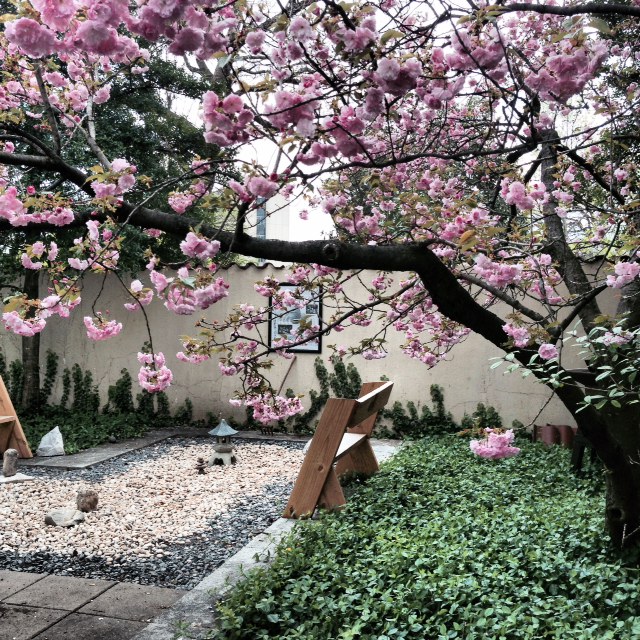
Zen Garden at Vanderbilt

A few weeks ago I received an invitation from a Vanderbilt University student to lead an hour long meditation workshop designed to coincide with the opening of their Zen Garden. The new garden is just outside of the Office of Religious Studies on campus. I accepted the invite even though it was short notice, and I’m very glad I did. It was an inspiring hour and I believe what I experienced bodes well for the future of Buddhist meditation in this country.

At the Zen Garden, a cherry tree was in full bloom, a perfect compliment to the serene and simple garden. We started with a dedication and went inside for a 20 minute guided meditation. The organizer had set up a Facebook event for the workshop not long before and 60 people RSVP’d. She was concerned that there wouldn’t be enough room and hoped closer to 20 would show up instead! As we gathered to meditate, about forty people joined in the circle. We all fit at close quarters without a problem. From the silence and stillness in the room, I could tell that many of the students had meditation experience.

After the meditation we had refreshments and an open discussion. I was truly inspired by the quality and depth of the questions. Meditation wasn’t a passing curiosity for many of these students. Their interest went beyond stress reduction or secular mindfulness; they wanted to know more about Buddhist mediation and how to deepen their practice, which most had already started. What inspired me the most is that a number of the students were clearly looking beyond the benefits they would personally accrue through meditation. They were interested in how the practice can help alleviate suffering for humanity as a whole. This is truly a wonderful intention that can be realized directly; our practice will ripple outward and positively impact those near and far.

May many of these students become life long meditators and help bring the dharma to future generations.

Where Are the Flowers?

IMG_7895

If you break open the cherry tree,

Where are the flowers?

But in the spring time, see how they bloom!

– Ikkyu

Spring Renewal Residential Meditation Retreat

Intimate With Life
Bethany Hills Retreat Center, Kingston Springs TN
Thursday Evening, April 16 – Sunday Noon April 19
Led by Lisa Ernst

bethanyhall

“Enlightenment is Intimacy With All Things” – Dogen

Each spring the earth awakens from its winter slumber as the days grow warmer and longer. Surrounded by newly leafed trees and rolling hills, we will renew our minds and hearts in the simple yet profound practice of sitting and walking meditation. Gradually this practice will lead us to intimacy with all of life as we touch the present moment with a kind and open heart.

This silent retreat will be held at Bethany Hills Retreat Center, Kingston Springs, TN. It will include sitting and walking meditaiton, instruction, dharma talks and private meetings with the teacher. Retreat cost is $225. Participation for all three days is required. Fee covers lodging and all meals. There will be a separate opportunity at the retreat to make a *dana offering (donation) to the teacher. Two sliding scale spots are available for those who need financial assistance. Paypal is available here. If paying by check, information and address are available at this  link. Please include your email address.

Lisa Ernst is a meditation teacher and founder of One Dharma Nashville. She has been meditating for 25 years and received dharma teaching authorization in the Thai Forest lineage of Ajahn Chah, Jack Kornfield and Trudy Goodman. In her teaching, Lisa emphasizes both transformational insight and everyday awakening as an invitation to embrace all of the path’s possibilities.

*Dana: According to the Buddha, generosity, or sharing what we have, is one of the central pillars of a spiritual life. In the act of giving we develop our ability to let go, cultivate a spirit of caring, and acknowledge the inter-connectedness that we all share.

Please contact onedharmaretreat@gmail.com for questions or to reserve your spot.

Mindfulness and Lovingkindness in Huntsville

The Power of Presence: A Mindfulness and Lovingkindess Workshop
Saturday, March 14, 1 – 4 p.m.
Yoga Center of Huntsville
Led by Lisa Ernst

Learn to rest your heart and mind in ease and presence. We will tune in more fully to our present moment experience, drawing on the practices of mindfulness and lovingkindness. These transformational practices help us expand our capacity for well being, compassion and joy.

Suitable for beginning as well as more experienced meditators, the workshop will include instructions in mindfulness and lovingkindness practices, sitting and walking meditation and group discussion. Cost is $50 if registered by March 6. This workshop will be hosted by The Yoga Center of Huntsville.

Lisa Ernst is a meditation teacher, artist and founder of One Dharma Nashville. In her teaching, Lisa emphasizes both transformational insight and everyday awakening as an invitation to embrace all of the path’s possibilities. She has been meditating for over 25 years and leads classes and retreats nationally.

For more information or to register, call 256-533-7975

This is Love

IMG_0706

This is love: to fly toward a secret sky, to cause a hundred veils to fall each moment. First to let go of life. Finally, to take a step without feet.
– Rumi

Stability and Clarity Daylong Meditation Retreat

Saturday, February 28, 2015, 9:30 a.m. – 4 p.m.
Rural West Bellevue
Led by Lisa Ernst

Retreat full, wait list only

IMG_7388

Cultivating clear awareness of our present moment experience reveals insights into the nature of suffering and liberation. We see that everything that arises is not my “self” but a display of impermanent conditions. When the mind sees life through this clarity and is unclouded by confusion, we create the foundation for well-being, joy and equanimity.

Led by meditation teacher Lisa Ernst, this silent retreat is suitable for beginning as well as experienced students. The retreat will include periods of sitting and walking meditation, instructions and dharma talk. Cost is $50. There will be a separate opportunity at the retreat to make a dana (generosity) offering to the teacher. A reduced fee spot is available in the case of financial need. Please inquire for details.

You can pay through paypal  here or write a check, made out to One Dharma Nashville, and send to: One Dharma Nashville, 2301 12th Avenue South, Suite 202, Nashville, TN 37204. Please include your email address. For questions, email onedharmaretreat@gmail.com.

Meditation or Medication?

“Allow dark times to season you.” Hafiz

25 years ago I took a hesitant step into a psychiatrist’s office. My boyfriend at the time was worried about my mental state and urged me to seek help. My grandmother had just died, preceded in death by my mother and my father. My grandmother was my last close family connection and I felt utterly alone. I had no idea what was happening to me as I sunk further and further into a dark hole of despair.

The psychiatrist said I was clinically depressed and wanted to prescribe anti depressant meditation. This threw me. I had been living with depression for so many years it seemed like an irreparable part of me. I had come to accept that I was chronically depressed and perhaps always would be. But as we talked, and I assessed my mental state more objectively, I knew in my heart that I couldn’t go on this way any longer. At that very moment I decided I would try meditation. I let the shrink know I would not be taking him up on his offer of medication, but I did agree to begin seeing a psychotherapist to help me deal with childhood trauma and grief from my losses. This was a vital step for my mental well being. But I knew therapy alone wouldn’t be enough. In fact, my new therapist was very supportive and encouraging that I had begun a meditation practice.

Taking up meditation was an easy decision for me. Looking back, I have no idea why I was so confident. 25 years ago there wasn’t nearly the volume of information on meditation and the brain that there is now. But I had always been inspired by Buddha’s emphasis on meditation as a part of the path to freedom from suffering. Intuitively I knew meditation was for me, but I also knew I would have to commit myself to the practice with my whole heart.

As a meditation teacher I frequently meet people who are seeking relief from stress and depression through meditation. Often they’ve read encouraging studies and scientific papers and they hope to see the same results. But it works for only a few. Its not that meditation isn’t effective; what I’ve consistently observed is that only a small number of people truly commit to the practice wholeheartedly. If relieving depression is the only reason to meditate, most people will become impatient and doubtful too soon to experience any significant change. Others will practice only sporadically, yet still expect results. This won’t work.

For some, meditation isn’t the right path, at least not initially. Certain mental illnesses need to be treated clinically and sitting in the midst of grief and depression may overwhelm or intensify anxiety. Some may combine medication with meditation initially. Longer term, meditation can be a wonderful way to further steady the mind and begin to see and relieve the roots of human suffering, of clinging and aversion.

When I began my meditation practice, I committed to sitting a minimum of 30 minutes each day. I gave myself no leeway at all on this. No matter what, I meditated daily. Sitting through grief, anxiety and fear, along with joy, equanimity and bliss. The practice itself stabilized my mind enough that I could stay present in my experience without being overwhelmed. As Thich Nhat Hanh explained, “when we go home to ourselves with the energy of mindfulness, we’re no longer afraid of being overwhelmed by the energy of suffering. Mindfulness gives us the strength to look deeply and give rise to understanding and compassion.”

I quickly forgot about whether meditation was helping with my depression. I became so interested in the process itself that my mental state actually took a back seat. Not that it was unimportant, but it wasn’t my primary focus. Studying and seeing my mind, as well as the world around me, in such an intimate way each day fascinated me. Those moments when I broke through a barrier to deeper insight into my heart and mind had a liberating and profound effect on me.

Gradually, almost without even noticing it, my depression lifted and I became less isolated and lonely. Even today, daily meditation is a foundational element of my mental health even though it isn’t the primary reason I’ve continued to practice.

Some people will take up a serious meditation practice at a very dark and desperate time in their lives and it works – they begin feeling better and slowly their meditation practice falls away. Maybe it was all they needed and they had no further aspiration with this form of practice. Personally I’m glad I didn’t stop. I so appreciate the clarity that arises when I witness and experience the myriad manifestations of thought and emotion I encounter. Most of all, this path has helped me deepen compassion for myself and others, to pierce the illusion of a separate self, which allows me to be more kind, open and receptive to life in its ever changing forms.
The Sound

whitegroup

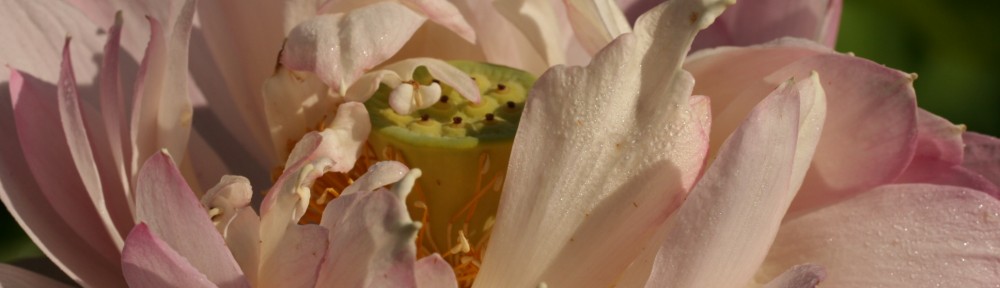
The temple bell stops.
But the sound keeps coming
out of the flowers.

– Basho