Flowering Lotus Lovingkindness Retreat Recap

Last weekend I led a lovingkindness retreat at a beautiful retreat center in Magnolia Mississippi, a place I’d never been before. Magnolia is a small town aptly named – the minute we entered the city, blooming magnolias were everywhere. Founded by Dolores Watson about 5 years ago, Flowering Lotus Retreat Center has grown considerably and has hosted teachers such as Phillip Moffitt, David Loy and John Orr. Dolores is a remarkable and energetic woman who so obviously loves the dharma. I first met her last November when she attended my seven day residential retreat here in Middle Tennessee. I wasn’t at all surprised that the care and thought she has put into the center shines through in every detail. She has her own bold and unique style, which I loved.

Dolores Watson Meditation Hall The experience level for this retreat ranged from four or five people who had never meditated before to several with extensive retreat experience, and everything in between. We focused on lovingkindness (metta) practice for the weekend, which I always appreciate teaching. Watching hearts open and barriers dissolve, seeing people finally realize its ok to offer kindness and love to themselves, is a deeply fulfilling experience for me. I remember how hard it was the first time I tried it many years ago, how I felt guilty and even selfish spending so much time giving metta to myself. But when my heart finally cracked open, I was able to receive and extend love to all beings for the first time. That has stayed with me ever since when I practice metta. At this retreat, as we moved our metta outward to loved ones, family friends, indifferent and difficult people, some at the retreat got a taste of the heart that is not separate from all beings, the heart that can love unconditionally. This is the realm of true compassion. Lodge at Flowering Lotus May all beings be free from suffering. May they live in equanimity.
You Don’t Have to Believe Your Thoughts

by Lisa Ernst

You’ve probably heard that before, right? It sounds pretty simple and maybe sometimes it is, but at other times, nearly impossible. Why? Because for many of us, certain thoughts appear as unassailable “truths,” specific stories about our lives, about ourselves and others. As long as these thoughts operate below our awareness as stealth narratives, they can’t be seen for what they are, impermanent conditions that arise and pass away. We remain bound by these thoughts and they may lead to significant suffering and even depression.

When we identify with a thought or emotion as “I” or “mine,” our boundaries of inside and outside remain intact. There’s me, and then there is the outside world. This is only a perception, but its so strong as to feel solid and real. Buddha taught that this idea of a separate, inherent self is the root of suffering.

As a practice, try asking yourself, “is this thought me; is this thought mine?” You can do the same with emotions. This exercise is not intended to suppress or push away thoughts or emotions, but to allow you to begin seeing them without personal identification. This opens space to perceive the thoughts and experience the emotions as they are. This practice, reflective inquiry, isn’t a form of analysis. You’re letting the question remain open ended, to allow experience itself provide the answer. As you do this, you are opening yourself to the realm of dharma, where customary ideas and everyday perceptions don’t apply. The good news is, you don’t need them as you experience your thoughts and emotions appearing and falling away. Here you can access the heart’s true wisdom.

“When Ajahn Chah said it was possible to learn as much from stupid thoughts as wise ones, that was such a radically different approach. A wise thought arises and ceases. A stupid thought arises and ceases. A painful thought arises and ceases. A painful feeling arises and ceases. A pleasant feeling arises and ceases. I realized I didn’t have to feel ashamed when there was confusion in the mind. Just let it be and know it for what it is. They are all just states of mind, coming and going. Rather than anxiously holding on or to try to make sense of everything all the time, I got a feeling for letting go and letting be.”- Kittissaro, Listening to The Heart.


June Daylong Meditation Retreat

Stilling Mind and Heart with Mindfulness and Lovingkindness
Saturday, June 13, 2015
9:30 a.m. – 3:30 p.m., Nashville Friends House
Led by Lisa Ernst

frankieretreat414

During the busyness and activity that often accompany our daily lives, this meditation retreat will offer a quiet time to slow down, mindfully connect with our bodies and extend kindness and compassion to ourselves and others. Slowly, in the simplicity and silence of the day, we will learn to let go of distractions and touch our experience with a kind and open heart.

Led by meditation teacher Lisa Ernst, this silent retreat is suitable for newer and more experienced meditators. It will include periods of sitting and walking meditation, practice instructions and dharma talk.

Retreat fee is $50. A reduced fee spot is available, please inquire to the email below. Paypal is here. If paying by check, you can find instructions on where to send it at this link. Be sure to include your email address. There will be a separate opportunity at the retreat to make a dana offering (donation) to the teacher.

For questions, contact onedharmaretreat@gmail.com.

2015 Spring Renewal Meditation Retreat Recap

One Dharma just completed our fourth Spring Renewal Residential Retreat at Bethany Hills. Each April I especially enjoy our time in this beautiful and natural setting where our hearts can open in tandem with the flowers and leaves after spring rains.

Ferns by the Pond at Bethany Hills

Ferns by the Pond at Bethany Hills

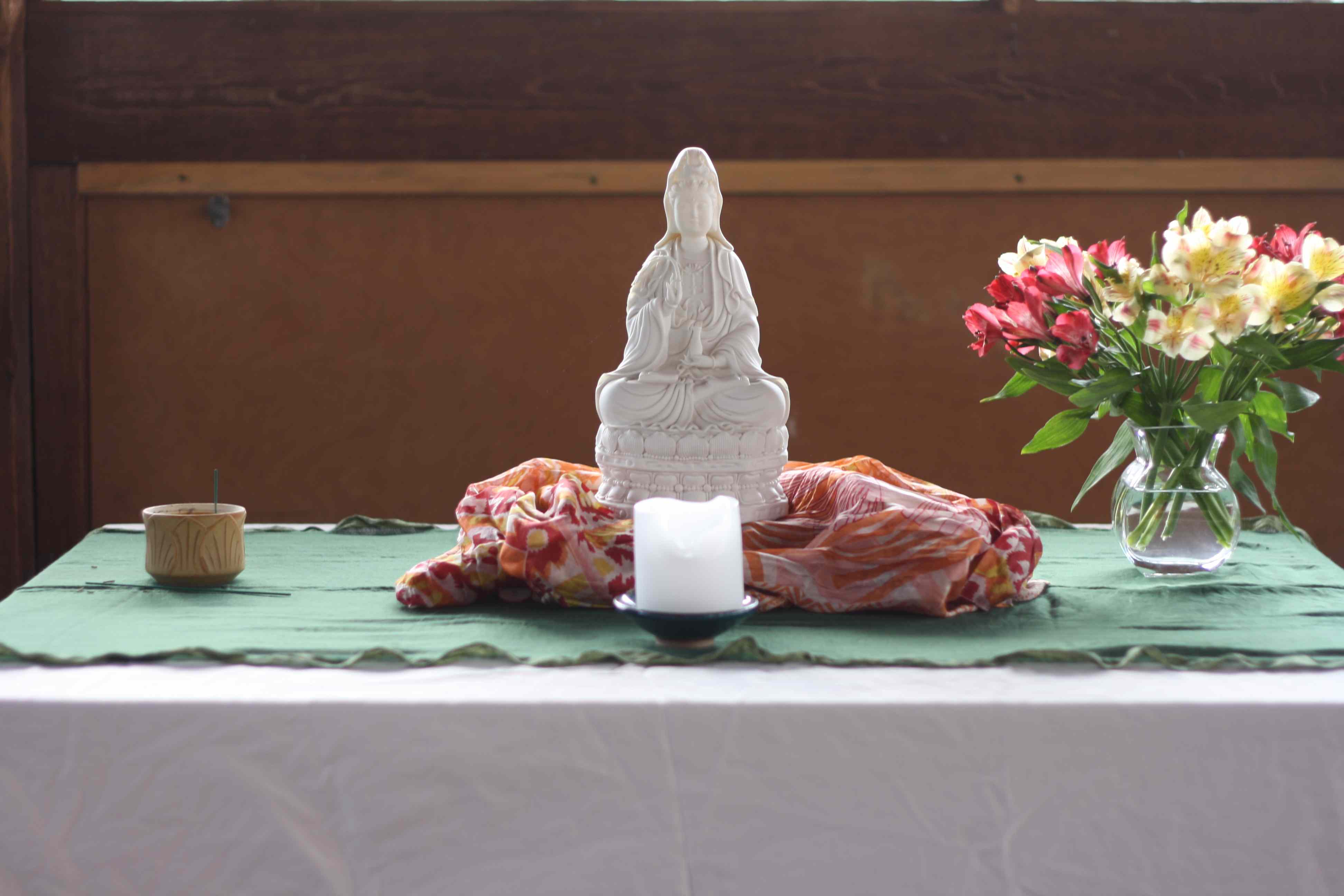
altarflowers

Altar Flowers by Frankie Fachilla

I appreciate all of nature’s seasons but spring is my favorite. In my twenties, during some of the darkest, loneliest years of my life, immersing myself in spring each year gave me a sense of possibility that my life could be more than the sadness and grief I lived with daily. As I witnessed newly leafed trees growing greener each day, purple wild iris opening along the water’s edge, and birds breaking into a melodious but raucous symphony every morning as the sun rose, I allowed my heart to open completely, to release my armor and touch the warmth and vulnerability of new life. This tenderness of heart nourished and fortified me through this otherwise long and lonely season of my life. Slowly, as the years passed and I reached my 30’s, the possibility of renewal that had once seemed so removed from the rest of my life blossomed at last. This awakening enabled me to live my life more fully, to move through my grief and find friends and love again. Thank you spring for sustaining and warming my heart when I had no other way to touch this moment with love and gratitude.

Double Web

Double Web

These two lovely poems, speak to the retreat experience of opening heart and mind in this moment. Both were written by attendees at our spring retreat.

Water Meditation

Water extinguishes fire
Takes away the angry,
burning desire to eat
everything in its path.
Be water,
drown in this moment.
Watch the world and its stories
pass like waves.
They aren’t yours to grab.
Try to grab them and
they disappear like
scattered stars,
reforming later, still
constellations of emptiness.

Instead, let the waves
crash over you,
their powerful fingers
tear at you then recede
into foamy nothing.
Crash and recede, crash and recede.
Nothing to do
but feel the sun.

– Andrea Hewitt

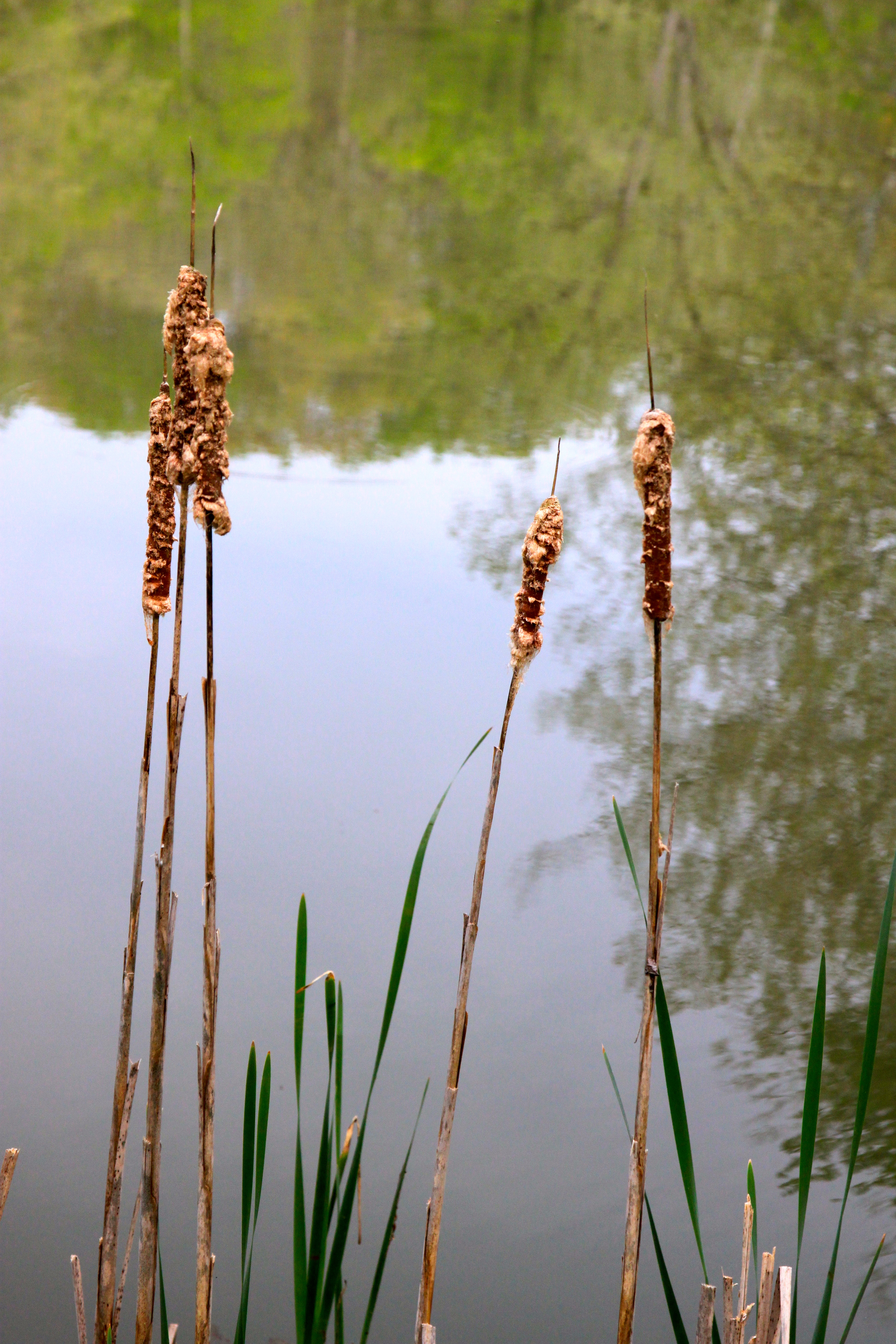
Cattails by Pond

Cattails by Pond

The retreat ended, rain stopped.
The geese have landed at the lake,
Sun shining thru clouds, I see clearly.

– Jeff Miller

Reflect1

Clear Skies Reflected in Pond

Spring Renewal Residential Meditation Retreat

Intimate With Life
Bethany Hills Retreat Center, Kingston Springs TN
Thursday Evening, April 16 – Sunday Noon April 19
Led by Lisa Ernst

bethanyhall

“Enlightenment is Intimacy With All Things” – Dogen

Each spring the earth awakens from its winter slumber as the days grow warmer and longer. Surrounded by newly leafed trees and rolling hills, we will renew our minds and hearts in the simple yet profound practice of sitting and walking meditation. Gradually this practice will lead us to intimacy with all of life as we touch the present moment with a kind and open heart.

This silent retreat will be held at Bethany Hills Retreat Center, Kingston Springs, TN. It will include sitting and walking meditaiton, instruction, dharma talks and private meetings with the teacher. Retreat cost is $225. Participation for all three days is required. Fee covers lodging and all meals. There will be a separate opportunity at the retreat to make a *dana offering (donation) to the teacher. Two sliding scale spots are available for those who need financial assistance. Paypal is available here. If paying by check, information and address are available at this  link. Please include your email address.

Lisa Ernst is a meditation teacher and founder of One Dharma Nashville. She has been meditating for 25 years and received dharma teaching authorization in the Thai Forest lineage of Ajahn Chah, Jack Kornfield and Trudy Goodman. In her teaching, Lisa emphasizes both transformational insight and everyday awakening as an invitation to embrace all of the path’s possibilities.

*Dana: According to the Buddha, generosity, or sharing what we have, is one of the central pillars of a spiritual life. In the act of giving we develop our ability to let go, cultivate a spirit of caring, and acknowledge the inter-connectedness that we all share.

Please contact onedharmaretreat@gmail.com for questions or to reserve your spot.

Brothers and Sisters in Suffering

This morning I read an article from Ajahn Sumedho that inspired me to post this excerpt about our shared humanity. Thanks to Geoff Lovettf for the link.

In Thailand they say: “Brothers and sisters in suffering, old age, sickness and death.” When we think of ourselves as brothers and sisters in old age, sickness and death, we stop the foolishness. But if we want to build up an army to fight, we can’t say we’re brothers and sisters in old age, sickness and death. We have to say, `Those people over there are demons. The more you kill, the better. They don’t have any feelings. They like to bayonet babies and butcher old women. They have no respect for anything.’ And then you think, `Oh, I’m going to kill them.’ Propaganda is like that. It’s a way of making you think the best thing you can do is kill them. But in reflective knowledge we see the common bond — from the most despicable human being to the most saintly. That is a reflective teaching. We think, `Yes, yes, that is the truth. When you think about that — brothers and sisters in old age, sickness and death — we’re all getting old and . . . ‘

Excerpted from Brothers and Sisters in Suffering, Old Age, Sickness and Death by Ajahn Sumedho.

The Dharma of Writing and Meditation Workshop

Saturday, January 31, 2015

9:30 a.m. – 3:30 p.m., Nashville Friend’s House

Led by Lisa Ernst

398b3-lotusblossom

Please join us for a day of contemplative writing and meditation practice. We will cultivate writing inspiration through meditation and exercises that help us open our hearts to the truth of what we most want to express. These practices will also help us to communicate more eloquently from our authentic voice, both in written and verbal form. In addition, we will have an opportunity to share our writing in an atmosphere of compassionate support.

This workshop is suitable to beginning and experienced writers and meditators. Cost is $75 – $100, sliding scale. Please pay at the highest level you can afford so we can accommodate those who need reduced fee, scholarship spots. For a scholarship spot, please inquire to the email below. You can pay by Paypal here using the donate button. If paying by check, please make it out to One Dharma Nashville and send to 12 South Dharma Center, c/o One Dharma Nashville, 2301 12th Avenue South, Suite 202, Nashville, TN 37204.  Please include your email address.

Lisa has been meditating for 25 years in both the Zen and Vipassana traditions. She is the founder and guiding teacher of One Dharma Nashville. In addition to regularly teaching meditation classes and retreats, Lisa has written numerous articles for magazines, newspapers and newsletters. She was the technical editor for the current edition of Meditation for Dummies. Her blog include essays and poetry: www.thelotusbloomsinthemud.com. For questions, email onedharmaretreat@gmail.com

When Peace Will be Born

This is a beautiful guest post from Najmeh Jami, a student and practitioner at One Dharma and reflects the fruits of compassionate dharma practice.

“When Peace Will be Born”

I’d been waiting all my life for a moment, for a moment that shouts itself “Hey! Look at me! I am clear. Hey! Look at me, I am perfect.”

I missed a lot when I was waiting. I missed the pain behind my mom’s eyes when she was expecting me to do “nonsense” and I called that moment imperfect. I missed my dad’s suffering when he was angry, really angry and I called him an imperfect dad. And I missed a lot of beauties and joys when I was judging the imperfection of those moments waiting for that clear, perfect moment.

Some got clear, while I was still busy waiting for the perfections to happen.

Those moments happened again, my dad got angry, my mom expecting me to do “non-sense”. I wasn’t thinking about perfection or non-perfection. I was seeing that clarity; I was dissolved in my mom’s pain and my dad’s suffering; There’s no pain, no suffering, no me no dad, no me no mom. It was a pure clarity and it was perfect.

Some didn’t get clear. But I have already made my decision. I am not looking for clarity or perfection. I am just dying in the moment with love and the moment gets clear, the moment gets perfect. The moment IS clear, the moment IS perfect. We just need to die in the moment with love, and it gets clear and it gets perfect. And that’s when peace will born.”

– Najmeh Jami

Listening to Your Thoughts Like a Friend

Meditation teachers in the West rarely emphasize thought as a primary object of meditation, even though mindfulness of mental factors is the fourth foundation of mindfulness. There’s a reason for this – from the time we’re young children, many of us are taught to revere thought above all else. When we first come to meditation we may feel as though we’re lost in the rapids of thought, tumbling down a treacherous river with no escape. Initially, establishing awareness at the breath and sensations of the body helps to calm these rapids. But not entirely. The thoughts don’t and won’t stop.

So why not learn to listen to your thoughts like you listen to a good friend? This means bringing your full awareness, with kindness, to your internal dialog. From this perspective, listening practice translates well from hearing external sounds like bird song or passing cars to awareness of the tone and quality of your thoughts, not simply the content. The practice may sound simple, but it takes skill to listen without reacting, judging or getting caught again in those rapids.

We can categorize our thoughts as positive, negative or neutral, just as we can with feelings and sensations. This can help us dis-identify with the specific content of the thought so we can simply observe. Most of us spend a lot of time problem solving, strategizing and planning. Often this activity is necessary and useful. But at other times it diverts us from our present moment experience. Listening to thought can help us to discern when we are using thought to escape and when we are using it wisely.

How often are your thoughts angry, comparing or judgmental? How frequently do you carry on internal dialog with someone who has hurt you or made you angry, but you never verbalize those thoughts skillfully or resolve the conflict? What narratives do you cling to as undisputed truths about yourself or others that narrow your possibilities? As your awareness deepens, you may notice how often your thoughts support the mistaken belief that you are a fixed, separate self, at odds with the outside world. Though listening practice, you may also become aware when compassionate and generous thoughts arise from a sense of interconnection and find opportunities to cultivate more of these. Deep concentration, Samadhi, during meditation practice helps support our insights into interconnection, which we can then bring into our daily lives.

Through listening practice I have discovered that whenever I feel a strong sense of self and other, my thoughts tend toward self-clinging or judgment. When I feel an intuitive sense of interconnection, my mind naturally opens to a more compassionate way of thinking about my life and the world. I am able to listen from the heart and respond with kindness, rather than though old thought patterns that reinforce separation.

Fall Seeds

IMG_7428

The withered flowers

drop their seeds

like tears.

– Basho