Becoming the Ocean

Leonard Cohen died yesterday. Many of his songs and lyrics have been shared on social media and I came across one I haven’t seen before, one that perfectly reflects my mood today: “If you don’t become the ocean, you’ll be seasick every day.”

Right now it’s hard to become to ocean. I often feel seasick and keep reaching for the raft. But the raft has holes in it. When I hear of heightened bullying, I feel grief and fear for my LGBT friends and people of color, for Muslims and for people who have been traumatized by bullies and sexual predators. The last two include me. Everything is upside down and I am drowning.

But then, in the quiet, surrendering to my grief, to the groundlessness, I remember that I am the waves, the ocean. My heart comes to rest for a while and I’m no longer seasick.

img_1250

I wrote “Riding Free” at another time when I couldn’t stay afloat. This surrender is what serves me in the roughest waters when the boat doesn’t hold. From this place I can find my way again, I can swim and I can serve.

Riding Free

Its like you’re throwing away your canoe and oars and are riding the waves of emptiness. Its scary at first, you’ve no control. You feel vulnerable and completely without knowledge of where you are going, or even where you are. So you have to surrender completely to the waves when they come. It may take a while. It may take weeks or months or years. You may ask, “what if I drown?” Then I ask you, “who and what drowns? What do you lose? And what might you gain?”

You may decide to climb back into your canoe if you can. But if you’re truly on this path, the water will draw you in again and again until finally you drown and then you’re riding the waves and those waves are you, and you are the waves, there’s really no difference any more, and you arrive exactly where you need to be, where you always have been, but just didn’t know it until now. You are home.

Staying Right Here

img_3242

Before I think about moving forward, about kindness and a wise response, I need to stay right here. In this place of groundlessness, of vulnerability, of deep concern for the world and how things are today.

We talk a lot about practicing with groundless in the dharma, about letting the bottom fall out. That time is now. Do it if you can, let it happen. Don’t turn from your grief and fear, allow it. You don’t need to force yourself to think hopeful thoughts just now. This isn’t yet the time for that. Let yourself weep and know it deep in your heart, for yourself and the world.

Words aren’t enough right now, really nothing is, but here’s the poem that speaks to me in this moment, that cracks my heart open, as it often does in times of strife and suffering.

Please Call Me by My True Names

Do not say that I’ll depart tomorrow
because even today I still arrive.

Look deeply: I arrive in every second
to be a bud on a spring branch,
to be a tiny bird, with wings still fragile,
learning to sing in my new nest,
to be a caterpillar in the heart of a flower,
to be a jewel hiding itself in a stone.

I still arrive, in order to laugh and to cry,
in order to fear and to hope.
The rhythm of my heart is the birth and
death of all that are alive.

I am the mayfly metamorphosing on the surface of the river,
and I am the bird which, when spring comes, arrives in time
to eat the mayfly.

I am the frog swimming happily in the clear pond,
and I am also the grass-snake who, approaching in silence,
feeds itself on the frog.

I am the child in Uganda, all skin and bones,
my legs as thin as bamboo sticks,
and I am the arms merchant, selling deadly weapons to Uganda.

I am the twelve-year-old girl, refugee on a small boat,
who throws herself into the ocean after being raped by a sea pirate,
and I am the pirate, my heart not yet capable of seeing and loving.

I am a member of the politburo, with plenty of power in my hands,
and I am the man who has to pay his “debt of blood” to, my people,
dying slowly in a forced labor camp.

My joy is like spring, so warm it makes flowers bloom in all walks of life.
My pain is like a river of tears, so full it fills the four oceans.

Please call me by my true names,
so I can hear all my cries and laughs at once,
so I can see that my joy and pain are one.

Please call me by my true names,
so I can wake up,
and so the door of my heart can be left open,
the door of compassion.

– Thich Nhat Hanh

Anxiety, Election Fallout and Finding Calm in the Storm

img_3700

Over the past month or so at One Dharma we’ve been talking about our practice in relation to this election. Many people have reported feeling challenged at a level they rarely, if ever experience. Anger, fear, discord in relationships and remorse. We’ve covered a lot of practice approaches to work with these. And remembering self forgiveness when we simply can’t act out of our best intentions in the heat of the moment.

While the divide in our country won’t be erased just because the election ends, we can continue to consciously work on our relationship to our inner and outer terrain, especially when its rocky, and find a path to be of help in whatever way we can. Jack Kornfield shared this short quote from Thich Nhat Hanh that is very timely to our current situation:

“Remember the story Zen master Thich Nhat Hanh told of the crowded refugee boats. “If even on person on the boat stayed calm, it was enough. It showed the way for everyone to survive.”

Embracing “don’t know mind” has been an important practice for me, the willingness to hold in open awareness what I can’t understand. This practice allows me to access my heart rather than just staying in my head and trying to figure it out. It also helps me to let go of what I can’t control and find a calm spot in the middle of the storm.

I’ve read some good articles that have analyzed the political divide we’re engulfed in right now. Many of the articles make a case for trying to understand and empathize with people who we disagree with and remember our shared humanity, our interconnection. I wholeheartedly agree with this. But I’ve also found these articles are too general about demographics. They speak of the people who are angry and feel left behind, usually pointing to older white males without college degrees. Yes, we need to try and understand their pain. But deeper demographic analysis shows that many privileged people are angry too and want radical change, regardless of what it is or how dangerous it might be.

Because I can’t understand it all through reading articles and analysis, I find that an open ended question is helpful to me – what is the most beneficial response right now for myself and others? This is coming home to my own heart. It takes the edge off my fear. It shows me what I can and can’t control and a compassionate way forward while being rooted in the present.

May all beings find peace and the causes of peace.

A Season of Politics and the Unwelcome Guest

In this talk I explore how we can skillfully meet our fear and the unwanted visitors who keep knocking on the door, especially in this challenging season of political unrest. I also share how I overcame the trauma and fear of being stalked for a year.

2016 Refuge and Precepts Ceremony

If you have been practicing for a year or longer and wish to formally reflect your commitment to the dharma path, I will be offering this opportunity through One Dharma. It will culminate in a ceremony at One Dharma, which we will plan for a time in November that works for all involved. If you are interested, please email ernst.lisa@gmail.com by October 1. If you have already taken refuge and the precepts and wish to refresh your vows, you are also welcome and encouraged to participate.

About the Refuge Ceremony
Taking refuge means relying wholeheartedly on the Three Jewels of the Buddha, Dharma and Sangha to inspire and guide us toward a constructive and beneficial direction in our lives. The real taking of refuge occurs deep in our hearts and isn’t dependent on doing or saying anything. Nevertheless, we may wish to participate in the refuge ceremony by requesting a dharma teacher to formally give us refuge. The refuge ceremony is simple: we repeat the passages after the teacher and open our hearts to make a strong connection with the Three Jewels.

About Taking Precepts
Precepts are a joy, not a burden. They aren’t designed to keep us from having a good time and to make us feel deprived. The purpose of taking precepts is to give us internal strength so that we won’t act in ways that we don’t want to. Having understood that killing, stealing, selfishness and so forth only lead us to harm ourselves and others now and in the future, we’ll want to avoid these. Taking precepts give us energy and strength to do so. Therefore, it’s said that precepts are the ornaments of the wise.

To help people overcome their disturbing attitudes and stop committing harmful actions, the Buddha set out five precepts. During the refuge ceremony, in addition to taking refuge in the Three Jewels, we can take any or all of the five precepts, and become a lay Buddhist.

The five precepts
1. I observe the precept of abstaining from the destruction of life.
2. I observe the precept of abstaining from taking that which is not given.
3. I observe the precept of abstaining from sexual misconduct.
4. I observe the precept of abstaining from falsehood.
5. I observe the precept of abstaining from intoxicants that cloud the mind and cause carelessness.

The refrain “I observe the precept of abstaining from …” which begins every precept clearly shows that these are not commandments. They are instead codes of conduct that lay Buddhists undertake out of clear understanding and conviction that they are good for both themselves and for the world. If you have any questions about these precepts and what they mean to your everyday life, please inquire. (You aren’t expected to become a vegetarian unless you are already inclined in that direction. However, reflecting on and taking actions to reduce harm is at the heart of the first precept.)

Two Special Events with David Loy, October 14 & 15

Please join us for one or both of these events

Why Buddhism and the Modern World Need Each Other
Public Lecture by David Loy
Sponsored by One Dharma Nashville
Friday, October 14, 7:30 – 8:30 p.m.
Healing Well Yoga, 3808 Park Place, Nashville

The mercy of the West has been social revolution. The mercy of the East has been individual insight into the basic self/void. We need both.

– Gary Snyder

The highest ideal of the Western tradition has been to restructure our societies so that they are more socially just. The most important goal for Buddhism is to awaken and put an end to dukkha “suffering” due to the delusion of a separate self. Today it has become obvious that we need both: not just because individual transformation and social transformation complement each other, but because each needs the other.

Suggested donation: $15. No one turned away for lack of funds. To pay in advance, you can use Paypal here.

David Loy is an internationally renowned Buddhist teacher, keynote speaker, lecturer and author. He is a professor of Buddhist and comparative philosophy and his many published books include his most recent, A New Buddhist Path: Enlightenment, Evolution and Ethics in the Modern World. He lives in Boulder Colorado.

Transforming Self, Transforming World

Workshop with David Loy
Saturday, October 15, 9:30 a.m. – 4:30 p.m.
Nashville Friends Meeting, 530 26th Avenue North
Sponsored by One Dharma Nashville

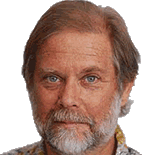
headshotloy

What is the connection between personal and social transformation?

According to Buddhism, our usual sense of self is haunted by a sense of lack: “something is wrong with me.” Why do we never have enough money, fame, sensory pleasure? Because we try to fill up our sense of lack with them — but it doesn’t work.

Those obsessions also reveal where our society is stuck. The Buddha’s “three poisons” have become institutionalized and taken on a life of their own: our economic system institutionalizes greed, racism and militarism institutionalize ill will, and the corporate media institutionalize delusion. And our collective sense of separation from the rest of the biosphere lies at the heart of the ecological crisis.

Any personal awakening we may experience remains incomplete without a “social awakening” to these institutionalized causes of suffering. Through meditation, interactive inquiry and group discussion we will explore how to connect personal and social awakening and transformation.

Cost is $50 – $75 sliding scale, plus dana (donation) to the teacher. Please pay at the highest level you can afford on the sliding scale so we can accommodate those who need to pay less. You can pay at the Paypal here and enter the amount you will pay. Instructions for paying by check are at this link. Please include your email address. Scholarships are available if you need a reduced rate. Inquire to onedharmaretreat@gmail.com

Pali Language as a Gateway to Understanding Buddha’s Teachings

Taught by Jeffrey Samuels, Ph.D.
Thursdays, September 1 – November 17
7 – 8:30 p.m.

Ever wonder what the Buddha really taught? Ever want to read and understand the Buddha’s sermons in their original Pali language? In September we will begin a Pali course that is designed for students of Buddhism interested in reading Pali Buddhist texts. The course text that we will use for learning Pali grammar and vocabulary is focused on a wide range of Buddhist literature including sermons, verses from the Dhammapada, passages from the disciplinary texts, the Questions of King Milinda, and so on. This challenging 12 week course concludes with translating the Buddha’s first sermon (the Turning of the Wheel of the Dharma discourse).

Course fee is $150 – $200 sliding scale, plus $10 for the book, which Jeff will supply. Please pay at the highest level you can afford so we can accommodate those who need to pay less. A $50 deposit reserves your spot with the balance due by August 25. A scholarship spot is available in the case of financial need.

Jeffrey Samuels started practicing meditation in 1987 under the Thai forest monk Ajahn Buddhadasa. He has completed several long meditation retreats in Thailand under Mahasi Sayaadaw teachers as well as retreats in the US at the Zen Center in San Francisco and under the Thai teacher Sobin S. Namto. More recently, he has been practicing with One Dharma Nashville and Lisa Ernst.

Jeffrey Samuels is Professor of religious studies at Western Kentucky University. He received a Ph.D. in Buddhist studies from the University of Virginia in 2002. He has been teaching courses on Buddhism and Pali at WKU since 2001.

To register, go to paypal here and enter the amount you will pay. To pay by check, instructions are here. For specific questions about the course, email jeffrey.samuels@wku.edu. For inquires about a scholarship rate, email onedharmaretreat@gmail.com

Practice Tip: Creating a Story Room

So often during meditation our minds can wander into planning, stories and other thought patterns that lead us away from our present moment experience. When our minds are identified with thought, we miss our breath, sensations and feelings in our body, and the inner and outer sounds arising and passing away. But anyone who has meditated for a while knows quite well that we can’t simply turn off our thoughts.

Sometimes during meditation, when I’m particularly busy and have a lot on my plate, I slip into planning and stories about what I need to do, how I will do it and when. As my mental formations get stronger, I find it challenging to turn my attention back to my immediate experience. But as soon as I notice anxiety in my body related to planning, I begin to relax and dis-identify from the thoughts. Another simple tool I have found useful is a “story room.” Here is where I store planning, stories and other thoughts about upcoming activities. I close the door to this room, reminding myself I can re-enter after meditation. My mind releases and I return to the moment. Any lingering anxiety about “getting it all done” begins to dissipate and I relax into my present moment experience. Inside and outside dissolve into the simplicity of the breath, sensations, sounds, the suchness of this moment. After mediation, I can reenter my story room with a refreshed mind and open heart. My planning is much more effective.

Daylong Meditation Retreat: Resting in Openhearted Awareness

Saturday, August 27, 9:30 – 3:30
Nashville Friends Meeting
Led by Lisa Ernst

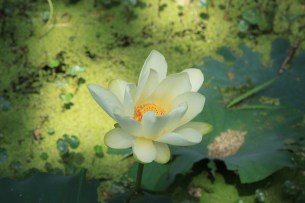
ReelfootLotus

“There is a voice that doesn’t use words. Listen.” – Rumi

In this silent retreat we will stabilize attention and deepen concentration through the breath and body, then gradually open our awareness to the boundless space of mind and heart. These practices will help us relax into freedom from our habitual thoughts and patterns and find equanimity in our present moment experience.

Led by meditation teacher Lisa Ernst, this retreat is suitable for newer as well as more experienced meditators. The retreat will include periods of sitting and walking meditation, instructions and dharma talk

Cost: $50, plus dana (generosity donation) to the teacher. A reduced fee spot is available in the case of financial need. The retreat fee can be paid by Paypal here.  Directions and additional information will be emailed prior to the retreat.

Please contact onedharmaretreat@gmail.com with any questions.

Our New Meditation Space

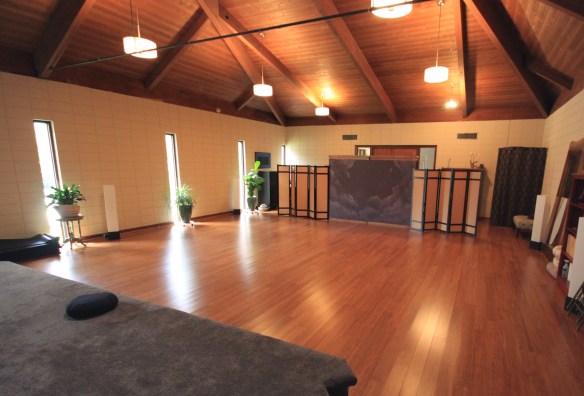
Here are some photos of One Dharma’s new Nashville meditation space. Its spacious, serene and quiet. We also love the raised ceiling and skylight. If you live in or near Nashville and haven’t come by yet, please come see the space in person and join us for meditation. We meet Mondays, 7 – 8:30 p.m. Directions and additional info here.

IMG_2690

IMG_2675

Low light for meditation.

IMG_2682