Staying Right Here

img_3242

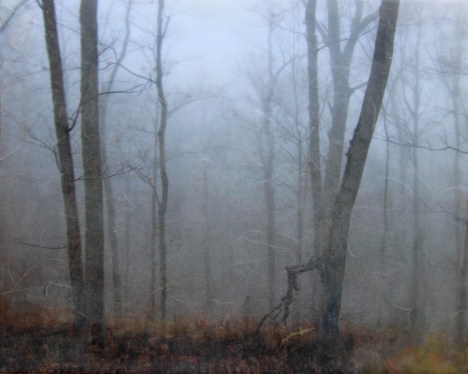
Before I think about moving forward, about kindness and a wise response, I need to stay right here. In this place of groundlessness, of vulnerability, of deep concern for the world and how things are today.

We talk a lot about practicing with groundless in the dharma, about letting the bottom fall out. That time is now. Do it if you can, let it happen. Don’t turn from your grief and fear, allow it. You don’t need to force yourself to think hopeful thoughts just now. This isn’t yet the time for that. Let yourself weep and know it deep in your heart, for yourself and the world.

Words aren’t enough right now, really nothing is, but here’s the poem that speaks to me in this moment, that cracks my heart open, as it often does in times of strife and suffering.

Please Call Me by My True Names

Do not say that I’ll depart tomorrow
because even today I still arrive.

Look deeply: I arrive in every second
to be a bud on a spring branch,
to be a tiny bird, with wings still fragile,
learning to sing in my new nest,
to be a caterpillar in the heart of a flower,
to be a jewel hiding itself in a stone.

I still arrive, in order to laugh and to cry,
in order to fear and to hope.
The rhythm of my heart is the birth and
death of all that are alive.

I am the mayfly metamorphosing on the surface of the river,
and I am the bird which, when spring comes, arrives in time
to eat the mayfly.

I am the frog swimming happily in the clear pond,
and I am also the grass-snake who, approaching in silence,
feeds itself on the frog.

I am the child in Uganda, all skin and bones,
my legs as thin as bamboo sticks,
and I am the arms merchant, selling deadly weapons to Uganda.

I am the twelve-year-old girl, refugee on a small boat,
who throws herself into the ocean after being raped by a sea pirate,
and I am the pirate, my heart not yet capable of seeing and loving.

I am a member of the politburo, with plenty of power in my hands,
and I am the man who has to pay his “debt of blood” to, my people,
dying slowly in a forced labor camp.

My joy is like spring, so warm it makes flowers bloom in all walks of life.
My pain is like a river of tears, so full it fills the four oceans.

Please call me by my true names,
so I can hear all my cries and laughs at once,
so I can see that my joy and pain are one.

Please call me by my true names,
so I can wake up,
and so the door of my heart can be left open,
the door of compassion.

– Thich Nhat Hanh

Anxiety, Election Fallout and Finding Calm in the Storm

img_3700

Over the past month or so at One Dharma we’ve been talking about our practice in relation to this election. Many people have reported feeling challenged at a level they rarely, if ever experience. Anger, fear, discord in relationships and remorse. We’ve covered a lot of practice approaches to work with these. And remembering self forgiveness when we simply can’t act out of our best intentions in the heat of the moment.

While the divide in our country won’t be erased just because the election ends, we can continue to consciously work on our relationship to our inner and outer terrain, especially when its rocky, and find a path to be of help in whatever way we can. Jack Kornfield shared this short quote from Thich Nhat Hanh that is very timely to our current situation:

“Remember the story Zen master Thich Nhat Hanh told of the crowded refugee boats. “If even on person on the boat stayed calm, it was enough. It showed the way for everyone to survive.”

Embracing “don’t know mind” has been an important practice for me, the willingness to hold in open awareness what I can’t understand. This practice allows me to access my heart rather than just staying in my head and trying to figure it out. It also helps me to let go of what I can’t control and find a calm spot in the middle of the storm.

I’ve read some good articles that have analyzed the political divide we’re engulfed in right now. Many of the articles make a case for trying to understand and empathize with people who we disagree with and remember our shared humanity, our interconnection. I wholeheartedly agree with this. But I’ve also found these articles are too general about demographics. They speak of the people who are angry and feel left behind, usually pointing to older white males without college degrees. Yes, we need to try and understand their pain. But deeper demographic analysis shows that many privileged people are angry too and want radical change, regardless of what it is or how dangerous it might be.

Because I can’t understand it all through reading articles and analysis, I find that an open ended question is helpful to me – what is the most beneficial response right now for myself and others? This is coming home to my own heart. It takes the edge off my fear. It shows me what I can and can’t control and a compassionate way forward while being rooted in the present.

May all beings find peace and the causes of peace.

Working with Focused and Open Attention in Meditation

Here are a few simple tips for understanding and practicing focused attention (mindfulness) and open awareness in meditation.

Mindfulness meditation is as much about returning to an object of attention as it is about focusing on it. We rarely maintain fixed attention for a full meditation period. In fact, we may only have short periods of fixed attention on an object and need to return again and again. Doing so with kindness and compassion, rather than frustration, is key.

Being present with the body, physical sensations and emotions is about relaxing into the experience, whatever it is, rather than resisting or tensing up. “That which we resist persists.”

In working with thoughts in meditation, our relationship to thought is more important than the content of the thoughts themselves. That is, we observe the flow of thinking without getting caught up in the narrative. Its like we’re watching a stream flow by or a train coming into the station and then heading out again without getting on.

Open awareness meditation is about noticing sounds arising and passing near and far and experiencing the changing flow of all experience, internally and externally, in the open space of mind – a mind as wide as the sky. We are letting go of the idea that our mind is limited to our head or any fixed point of reference. We do include awareness of breath and body in this practice, but we don’t fix our attention there. In fact, this practice works best when we are able to let go of effort and rest in the great embrace of open awareness, allowing all things to arise and pass away, attaching to none.

As we deepen into this practice the boundary between inside and outside dissolves and the duality of subject and object disappears.

I don’t recommend toggling back and forth between focused attention and open awareness during one meditation session. Find a practice to settle on until you feel stable. Many people, especially more experienced meditators, begin with focused attention and naturally shift into open awareness as their concentration deepens. If you struggle with open awareness because your mind wanders without a fixed object of attention, you may find the guided meditation, “Mind Like Sky” helpful. You can listen to it here.


Join Me on a Tour of Buddhist India!

I’m excited to be offering this tour of India in November 2017, Ancient Roots, Living Branches: Discovering Buddhist India. Dates are November 5 – 19

Combining a meditation retreat with a Buddhist pilgrimage, this tour is an exploration of both ancient Buddhist history and living Buddhist traditions. First we explore the ancient holy sites in the North and East of India, where the Buddha practiced and taught – including Bodhgaya and Sarnath – before moving on to the mountains of Sikkim to experience Buddhist village life in the Himalayas.

The tour is guided by expert local guides in India, while I offer meditation and dharma discussions along the way in various locations, from hotel gardens to Tibetan monasteries.

We will be interacting with and learning from Buddhist communities and practitioners as we travel. It’s also a fun adventure off the beaten track, and this tour is open to everyone interested in Buddhism and meditation.

For information including the complete itinerary, pricing, etc., go here.

December Residential Retreat

Making Peace: Being Self and Emptiness
Thursday Evening, December 8 – Noon, December 11, 2016
Optional extended retreat through noon December 13
Bethany Hills Retreat Center, Kingston Springs, TN

“Live in the nowhere that you come from, even though you have got an address here.” – Rumi

lisaprofilecropha

Retreat full. We are accepting names for the waitlist at onedharmaretreat@gmail.com

Please join us at a beautiful, wooded retreat site just outside Nashville for this three or five night residential retreat. We will explore the nature of our identity and sense of self that we use to live in the world, as well as the wise space of heart and mind that lets go. As we practice meeting all of the activity of self with mindfulness, steadiness, and kindness, our insight and compassion grow. The more we make peace with our ego the more we dwell in our boundless, empty nature.

Led by meditation teacher Lisa Ernst, this silent retreat is suitable for newer and more experienced meditators. It will include periods of sitting and walking meditation, instructions, dharma talks and private meetings with the teacher. Retreat fee includes lodging and all meals.

The 3 night retreat is $225 if paid in full by November 9; after $250. If you wish the stay for five nights, the retreat fee is $365 if paid by November 9; $395 after. A $75 deposit reserves your spot. There will be a separate opportunity at the retreat to make a dana (generosity) offering to the teacher. Two reduced fee spots is are available in the case of financial need. Please inquire for details.

Payments can be made through Paypal here or mailed to One Dharma Nashville, P.O. Box 158533, Nashville, TN, 37215. Please indicate the number of nights you will stay. If sending a check, include your email address. For questions, email onedharmaretreat@gmail.com

Lisa Ernst is a Meditation teacher in the Thai Forest lineage of Ajahn Chah, Jack Kornfield and Trudy Goodman. She is the founder of One Dharma Nashville. In her teaching, Lisa emphasizes both transformational insight and everyday mindfulness as an invitation to embrace all of the path’s possibilities. She leads classes, workshops and meditation retreats nationally.

New Dharma Talk: How to Hold Your Dharma Seat

This talk offers guidance on how to train the heart and mind to become steady and balanced even in the face of the most challenging circumstances.

Dharma Talk: The Dancer in The Desert

This dharma talk was inspired by a woman named Marta Beckett who was a professionally trained ballet dancer in New York City. When her car broke down in Death Valley she saw an abandoned old theater and listened to the call of her heart and renovated it. She danced there many years with little to no audience until she was discovered. In the talk I explore how we can devote ourselves fully to our path with love and commitment, rather than seeking results, even when the terrain seems barren. In this way, we open to greater possibilities as unexpected and wonderful surprises often appear along the way.

One Dharma is Moving!

After eight years at the 12 South Dharma Center, One Dharma will hold its last meeting there this Thursday, July 7. This is our once monthly LGBT meeting. The center will officially close by July 15. Why are we moving? To quote a lovely piece on the 12 South Dharma Center written by Walter Bittner, “In the end, it was the success of the revitalization and gentrification of the 12 South neighborhood that spelled the end of 12SDC. Recently, the ground floor unit directly beneath the meditation hall was rented to a juice bar which operates 7 days/week, 12 hours/day. Silent meditation in the room above a busy shop filled with the voices of customers, staff, blenders, and piped-in ambient music was no longer possible, and each of the three groups who share the center made alternate plans and negotiated to withdraw from their lease.”

One Dharma’s weekly Monday meditation and all Thursday meetings and classes will begin July 11 at Healing Well Yoga, 3808 Park Avenue, just off Charlotte Ave. This is a spacious studio and there’s plenty of parking by the building and along the street. I hope to have some photos soon. The space is truly beautiful! Interestingly, two years ago this was the very space we investigated as an option for a new dharma center. Negotiations didn’t work out but now the space available to us Monday and Thursday evenings and is perfect for meditation. Please come by and sit with us!

Our Introduction to Meditation Class will move to the Vanderbilt Center for Integrative Health beginning Saturday, July 9. This is a wonderful space and we are honored that Vanderbilt is accommodating us so generously. VCIH, also known as Osher, is located 3401 West End Ave at Orleans. The parking garage is at the rear of the building on Orleans. There is plenty of parking, which is free and secure. Walk through the glass door at the garage entry level (3rd floor). Turn left and follow the hallway to Vanderbilt Integrative Health, Suite 380. Stay left around the front desk to the first open room on your left. Please remove shoes before entering.

Special thanks to everyone who has made the unique, shared dharma center possible and especially Sharon Safer, whose vision was the spark that started the ball rolling. In the longer term, the three sanghas that have comprised the 12 South Dharma Center hope to find a new dedicated practice space.

Presence, Vulnerability and the Wise Heart

I gave this dharma talk shortly after finding out that a long time friend had died accidentally. I explore how cultivating presence and vulnerability, even in such difficult times, will open the door to the wise heart that knows the way to compassion and kindness for self and others.

Clear Mind and Open Awareness

“When your mind feels tight and constricted, you can make more space.” You’ve probably heard this before about meditation practice, but what specifically are we talking about here? The problem isn’t that there’s a lack of space, but the way our minds perceive space, which is related to our identity.

Most people think of the boundary of the body as a point of identity. That is, my thoughts, feelings, perceptions, heart, personality, all reside within my body. So the body is home and herein lies myself. This is who I am and where I exist. Everything I’m made of is inside is me, what’s outside is not me, or it may be related to me but still separate.

This boundary is useful and necessary living in the world. But it also has limitations when we only perceive ourselves through this narrow lens.

At times we may know that our hearts, our love, extend beyond the body. We may also feel compassion for the suffering of others and sense the boundary melting a bit. True lovingkindness and compassion function as a relative expression of emptiness or not-self. They are like a river that flows from a reservoir within our heart. But the reservoir doesn’t dry up – it has an infinite source because it isn’t limited to our body.

When we meditate we begin to see this perceived boundary of the body dissolve, we see that what we think of as “me” doesn’t have a distinct beginning and ending point. This is a liberating insight and is often an early aspect of understanding not-self. At times, we may feel less compelled to put so much energy into simply solving our own problems and “fixing myself.” This brings to mind Lenoard Cohen’s famous poem:

“Ring the bells that can still ring
Forget your perfect offering
There’s a crack in everything
That’s how the light gets in.”

If we only view difficult thoughts and emotions and as existing inside “me” there is often a feeling of tightness, a lack of space and confusion about what we should do. When the focus is mainly on myself, other conditions seem to disappear. Yet, as we sit, as our concentration deepens, the mental focus on self loosens up. The sensations of anger, sadness and fear are seen as conditions that arise and pass away and are not “myself,” even though we experience them in our bodies. As this happens, gradually, or perhaps quickly, a feeling of space opens.

When we understand that our minds are not simply in our physical bodies, our mental boundaries open and our awareness feels less constricted. From this perspective, our challenges and pain may still exist, but now the great sky of mind has room to include them all. We have access to our wise heart that sees conditions for what they are, without the limits of “inside and outside,” and our path becomes clearer.

“If you attain your true self, then if you die in one hour, in one day, or in one month, it is no problem. If you only do “fixing-your-body” meditation, you will mostly be concerned with your body. But some day, when it’s time for your body to die, this meditation will not help, so you will not believe in it. This means it is not correct meditation. If you do correct meditation, being sick sometimes is OK; suffering sometimes is OK; dying someday is OK. The Buddha said, “If you keep a clear mind moment to moment, then you will get happiness everywhere.” ― Zen Master Seung Sahn

To open your awareness to this clear mind, try my guided “Mind Like Sky” meditation here.