My Constant Companion

You’ve been with me

for what seems an eternity.

A shadowy presence,

keeping me up some nights

bringing an edge to my day

and nothing I do makes you go away.

Always here but you won’t show your face

until now.

This morning we met,

as if for the first time

I saw you without the veil,

not so dreadful after all.

Grateful, I welcomed you in

with an open heart.

We sat together like the best of friends

until the incense burned out

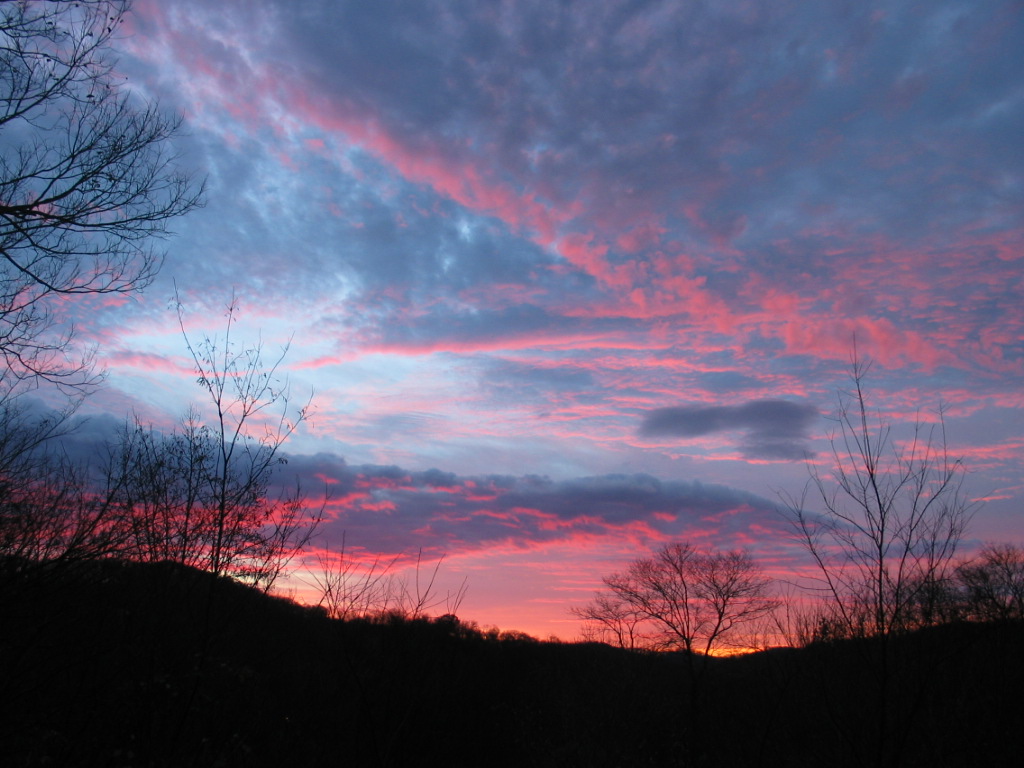
and the sun lit the  sky.

We rose as one with a smile.

Remembering

Any time a conditioned habit or emotional response gets the best of us, we’ve forgotten something important. We’ve forgotten this moment, right where we are. We’ve lost the true connection to our hearts, our breath, our bodies, the doorway into the dharma. To remember, we don’t need to get rid of the patterns or push away emotions, we just need to wake up to what’s happening in this moment. This is the starting point.

All conditioned habits feed on lack of awareness; they can only thrive when we’re not attentive and present. But how do we remember this moment when we’re swept away in the rapids of the mind? It’s a matter or practice. The more we bring our attention to this moment, how things truly are right now, the more readily we notice when we’re lost in our patterns. Even a moment of remembering can begin to undo what seemed an impossible tangle.  An open, aware heart and mind is the path and also the end of the path, the doorway into the great freedom of this moment.

December Refuge Ceremony and The Five Precepts

Last year One Dharma held a Refuge and Precepts Ceremony for dharma practitioners who wanted to formally take the vows and reflect their commitment to the Buddhist path. We will be offering this opportunity again in December. Generally, at least one year of Buddhist practice experience is recommended before taking the precepts, although there are exceptions. Here is some general information:

About the Refuge Ceremony
Taking refuge means relying wholeheartedly on the Three Jewels of the Buddha, Dharma and Sangha to inspire and guide us toward a constructive and beneficial direction in our lives. The real taking of refuge occurs deep in our hearts and isn’t dependent on doing or saying anything. Nevertheless, we may wish to participate in the refuge ceremony by requesting a dharma teacher  to formally give us refuge. The refuge ceremony is simple: we repeat the passages after the teacher and open our hearts to make a strong connection with the Three Jewels. The ceremony also “officially” makes us a Buddhist.

About Taking Precepts
Precepts are a joy, not a burden. They aren’t designed to keep us from having a good time and to make us feel deprived. The purpose of taking precepts is to give us internal strength so that we won’t act in ways that we don’t want to. Having understood that killing, stealing, selfishness and so forth only lead us to harm ourselves and others now and in the future, we’ll want to avoid these. Taking precepts give us energy and strength to do so. Therefore, it’s said that precepts are the ornaments of the wise.

To help people overcome their disturbing attitudes and stop committing harmful actions, the Buddha set out five precepts. During the refuge ceremony, in addition to taking refuge in the Three Jewels, we can take any or all of the five precepts, and become a lay Buddhist.

The five precepts

1. I observe the precept of abstaining from the destruction of life.

2. I observe the precept of abstaining from taking that which is not given.

3. I observe the precept of abstaining from sexual misconduct.

4. I observe the precept of abstaining from falsehood.

5. I observe the precept of abstaining from intoxicants that cloud the mind and cause carelessness.

The refrain “I observe the precept of abstaining from …” which begins every precept clearly shows that these are not commandments. They are, indeed, ethical codes of conduct that lay Buddhists willingly undertake out of clear understanding and conviction that they are good for both themselves and for society.

If you are interested or have questions, please contact ernst.lisa@gmail.com. For planning purposes, I’ll need to hear from you by November 8. If you’d like to see photos from last year, click on this link.

True Refuge Retreat, December 6 – 9, Nashville Tennessee

True Refuge Residential Retreat

Steady Mind, Open Heart

7 p.m. December 6 – Noon December 9

Note:  Early start option 7 p.m. December 5

Led by Lisa Ernst

  Please join us for a weekend of meditation at a beautiful, wooded retreat site near Nashville. True refuge is turning toward our experience and finding freedom in the way things are.  As winter approaches and daylight wanes, there is a natural tendency to slow down and turn inward. Yet, in the busyness of the holiday season we may forget that true refuge is right where we are. This silent retreat will focus on cultivating a quality of compassionate presence that embraces our experience with equanimity and insight. Through this practice we begin to pierce the illusion of separateness and taste the joy of interconnectedness to all things.

 
The retreat will be held at Bethany Hills Retreat Center, near Kingston Springs, TN. There are two start options: 7 p.m. Wednesday, December 5, or 7 p.m. Thursday, December 6. The retreat will end at noon on Sunday.  Retreat cost for December 6 – 9  is $175 if paid in full by November 5; after 11/5 the cost is $200.  If beginning December 5, the fee is $235 paid by 11/5. After, the cost is $260. The retreat fees include lodging and all meals. Full participation is required. There will be an opportunity at the retreat to make a dana offering (donation) to the teacher. Two sliding scale spots are available for those who need financial assistance. Please make your retreat payment to One Dharma Nashville and send to: One Dharma Nashville c/o 12 South Dharma Center, 2301 12th Avenue South, Suite 202, Nashville, TN 37204. Please include your email address.

Lisa Ernst is the founder and guiding teacher at One Dharma Nashville. She began meditation practice in the late ’80’s in the Zen Buddhist tradition, studying closely with two Rinzai Zen  Masters and attending numerous mediation retreats. Lisa has also studied and practiced in the Theravada tradition since the late 90’s. She has been teaching since 2005 and was given full dharma transmission from Trudy Goodman in 2010 in the lineage of the Thai Forest tradition of Ajahn Chah.

Dana: According to the Buddha, generosity, or sharing what we have, is one of the central pillars of a spiritual life. In the act of giving we develop our ability to let go, cultivate a spirit of caring, and acknowledge the inter-connectedness that we all share.

Please contact  onedharmaretreat@gmail.com for questions or to reserve your spot.

Rocks and Mind Ripples

What do you notice when you throw a rock into a lake? Most likely you see the ripples created on the surface. The rock is usually obscured by the water itself. The deeper the lake, the murkier the water it is, with nothing visible beyond those surface ripples. Our minds resemble the lake in this way: we usually only see the surface disruption when life throws us a rock. What happened? The rock is present, but obscured by the murkiness of our mind ripples. We miss the rock sinking into our hearts or even deeper into our guts.

This is where our practice serves us well. We need to bring our attention to where the rock has settled inside and let it rest there.  Take a few deep breaths and steady your mind. Gradually the ripples will begin to subside and not pull your attention away.  As you feel how the rock sits in you body, it may seem foreign and uncomfortable, like something you need to remove. But as you remain present, you will begin to see that, like the lake, you have the capacity to accommodate many rocks.  The heart/mind is vast and wide. Rocks won’t destroy you. Gradually they settle into the ground and become part of the terrain.  Like rocks at the bottom of a lake, they  strengthen the foundation of your very being.

A Day of Mindfulness Retreat in Nashville, Sunday October 21

We’re accepting a few last minute reservations for this Sunday’s retreat. Please join us for a day of sitting and walking meditation at the 12 South Dharma Center in Nashville. Hours are 9:30 a.m. – 3:30 p.m. We will cultivate insight and lovingkindness through awakening our minds and hearts to the present moment.

Led by meditation teacher Lisa Ernst, this silent retreat will focus on mindfulness meditation. We will practice bringing mindfulness to the breath and sensations in the body, cultivating awareness of the pleasant and unpleasant states that arise. Through this practice we gradually awaken the joy of meeting all that arises with compassion and friendliness.

This retreat is suitable for both beginning and experienced meditators; it will include sitting and walking meditation, practice instructions, and a dharma talk. Please bring a sack lunch. Refreshments will be provided at the end of the retreat.

Cost: $35, plus dana (donation) to the teacher. A deposit of $35 will reserve your space and can be paid through Paypal at this link (please use the first Donate button). If you don’t use Paypal, contact onedharmaretreat@gmail.com to make payment arrangements, or for any questions.

Why Do a Residential Meditation Retreat?

I’m often asked this question by newer meditation students still unsure of the value of taking that “next step,” from home and group sitting practice to devoting three or more days to meditation. Could there possibly be more to it than just sitting and walking over and over again? Each person who decides to take this step will answer that question in his or her own unique way. I can elaborate, however, on some common experiences.

What I hear repeatedly from people after their first residential retreat is how deeply they settled into their meditation periodically through the course of the weekend. Nearly all new retreatants experience some resistance at the beginning of a retreat because the activities seem so removed from everyday life. But once they make peace with the retreat rhythm and lack of external distractions, they find a way of settling in that allows for substantial deepening of concentration (Samadhi).

Through this Samadhi, the door to insight gradually opens. This is where each person’s experience is unique – the fruits of insight manifest in myriad ways. It may reveal the very nature of mind, an opening into emptiness.  Some people will awaken to the endless arising and passing away of phenomena with equanimity. Fresh insights into difficult life challenges are common as well. Some people experience a deep opening of the heart with occasional or extended periods of  stillness and joy. Usually these openings, however they manifest, are exactly what a person needs at the time  – the wisdom of the dharma truly reveals itself through this process. It often differs from the expectations a person brought into the retreat, but letting go of fixed agendas is key to the unfolding of genuine insight.

Returning home, many people feel lighter and less caught in reactive patterns for a while. Others may feel heightened sensitivity because their hearts have opened so fully. Its important to maintain compassion and awareness during this transition back into everyday activities. At some point the after retreat high inevitably wears off, but the mind and heart retain a new depth of insight that can be accessed through continued practice.  Most people experience a greater appreciation for the value of meditation and many make a stronger commitment to their practice.


Generosity

As I sit for meditation

I’m struck by the morning’s

complete generosity.

It gives all,

holding not a thing

back for itself.

It asks nothing of me

except to fall into its open arms

completely

like a lover’s warm embrace.

The birds sing this song

from my very heart

until the birds and I disappear

and nothing remains

except all that is here.

– Lisa Ernst

Gratitude

Incense close, sandalwood

Just outside insects sing a steady cadence

Dogs bark a few yards down

Cars whisper on a distant road

Each revealing its nature

Full and ephemeral

Like endless breath arising

and fading to nothingness

This moment, perfect moment

Gratitude

– Lisa Ernst

Contemplative Photography and Meditation Retreat Recap

On Saturday, September 22 I led a contemplative photography and meditation workshop at Mercy Convent and Retreat Center in northeast Nashville. It was the first of its kind in Nashville that I’m aware of, although I’m sure not the last. The idea, suggested by dharma friend Lila Wheeler, seemed intriguing to me, but initially unclear in execution.  Where would we do it? Who would be interested? And how would the day progress?

The first and most significant hurdle was finding an appropriate place. After researching several options that didn’t quite work I settled on Mercy Retreat Center, a convent for retired nuns in Northeast Nashville. They’re local but rural, and rent their facilities to groups for reasonable rates. I booked it sight unseen. Finally, after a few months of only imagining the place from the few photographs available, I went to see it.

As I arrived at the center, I wasn’t too impressed. The building was generic looking other than some stained glass windows and a long, covered entrance. The grounds were pleasant but lacking in drama. I wondered if I had made a mistake. How would the plain facility and grounds translate into a day of photography? I had brought my camera and spent about ten minutes photographing outside prior to my meeting. This exercise began to ease my concerns. The grounds held enough diversity to allow for interesting shots without being so dramatic and obviously beautiful as to render any effortless, mindless shots successful. The point of contemplative photography is to pay attention, to cultivate a receptive, intimate way of seeing that allows the shots to reveal themselves. Drama and obvious beauty aren’t the point. The more mindful the photographer is, the more he or she will perceive the surroundings with a clear and fresh perspective.  At times the conditioned mind melts away into the unconstrained intimacy of camera and surroundings. Often this practice yields remarkable photos, but that’s not the goal.

Our small group of 11 (two additional people had to drop out last minute) spent nearly two and a half hours in the morning immersed in contemplative photography. The day also included several rounds of meditation. In the afternoon we went out to shoot again for about an hour. Some people reported that they were more connected with the activity in the morning, while others found the afternoon shoot (even in bright sun) to be the most fruitful.

At the end of the day I gave everyone access to a Flickr account where we could all load our photos to create a slide show.  Over the past week I have truly enjoyed seeing the images as each person added his or hers. What amazes me the most is how people see the same things so differently, or simply see different things. Each individual’s contribution is unique.

I’m offering another contemplative photography and meditation retreat next fall, at a different location: Penuel Ridge If you’d like to see a slide show of the day’s photographs, go here.

Post Script: Thanks to Shelley Davis-Wise, we created and sold a beautiful calendar based on the photographs from our workshop. The first batch sold out and we had to get a second order in to fulfill demand!