Clear Mind and Open Awareness

“When your mind feels tight and constricted, you can make more space.” You’ve probably heard this before about meditation practice, but what specifically are we talking about here? The problem isn’t that there’s a lack of space, but the way our minds perceive space, which is related to our identity.

Most people think of the boundary of the body as a point of identity. That is, my thoughts, feelings, perceptions, heart, personality, all reside within my body. So the body is home and herein lies myself. This is who I am and where I exist. Everything I’m made of is inside is me, what’s outside is not me, or it may be related to me but still separate.

This boundary is useful and necessary living in the world. But it also has limitations when we only perceive ourselves through this narrow lens.

At times we may know that our hearts, our love, extend beyond the body. We may also feel compassion for the suffering of others and sense the boundary melting a bit. True lovingkindness and compassion function as a relative expression of emptiness or not-self. They are like a river that flows from a reservoir within our heart. But the reservoir doesn’t dry up – it has an infinite source because it isn’t limited to our body.

When we meditate we begin to see this perceived boundary of the body dissolve, we see that what we think of as “me” doesn’t have a distinct beginning and ending point. This is a liberating insight and is often an early aspect of understanding not-self. At times, we may feel less compelled to put so much energy into simply solving our own problems and “fixing myself.” This brings to mind Lenoard Cohen’s famous poem:

“Ring the bells that can still ring
Forget your perfect offering
There’s a crack in everything
That’s how the light gets in.”

If we only view difficult thoughts and emotions and as existing inside “me” there is often a feeling of tightness, a lack of space and confusion about what we should do. When the focus is mainly on myself, other conditions seem to disappear. Yet, as we sit, as our concentration deepens, the mental focus on self loosens up. The sensations of anger, sadness and fear are seen as conditions that arise and pass away and are not “myself,” even though we experience them in our bodies. As this happens, gradually, or perhaps quickly, a feeling of space opens.

When we understand that our minds are not simply in our physical bodies, our mental boundaries open and our awareness feels less constricted. From this perspective, our challenges and pain may still exist, but now the great sky of mind has room to include them all. We have access to our wise heart that sees conditions for what they are, without the limits of “inside and outside,” and our path becomes clearer.

“If you attain your true self, then if you die in one hour, in one day, or in one month, it is no problem. If you only do “fixing-your-body” meditation, you will mostly be concerned with your body. But some day, when it’s time for your body to die, this meditation will not help, so you will not believe in it. This means it is not correct meditation. If you do correct meditation, being sick sometimes is OK; suffering sometimes is OK; dying someday is OK. The Buddha said, “If you keep a clear mind moment to moment, then you will get happiness everywhere.” ― Zen Master Seung Sahn

To open your awareness to this clear mind, try my guided “Mind Like Sky” meditation here.
Dharma Talk: The Flood and The Heart Tree

In this talk I share my experiences from the Nashville flood of 2010, how it devastated Radnor Lake and how the lake recovered. From a larger perspective, I explore the question of how we proceed when a tree falls into our path, or when the path is flooded beyond recognition. Can we discover a new way even as we mourn what is lost?

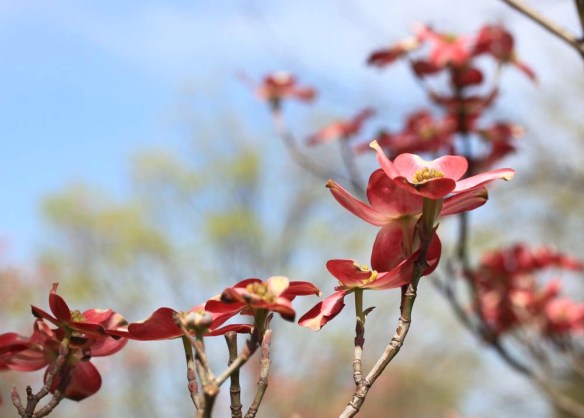
Spring Flowers

dogwoodsinarow

Spring flowers, the autumn moon;

Summer breezes, winter snow.

If useless things do not clutter your mind,

You have the best season of your life.

-Wu Men


Spring Renewal Residential Meditation Retreat

Stability and Clarity
Thursday Evening, April 21 – Noon, April 24, 2016
Optional extended retreat through noon April 26
Bethany Hills Retreat Center, Kingston Springs, TN
Led by Lisa Ernst

frankieretreat414

 This retreat is full but you are welcome to put your name on the waitlist by emailing onedharmaretreat@gmail.com.

Please join us at a beautiful, wooded retreat site just outside of Nashville for this three or five night retreat. Cultivating clear awareness of our present moment experience reveals insights into the nature of suffering and liberation. We see that everything that arises is not my “self” but a display of impermanent conditions. When the mind sees life through this clarity and is unclouded by confusion, we create the foundation for well-being, joy and equanimity.

Led by meditation teacher Lisa Ernst, this silent retreat is suitable for newer as well as experienced students. It will include periods of sitting and walking meditation, instructions, dharma talks and private meetings with the teacher. Retreat fee includes lodging and all meals.

The 3 night retreat is $220 if paid in full by March 23; after $245. If you wish the stay through the 26th, the retreat fee is $365 if paid by March 23; $395 after. A $75 deposit will reserve your spot. Please indicate if you will be attending the three or five night option. There will be a separate opportunity at the retreat to make a dana (generosity) offering to the teacher. A reduced fee spot is available in the case of financial need. Please inquire for details.

Lisa Ernst is a Buddhist Meditation teacher in the Thai Forest lineage of Ajahn Chah, Jack Kornfield and Trudy Goodman. She is the founder of One Dharma Nashville. In her teaching, Lisa emphasizes both transformational insight and everyday awakening as an invitation to embrace all of the path’s possibilities. She leads classes, workshops and meditation retreats nationally.

Payments can be made through Paypal here or mailed to One Dharma Nashville, c/o 12 South Dharma Center, 2301 12th Ave. S. Nashville, TN 37204. Be sure to include your email address. For questions, email onedharmaretreat@gmail.com

Why Retreats are Important to Me

by Frankie Fachilla

After completing my seventh One Dharma retreat in December, I have reflected quite a lot on the importance of retreats in my life. The retreats have varied in length from three days (4 of them), to five days (two of them), and one seven day. Every retreat is a gift to my own ability to cultivate peace of mind as I navigate the waves of my life. They are a training ground for this delicate and, often, nebulous task of being present with my own heart. Retreats allow me the time, space, and safety to make this journey to the core of things and stay there outside of the usual patterns of avoidance and distraction that sweep me along in my normal life routines. The more retreats I do, the more I think of them as essential for my mental well being and ability to live a fulfilling life.

Still, retreating from life is challenging as I disengage from my family, my work, my email, my phone. The process of letting go of all of this, even for a few days, feels to me like prying a young child’s grasping arms from her parents’ neck as she tearfully screams in protest at being dropped off for the first day of kindergarten. Once she’s in her classroom, though, she quickly begins making friends and learning about the beauties of this other existence… A world away from her usual comforts and routines but safe and secure under the watchful gaze of her teacher, with her basic needs provided for and more. So it is at retreat: I learn to sit and watch the anxiety come and go as I wonder what emails I might be getting that need attention. I watch the loneliness dance with me as I miss hearing my husband’s voice or hugging my cats. Then, I get to see what’s on the other side of those feelings, instead of merely feeling bound by a constant struggle to avoid emotions that are inevitable. Returning to life, I have a new confidence that I can touch what’s underneath the waves of pain and fear and “come home” wherever I am.

I already feel so fortunate to have a trusted dharma teacher live close by and offer retreats at an accessible location, and I feel even more fortunate that these retreats are sometimes offered for an extended amount of time. I find that, after the first day of a retreat, things get very interesting as my patterns take a backseat to noticing what is present within me. The more time I have at a retreat, the more I get to discover. Since the biggest challenge of retreat is always the initial disconnection itself (figuring out who will take my stepson to school, deferring tasks at work until I return, the anxiety of having no contact with my husband, etc), it seems like the opportunity to stay longer at a retreat offers much more gain for very little additional sacrifice. Once we’re there, why not stay for longer to get even more benefit and even more practice doing what is so hard to do in the thick of our lives? Why not give ourselves the gift of an additional day or two to connect more strongly with our heart-center, our core, the true nature of things? It reminds me of the choice to exercise or go to the gym: the hardest part is always getting started, but once those endorphins start flowing, we often don’t want to stop. I hope that others will choose to give themselves this additional practice time at our upcoming Spring retreat!

Frankie Fachilla has been practicing with One Dharma for 10 + years. She is a licensed professional counselor in the mental health field.

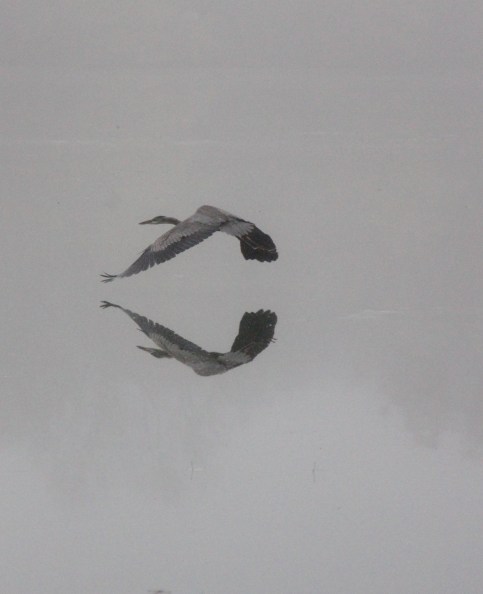
A Heron’s Cry

IMG_0657

Lightning:
Heron’s cry
Stabs the darkness

– Basho

Avoiding the Dangers of Isolated Samadhi

“What the hell is isolated samadhi?” you may ask. Currently we’re in a mindfulness meditation boom and samadhi is not emphasized as often in this practice. With mindfulness practice, we’re focusing on objects, such as breath, body, emotions and thoughts. We watch them arise and pass away, doing our best to see their impermanence moment to moment. This is a wonderful practice and helps us become more familiar with our minds, our habitual patterns and how we function in the relative world.

Samadhi is a state of meditative absorption where we access deep insights into the mind and heart and the nature of interconnection. In samadhi, our minds are calm, our meditation is effortless and often includes feelings of bliss, joy and equanimity. It has great appeal but I find many practitioners of mindfulness don’t reach this state often. Their concentration isn’t developed enough or the focus remains subject/object oriented. In samadhi, the subject/object separation disappears. That is, “self and other” cease to exist as a fixed experience. A strong mindfulness practice can lead to samadhi. But it takes commitment and adequate time devoted to meditation.

I began my practice in the Zen tradition, where samadhi was emphasized. Through rigorous practice, I quickly reached deep states of meditative absorption. I found it invaluable in helping me with intractable depression and grief; I was able to see thoughts and emotions as empty of any abiding reality. I found the courage to experience the grief and depression directly, which allowed them to finally pass through to their end.

But I also became aware that many accomplished teachers seemed lost outside of the meditation hall. They spoke eloquently of emptiness and seemed to have deep dharma insights. But their “everyday” behavior was puzzling and in some cases, inexcusable. Whatever clarity they gained through samadhi was lost as soon as they entered the everyday world. It was as if a barrier had been erected between the two, and no amount of practice penetrated the clouded mind of craving and addiction. I was on the receiving end of this craving with two Zen teachers and it shattered my trust in the path. I didn’t understand how such seemingly awakened men could be so blind in other parts of their lives.

I started to realize they had not developed their capacity to be mindful in daily life in a way that would bridge their insights and samadhi from the cushion. I knew I didn’t want to follow that route, so I took up Vipassana mindfulness as a counterbalance to samadhi practice. I had to let go of my pride of accomplishment on the path and approach this practice as a beginner. With its emphasis on ethics and compassion, and de-emphasis’ on holding teachers up as gurus, Vipassana helped me find a way back to the practice and to the dharma. This doesn’t mean I think one practice is better than the other. Both have merit and both need to be approached in a balanced way.

Many newcomers do best when they begin with mindfulness. But at some point they may need more. Mindfulness and meditative absorption are both important practices. I would not abandon one for the other, nor emphasize one over the other for the mature and committed practitioner. They are not mutually exclusive. Just enter the way with a good dose of compassion and find the path to your heart. All practices are like a finger pointing to the moon, as one saying goes. We don’t want to mistake the finger for the moon, and become attached to any one practice. Knowing when to let go is as important as skillfully developing these practices. When I let go of samadhi, I didn’t lose it, but gained another doorway into compassion and insight, especially in my everyday life.

No-Self and Freedom From Bondage

This dharma talk focuses on how releasing self identity can open the door to forgiveness and free us from bondage to our past.

It is Present Everywhere

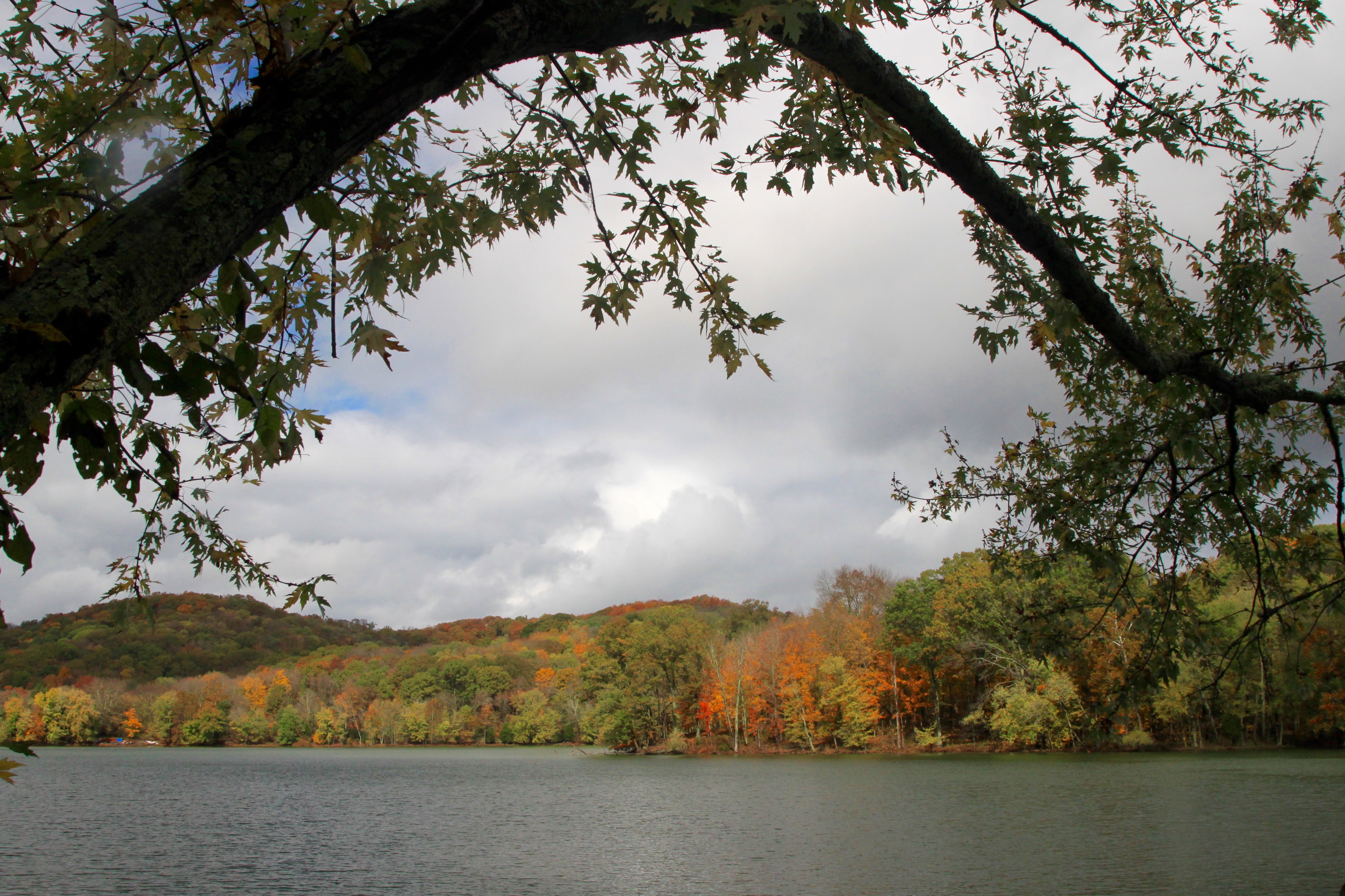
Archtreefall

“It is present everywhere.
There is nothing it does not contain.
However only those who have previously
planted wisdom seeds will be able
to continuously see it.”

– Dogen

Kindness and Compassion Half Day Meditation Retreat

Saturday, November 14, 2015, 9:00 a.m. – Noon
Nashville Friends House
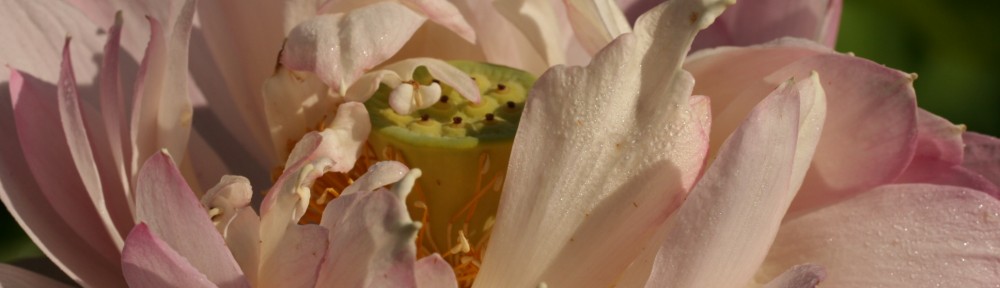
shylotuscrop3

During the busyness and outward focus that often the lead into the holidays, this daylong retreat will offer a quiet time to slow down, connect with our bodies and extend kindness and compassion to ourselves and others. Slowly, in the simplicity and silence of the morning, we will learn to let go of distractions and touch our experience with a kind and open heart.

Led by meditation teacher Lisa Ernst, this retreat is suitable for newer and more experienced meditators. It will include periods of sitting and walking meditation, practice instructions and dharma talk.

Retreat fee is $40. A reduced fee spot is available in the case of financial need, please inquire to the email below. Paypal is here. Instructions for paying by check are at this link. Please include your email address. For questions, email onedharmaretreat@gmail.com.