The Joy of Mindful Photography

I originally posted this article last July and decided to re-post it now as I have another photography and meditation workshop coming up on October 5 at Penuel Ridge Retreat Center. If you’re in the Middle Tennessee area, I hope you can join me. Info is here.

As a visual artist, painting was my primary form of expression for many years. It still plays a large role in my creative retinue, but over the last several years I have discovered and fallen in love with mindful photography. This type of shooting, also known as contemplative photography,  is accessible to anyone who cultivates mindfulness in their lives – no special equipment or technical skills are needed.

Many people think of photography as an activity that creates separation from present moment experience because the photographer is always seeking that perfect shot.  From this perspective, the great shot is always in another moment, something to strive and search for. But every good photographer knows the value of training the mind to be completely present and aware in each moment, where great shots often reveal themselves, no seeking required.

When I use my camera in a receptive and open state, my shots reflect how the moment presents itself in its myriad, ever changing forms. I’ve found that this approach yields unexpected results that often differ from conventional shots. Advanced camera equipment isn’t important; being present and open is.  A simple, yet profound joy arises as my sense of “I’” as the photographer dissolves into the alliance of mind and heart, camera and surroundings. When the shoot is complete, I am always deeply relaxed and refreshed.

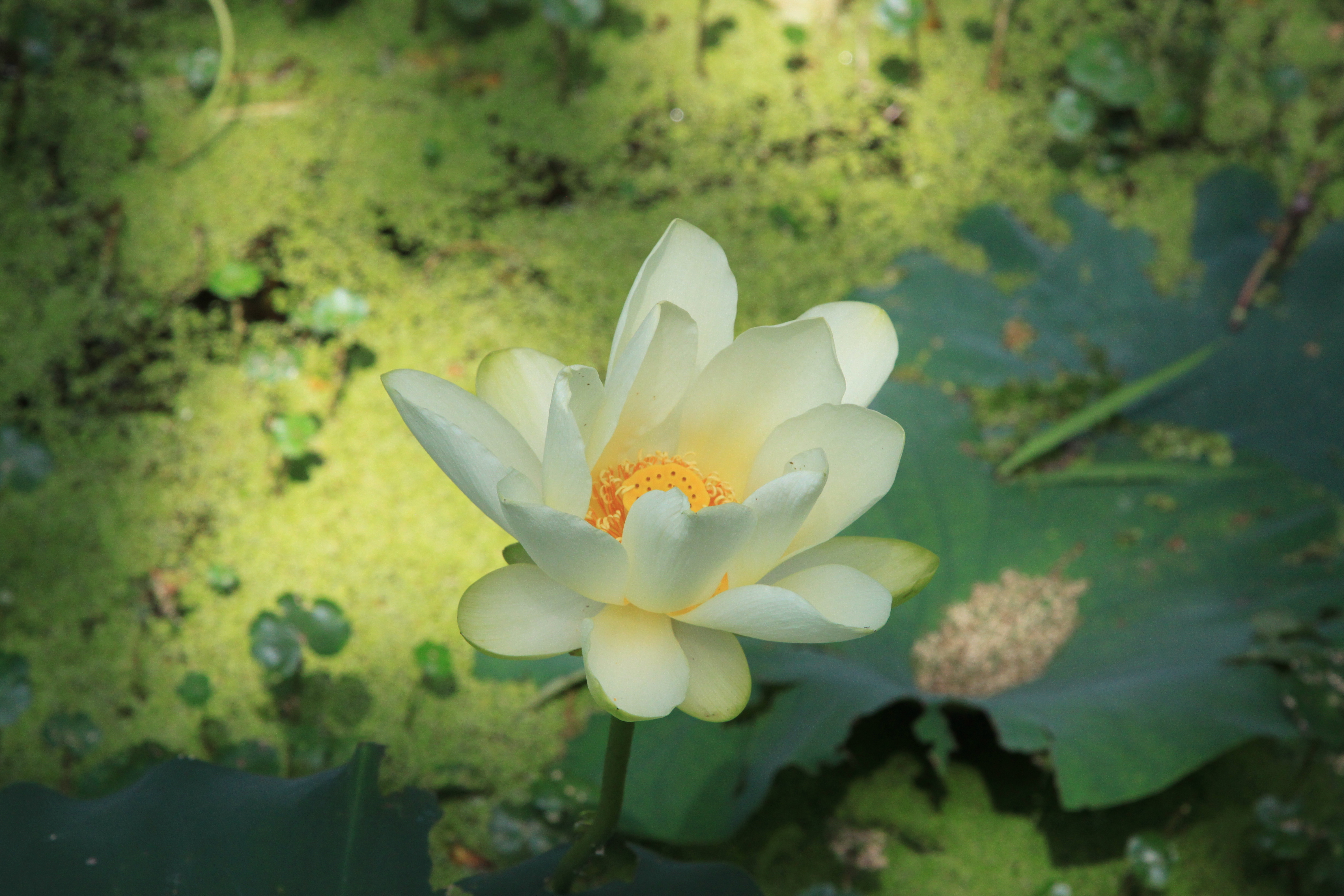
One of my favorite places for contemplative photography is Reelfoot Lake, in West Tennessee. In mid to late summer the lake is covered, even clogged, with huge yellow lotus flowers. Often the park rangers have to thin the plants out a bit. The endless vista of lotus flowers across the lake is truly an amazing sight. Locally my favorite place is Radnor Lake, just a block from my home. I can go any time of year and enjoy the ever changing weather conditions and seasonal transitions. To me, they are all beautiful although I have a special affinity for foggy mornings and icy winter afternoons.

Although I use my photographs as the basis for many of my paintings, I do most shoots simply to experience the joy of the moment, immersed in my surroundings with a camera. Occasionally  an image stands out that I want to paint, such as this one, “Lotus Lake” from a shoot at Reelfoot Lake a few years ago:
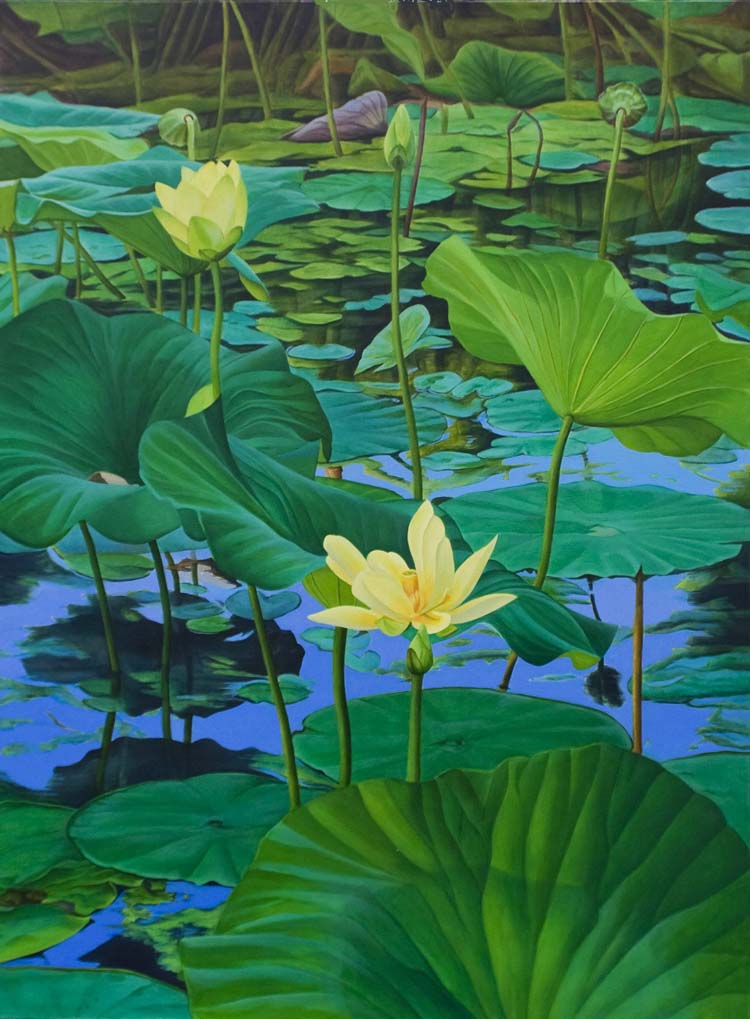
Lotus Lake, Acrylic on Canvas, 48″ x 36,” private collection

If you’ve never experienced mindful photography before, I hope you’ll give it a try. All you need is a camera and an hour or two to shoot.  In September I plan on offering a meditation workshop where we will practice the art of mindful photography in a rural setting. The day will include meditation, photography and group interaction. No special photography skills are needed; any camera will do. I’ll post more details soon.

Reelfoot Lake at Dusk
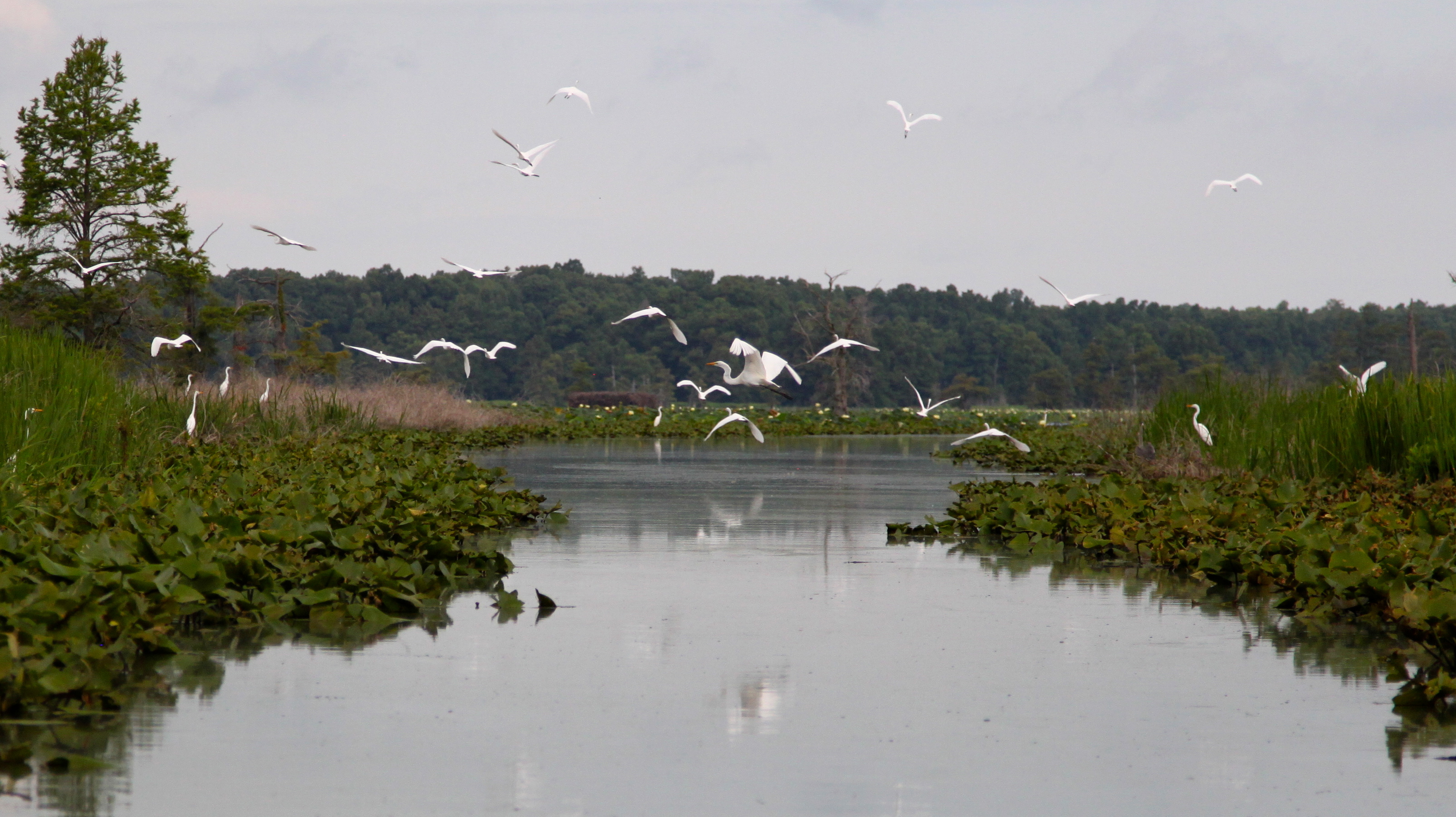
Reelfoot Lake at Dusk

Dying to This Moment

In dying to this moment,

We lose ourselves,

but gain everything.

And as Rumi eloquently puts it:

When you lose all sense of self the bonds of a thousand chains will vanish.

A Flock of Egrets - photography by Lisa Ernst

A Flock of Egrets
– photography by Lisa Ernst


Stay

Incense still lit

 sweet jasmine

invites me to stay.

My body had left

but my heart can’t stray.

Back on the cushion yet

obscured in the clouds

sadness like

 softly falling

 drops of  rain.

So steady and clear

thunder far away

stillness so deep

soon nothing  remains.

As the incense burns out

a smile lights my face.

– Lisa Ernst

Oregon Rain photography by Lisa Ernst

Oregon Rain
photography by Lisa Ernst

The Moon at The Window

Ryokan, a Zen master, lived the simplest kind of life in a little hut at the foot of a mountain. One evening a thief visited the hut only to discover there was nothing to steal.
Ryokan returned and caught him. “You have come a long way to visit me,” he told the prowler, “and you should not return empty-handed. Please take my clothes as a gift.”

The thief was bewildered. He took the clothes and slunk away.

Ryoken sat naked, watching the moon. “Poor fellow,” he mused, “I wish I could have given him this beautiful moon.”

He wrote this haiku:

 The Thief

left it behind –

The moon at the window                                                   

Moon on Lake photograhy by Lisa Ernst

Moon on Lake
photograhy by Lisa Ernst


The Lotus

First blooming in the Western Paradise,
The lotus has delighted us for ages.
Its white petals are covered with dew,
its jade green leaves spread out over the pond,
And its pure fragrance perfumes the wind.
Cool and majestic, it raises from the murky water.
The sun sets behind the mountains
But I remain in the darkness, too captivated to leave.

– Ryokan

Lotus at Reelfoot Lake photography by Lisa Ernst

Lotus at Reelfoot Lake
photography by Lisa Ernst

The Firefly

At twilight I caught

a flash of yellow light

The firefly blinked and vanished

Alert, I watched for more

But only one

brought the dusk

alive with its light

Memories from childhood

when evening hills glimmered

 with countless fireflies

Pure magic

Now few, they share a fate

with bees and frogs and birds

So sad that single

lonely light

brought a tear

as I settled into dusk.

Dusk at Reelfoot Lake photography by Lisa Ernst

Dusk at Reelfoot Lake
photography by Lisa Ernst

How To Meditate and Yoga Workshop in Huntsville

For those of you convenient to Huntsville, or anyone who wants to learn how to combine yoga and meditation, please join us on August 24.

with Meditation Teacher Lisa Ernst from One Dharma Nashville
and Suzanne Newton, asana & pranayama instruction
Saturday, August 24th
Early Bird Registration Discount due by August 17
Morning Session 9 – 12noon 
Yoga Postures & Breathing Practices for Seated Meditation with Suzanne & Lisa
Mixed Levels Class, beginners welcome

Afternoon Session 1 – 4PM  
Sitting and Walking Meditation Instruction with Lisa
Q & A session included
Mixed Levels Class, beginners welcome

Yoga Center of Huntsville
500 East Pratt Avenue

Register with Suzanne Newton via email : suzanne.m.newton@gmail.com
Pre-payment by check or cash is due by 8/17/13  (sent to Suzanne)

Morning Class Fee : $40
Afternoon Class Fee : $50
Both Classes Fee : $75, pre-registered or $90 ‘drop in’ if space is available

Balancing the Three Legs of Practice

I often think of dharma practice like a tripod, with three legs that create balance. On one leg there‘s meditation, including daily practice and retreats; on another is mindfulness in daily life; the third is sangha practice.

Let’s start with meditation. For many, establishing a consistent daily meditation practice is quite challenging. It requires making a commitment to carving out time to disengage from the ingrained distractions and patterns that inevitably arise in daily life.  Often when people say they don’t have time to meditate, it’s really that they aren’t making the time, which may otherwise be used to watch television or engage in online and other activities.  Meditation requires that we face ourselves, including all of our imperfections, leaving nothing out. Sometimes our sitting may be lovely and restful, even transcendent, at other times challenging and wobbly. But the key to a consistent practice is the willingness to receive all that arises in our awareness with an open and compassionate heart. This isn’t always easy, but its how the fruits of practice begin to ripen and transform our lives.

For the committed practitioner, meditation retreats are not a luxury but a vital part of deepening the practice. Concentrated time spent away from daily distractions helps us access parts of our minds and hearts that are otherwise out of reach; retreats help us contact our deepest evaded realities. If your life situation prevents you from traveling afar or carving out chunks of time for retreats, take advantage of daylong retreats as often as you can and shorter residential retreats that only last a weekend.

Practicing mindfulness in daily life is also vital to waking up. Some traditions emphasize sitting meditation and forget to focus on “off the cushion” practice. This creates an imbalance in the tripod; it can set up a firewall from everyday life. For our practice to deepen, we need to align what we learn in our seated practice with our daily lives. One of the best ways to bring mindfulness into daily life is practicing mindfulness of the body. This is a deceptively simple yet deep practice: Buddha said that mindfulness of the body leads to enlightenment. We’re so often caught up in our busyness, our activities and thoughts that we lose our connection with this moment. Our bodies are always right here, ready and available to serve as an anchor for our present moment awareness. Bringing mindfulness to your body is an uncomplicated yet powerful practice you can do throughout the day to root your awareness in this moment and disengage from reactive patterns and habitual thoughts.  You can still plan, think and carry out your activities, but you can do it all from a foundation more firmly grounded in presence and awareness.

Sangha comprises the third leg of the tripod. Sangha helps us create a stable support in our lives as we derive strength in our practice through sharing it with others. There is a notable, almost mysterious vibrancy that arises from meditating in a group setting. The collective energy of our concentration bolsters the individual and group simultaneously, allowing us to go deeper into our practice than if we only do it alone. Sangha practice also provides ample opportunities to practice generosity by contributing what we can to support the community of practitioners. We begin to break through the illusion of separation and realize that our practice isn’t only for ourselves, but for all beings. We also have an opportunity to view our habits, biases and aversions in the context of a group. The renowned Korean Zen teacher Seung Sahn likened sangha practice to cooking a pot of potatoes. He said that you could wash potatoes one by one or you could put numerous potatoes in a pot and stir them all together: they all rub up against each other, each getting clean in the process and rounding out the rough spots.

When our dharma practice is balanced it includes all three legs of this tripod. If we only focus on only one or two, we expend energy trying to maintain balance without a stable foundation. With our tripod in balance, however, we create the conditions for our practice to fully ripen and transform our lives, just as the Buddha taught.

The Practice of Meditation

The practice of meditation is the study of what is going on. What is going on is very important.
– Thich Naht Hanh

Still Lake with Clouds Photography by Lisa Ernst

Still Lake with Clouds
Photography by Lisa Ernst


The Whole World Will Shine

The monkey is reaching
For the moon in the water.
Until death overtakes him
He’ll never give up.
If he’d let go the branch and
Disappear in the deep pool,
The whole world would shine
With dazzling pureness.
Hakuin

Yellow Leaf  Photography by Lisa Ernst

Yellow Leaf
Photography by Lisa Ernst