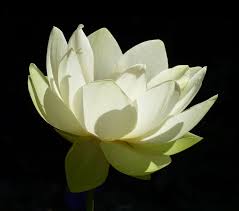
2015 Mindful Photograhy Calendars Now Available

These calendars were created with photos from our 2014 October Contemplative Photography Retreat. Created once again this year by Shelley Davis-Wise, each photo includes a dharma quote or poem. The calendars are for sale during our regular hours and are $20 each. They are a fund raiser for One Dharma. Here is a sample image:

Calendar

To reserve your calendar(s) or arrange for pickup, email onedharmainfo@gmail.com

December Refuge and Precepts Ceremony

Once again this year, One Dharma will offer a Refuge and Precepts Ceremony  for committed practitioners. If you’re interested, here is some general information:

About the Refuge Ceremony
Taking refuge means relying wholeheartedly on the Three Jewels of the Buddha, Dharma and Sangha to inspire and guide us toward a constructive and beneficial direction in our lives. The real taking of refuge occurs deep in our hearts and isn’t dependent on doing or saying anything. Nevertheless, we may wish to participate in the refuge ceremony by requesting a dharma teacher to formally give us refuge. The refuge ceremony is simple: we repeat the passages after the teacher and open our hearts to make a strong connection with the Three Jewels.

About Taking Precepts
Precepts are a joy, not a burden. They aren’t designed to keep us from having a good time and to make us feel deprived. The purpose of taking precepts is to give us internal strength so that we won’t act in ways that we don’t want to. Having understood that killing, stealing, selfishness and so forth only lead us to harm ourselves and others now and in the future, we’ll want to avoid these. Taking precepts give us energy and strength to do so. Therefore, it’s said that precepts are the ornaments of the wise.

To help people overcome their disturbing attitudes and stop committing harmful actions, the Buddha set out five precepts. During the refuge ceremony, in addition to taking refuge in the Three Jewels, we can take any or all of the five precepts, and become a lay Buddhist.

The five precepts

1. I observe the precept of abstaining from the destruction of life.

2. I observe the precept of abstaining from taking that which is not given.

3. I observe the precept of abstaining from sexual misconduct.

4. I observe the precept of abstaining from falsehood.

5. I observe the precept of abstaining from intoxicants that cloud the mind and cause carelessness.

The refrain “I observe the precept of abstaining from …” which begins every precept clearly shows that these are not commandments. They are instead codes of conduct that lay Buddhists undertake out of clear understanding and conviction that they are good for both themselves and for society.

If you are interested or have questions, please contact ernst.lisa@gmail.com no later than November 17.

Fall Seeds

IMG_7428

The withered flowers

drop their seeds

like tears.

– Basho

Kindness and Compassion Daylong Retreat

Saturday, December 6, 2014, 9:30 a.m. – 3:30 p.m.
Nashville Friends House
sunrisemaryhelen

During the busyness and outward focus that often accompany the holidays, this daylong retreat will offer a quiet time to slow down, connect with our bodies and extend kindness and compassion to ourselves and others. Slowly, in the simplicity and silence of the day, we will learn to let go of distractions and touch our experience with a kind and open heart.

Led by meditation teacher Lisa Ernst, this silent retreat is suitable for newer and more experienced meditators. It will include periods of sitting and walking meditation, practice instructions and dharma talk.

Retreat fee is $50. A reduced fee spot is available, please inquire to the email below. Paypal is here. If paying by check, make it out to One Dharma Nashville. There will be a separate opportunity at the retreat to make a dana offering (donation) to the teacher.
For questions, contact onedharmaretreat@gmail.com.

When You’re Ready for a Week Long Retreat: Answering Your Heart’s Calling and Overcoming Resistance

When a meditator makes a commitment to sit their first 7 day (or longer) retreat, it’s a big step and often requires a leap of faith.  Leaving behind family, work and personal obligations for a week or more may feel daunting.  At a deeper level, spending a full week in silence with few distractions may feel even more challenging.  Yet, for those of us who make this commitment, we are answering our heart’s calling to touch the moment so intimately that we have no choice but to receive its full embrace.

Once we’ve committed and the time draws closer, some of us may begin to feel anxious and vulnerable. This is normal and in fact is a good sign because it means our hearts and minds are approaching the spacious, unarmored realm where we fully encounter the dharma . However, this vulnerable feeling is often misinterpreted and may lead people to seek out reasons to avoid the retreat. I’ve experienced this myself. Fortunately, I know this pattern well enough that I don’t let it stop me.

Occasionally practitioners aren’t aware of this process. They may start feeling anxious about leaving loved ones behind for a full week or worry about work and personal obligations. A good question to ask: Why does it feel more difficult to be away for a week long retreat than spending the same amount of time on vacation? Of course, sometimes legitimate situations occur that may prevent a person from attending a retreat. Discerning our true priorities is important.  One year, only a week before a 10 day Vipassana retreat, my spouse had a serious health issue arise that required surgery and recovery time. I had to cancel the retreat, no question. But more commonly, I’ve had to resist the urge to avoid a retreat by looking more clearly at my thoughts, emotions and priorities.

Early in my marriage, for instance, I felt anxious about leaving my husband for a full week.  Various scenarios played out in my mind and I was caught in the grip of fear. Yet, as I mindfully examined the anxiety, I realized I was simply creating stories and scenarios that were unlikely to happen. I moved through the fear and went ahead with the retreat. Attending that retreat not only empowered me, but it was equally beneficial to my husband. Taking care of myself this way actually strengthened the foundation of my marriage.  The same once happened with work situation. I was afraid I would miss an art commission deadline if I was away for a week and wondered if I should back out. But as I carefully studied my calendar I realized that with wise time management I could accommodate both the retreat and the commission. I had no problem making my deadline and my client was quite pleased with the finished piece.

I can say that over the last 20 years in which I’ve participated in numerous 7 day and longer retreats, I have not regretted a single one.  Long retreats have been, and still are, one of the greatest spiritual gifts I give to myself, and those gifts extend to everyone in my life.

Once we answer our heart’s calling, we soon discover that retreats aren’t only for ourselves.

Fall 7 Day Meditation Retreat near Nashville

Sunday Evening, November 9 – Sunday Noon, November 16, 2014
Bethany Hills Retreat Center, Kingston Springs, TN
Led by Lisa Ernst
Early Deposit deadline: July 22
Lisaprofilepicsm2
Please join us for a rare opportunity to participate in a seven day meditation retreat in Middle Tennessee. Week long retreats offer a sustained opportunity to unplug and move deeply into the silence of heart and mind, where we access insight and compassion. We also enrich and revitalize our daily lives through this gift of extended retreat.

We’re currently seeking a commitment from a core group of practitioners to move forward. If you would like to support and participate in this retreat, we’ll need a $75 deposit by July 22. This retreat will be offered on a sliding scale basis from $425 – $550, which includes lodging and all meals. Teacher compensation (dana) is separate.

Lisa Ernst is a Buddhist Meditation teacher, artist and founder of One Dharma Nashville. In her teaching, Lisa emphasizes both transformational insight and everyday awakening as an invitation to embrace all of the path’s possibilities. She regularly leads classes, daylong and residential meditation retreats.

Deposits can be made through Paypal here or mailed to One Dharma Nashville, c/o 12 South Dharma Center, 2301 12th Ave. S. Nashville, TN 37204. Be sure to include your email address.
For questions email onedharmaretreat@gmail.com.

Instructions on Working with Questions in Your Practice and A Guided Meditation

“Be patient toward all that is unsolved in your heart and try to love the questions themselves. Do not now seek the answers, which cannot be given you because you would not be able to live them. And the point is to live everything. Live the questions.” – Rainer Maria Rilke

Unanswered questions, intractable situations often appear to stand in the way of living from our deepest intentions. At times we might feel blocked even from knowing what our true priorities are. But if we take time to turn inward with a spirit of patience and inquiry, instead of requiring the dilemmas to go away, or insisting on immediate resolutions, we can discover the resources we need. Internal dilemmas contain a rich source of insight; learning to live with them brings about a radical shift that opens the door to clarity and equanimity.

Working with unresolved questions in your meditation practice is an intentional focus, like metta, which is different from basic breath and body awareness. We are directing our attention to something more specific, in this case, deep questions in our lives. We are creating an intention to bring the question into our hearts with a quality of openness and interest, but not with an intent to analyze or resolve.

Your question may be about some aspect of your life that doesn’t make sense: loneliness, career or finances, a difficult relationship, perhaps old conditioning that keeps reappearing unexpectedly no matter what you do. It may be about health or chronic pain, the loss of a loved one or maybe deep spiritual question about life and death. Most of us are intimately familiar with our themes, the questions that we just can’t resolve.

In exploring your questions this way, they can transform into a life force. Living your deepest questions is living your life fully; loving your questions is loving even those parts of your life and those parts of yourself that you may have shut out.

This is where the radical shift can occur. Often unresolved questions represent parts of our lives that we resist. Trying to figure them out and resolve them takes us away from this moment, where the question can come alive. This is the portal to wisdom and insight. It only opens when we can move out of the realm of the intellect and our normal attempts to solve the question. Living our questions brings us fully into this moment.

Guided Meditation

Give yourself about 20 – 30 minutes to do this practice fully.

Find a comfortable place to sit. Take a few deep breaths and settle into this moment. Now take a few minutes to find your question and bring it into your heart

As you find it, just open up to it as a living thing

Keep sitting with whatever arises and let go of any thinking or stories until you become aware of your body

Notice what you feel

As the question settles into your body you may feel sadness or grief, despair, anger, fear, love or compassion. Don’t attach to the name or the explanation. Just feel it. You may even feel neutral. If it’s neutral or blank, just be with the experience of that. Chances are it will change of its own accord as you stay present. It may also appear as energy. This can happen when we move the question out of the realm of thought and into our hearts.

If you feel overwhelmed and quickly engage in busy or intensive thought, the question may be too charged. Pull back and focus on the breath or another object of attention until you feel more settled. Then return to your question as you feel ready.

There is a lot of life and energy in our deep questions once we open our hearts and minds to them.

Once your question settles into your being, just let it rest there and don’t try to direct or see the outcome. This is where your mindfulness practice will serve you, in this spaciousness of mind and heart that we can’t always so easily access in our day to day activities.

If you feel something arising allow it to flow and move. Sadness grief, energy, even joy, whatever it might be, just be open to it welcome it and let it be in your heart. If you need to cry that is ok too.

What we’re learning to do is hold the question in the realm of not knowing, the realm of mystery. With patience, we let go of trying to resolve anything. Slowly, we learn to respond from an unbiased heart, our inherent wisdom.

You can listen to my dharma talk on working with questions here.

For my Buddhist Geeks podcast on working with questions, click here.
Buddhist Geeks Podcast — Working With Questions in Your Practice

I was interviewed recently by Vincent Horn, founder of Buddhist Geeks, and we talked about how to work with questions in your practice. Unanswered questions, intractable situations often appear to stand in the way of living from our deepest intentions. We might feel blocked even from knowing what our true priorities are. But if we take time to turn inward with a spirit of patience and inquiry, instead of requiring the dilemmas to go away, or insisting on immediate resolutions, we can discover the resources that we need.  Internal dilemmas contain a rich source of insight; learning to live with them brings about a radical shift that opens the door to clarity and equanimity.

You can click on the image below to access the podcast. I hope you enjoy it!

LisaErnst_Overlay copy

Daylong Meditation Retreat

Taking Refuge in This Moment

Saturday, March 15, 9:30 a.m. – 4:00 p.m.

Led by Lisa Ernst

bf9a3-lotusblossomPlease join us for a day of sitting and walking meditation at a beautiful, wooded site in rural West Nashville. True refuge is turning toward our experience and finding freedom in the way things are. This silent retreat will focus on cultivating a quality of compassionate presence that embraces our experience with kindness and insight.

Led by meditation teacher Lisa Ernst, the retreat is suitable for both beginning and experienced meditators; it will include sitting and walking meditation, practice instructions, and a dharma talk.

Cost: $50, plus dana (donation) to the teacher. A deposit of $50 will reserve your space and is due by Friday, March 7. Paypal is available here. If paying by check, please make it out to One Dharma Nashville and send to: 12South Dharma Center c/o One Dharma Nashville, 2301 12th Ave. South, Suite 202, Nashville, TN 37204. Please include your email address. Directions and additional information will be emailed prior to the retreat.

For questions, email onedharmaretreat@gmail.com

December Refuge and Five Precepts Ceremony

Once again this year, One Dharma will a Refuge and Precepts Ceremony each December for committed practitioners. If you’re interested, here is some general information:

About the Refuge Ceremony
Taking refuge means relying wholeheartedly on the Three Jewels of the Buddha, Dharma and Sangha to inspire and guide us toward a constructive and beneficial direction in our lives. The real taking of refuge occurs deep in our hearts and isn’t dependent on doing or saying anything. Nevertheless, we may wish to participate in the refuge ceremony by requesting a dharma teacher  to formally give us refuge. The refuge ceremony is simple: we repeat the passages after the teacher and open our hearts to make a strong connection with the Three Jewels. The ceremony also “officially” makes us a Buddhist.

About Taking Precepts
Precepts are a joy, not a burden. They aren’t designed to keep us from having a good time and to make us feel deprived. The purpose of taking precepts is to give us internal strength so that we won’t act in ways that we don’t want to. Having understood that killing, stealing, selfishness and so forth only lead us to harm ourselves and others now and in the future, we’ll want to avoid these. Taking precepts give us energy and strength to do so. Therefore, it’s said that precepts are the ornaments of the wise.

To help people overcome their disturbing attitudes and stop committing harmful actions, the Buddha set out five precepts. During the refuge ceremony, in addition to taking refuge in the Three Jewels, we can take any or all of the five precepts, and become a lay Buddhist.

The five precepts

1. I observe the precept of abstaining from the destruction of life.

2. I observe the precept of abstaining from taking that which is not given.

3. I observe the precept of abstaining from sexual misconduct.

4. I observe the precept of abstaining from falsehood.

5. I observe the precept of abstaining from intoxicants that cloud the mind and cause carelessness.

The refrain “I observe the precept of abstaining from …” which begins every precept clearly shows that these are not commandments. They are instead codes of conduct that lay Buddhists undertake out of clear understanding and conviction that they are good for both themselves and for society.

If you are interested or have questions, please contact ernst.lisa@gmail.com