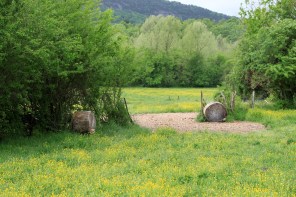
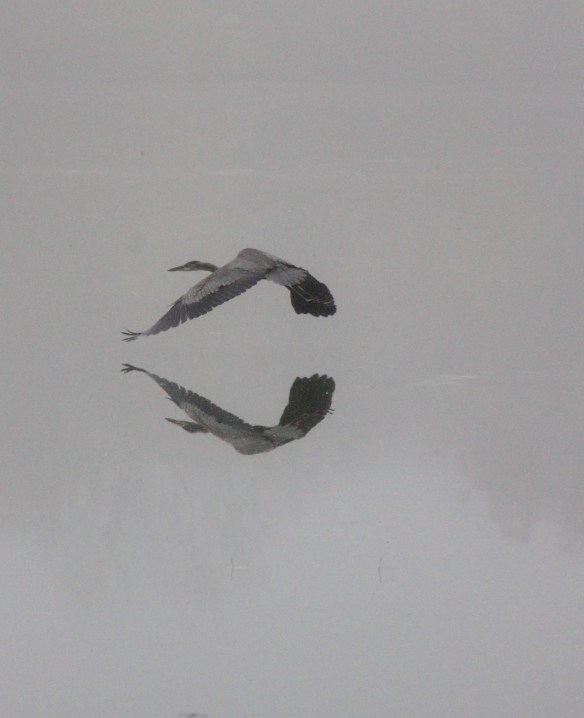
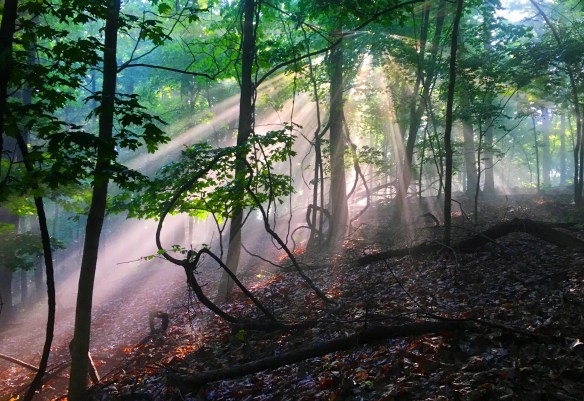
This dharma talk was inspired by a woman named Marta Beckett who was a professionally trained ballet dancer in New York City. When her car broke down in Death Valley she saw an abandoned old theater and listened to the call of her heart and renovated it. She danced there many years with little to no audience until she was discovered. In the talk I explore how we can devote ourselves fully to our path with love and commitment, rather than seeking results, even when the terrain seems barren. In this way, we open to greater possibilities as unexpected and wonderful surprises often appear along the way.
Tag Archives: buddhism
Kindness and Saying “No More”
Early this morning, I read the poem, Kindness, and it cracked my troubled heart open. I wept. It is an unflinching and powerful poem that doesn’t look away from suffering. The kindness the author Naomi Shihab Nye advocates doesn’t preclude standing up and saying, “no more, this has to stop.” Dr. Martin Luther King, said, “Darkness cannot drive out darkness: only light can do that. Hate cannot drive out hate: only love can do that.” His advocacy of love and non violence in the face of hatred never stopped him from protesting, speaking out and doing everything in his power to end oppression and racism.
Kindness allows my heart to break open and stay present in the midst of otherwise unbearable suffering. It allows me to touch the center of my own pain and the pain of the world, no matter how difficult, to not give up, to not turn away.
Kindness” by Naomi Shihab Nye
Before you know what kindness really is
you must lose things,
feel the future dissolve in a moment
like salt in a weakened broth.
What you held in your hand,
what you counted and carefully saved,
all this must go so you know
how desolate the landscape can be
between the regions of kindness.
How you ride and ride
thinking the bus will never stop,
the passengers eating maize and chicken
will stare out the window forever.
Before you learn the tender gravity of kindness
you must travel where the Indian in a white poncho
lies dead by the side of the road.
You must see how this could be you,
how he too was someone
who journeyed through the night with plans
and the simple breath that kept him alive.
Before you know kindness as the deepest thing inside,
you must know sorrow as the other deepest thing.
You must wake up with sorrow.
You must speak to it till your voice
catches the thread of all sorrows
and you see the size of the cloth.
Then it is only kindness that makes sense anymore,
only kindness that ties your shoes
and sends you out into the day to gaze at bread,
only kindness that raises its head
from the crowd of the world to say
It is I you have been looking for,
and then goes with you everywhere
like a shadow or a friend.
Fall Residential Retreat with Red Clay Sangha
Making the Mystery Clear
Led by Lisa Ernst
Thursday evening, September 29 – Sunday Noon, October 2

Our practice is not to clear up the mystery. It is to make the mystery clear.
~ Robert Aitken Roshi
Life is a balance of effort and letting go. Meditation practice gives us tools to be present, to work with our minds and to uncover the heart’s true wisdom. This wisdom also points the way to letting go — remembering that the practice is not only to help us solve problems but to enter deeply into the great mystery of life and death.
This residential 4-day/3-night, held mostly in silence is recommended for both beginning and experienced meditators. Format will be Vipassana style sitting and walking segments. Cost is $150 and covers all meals and lodging. There will be a separate opportunity to make dana (generosity) offering the teacher. Location is the beautiful Sautee Lodge nestled in the mountains near Helen Georgia (about 4 1/2 hours from Nashville). Space is limited so its a good idea to sign up early. Registration is here.
One Dharma is Moving!
After eight years at the 12 South Dharma Center, One Dharma will hold its last meeting there this Thursday, July 7. This is our once monthly LGBT meeting. The center will officially close by July 15. Why are we moving? To quote a lovely piece on the 12 South Dharma Center written by Walter Bittner, “In the end, it was the success of the revitalization and gentrification of the 12 South neighborhood that spelled the end of 12SDC. Recently, the ground floor unit directly beneath the meditation hall was rented to a juice bar which operates 7 days/week, 12 hours/day. Silent meditation in the room above a busy shop filled with the voices of customers, staff, blenders, and piped-in ambient music was no longer possible, and each of the three groups who share the center made alternate plans and negotiated to withdraw from their lease.”
One Dharma’s weekly Monday meditation and all Thursday meetings and classes will begin July 11 at Healing Well Yoga, 3808 Park Avenue, just off Charlotte Ave. This is a spacious studio and there’s plenty of parking by the building and along the street. I hope to have some photos soon. The space is truly beautiful! Interestingly, two years ago this was the very space we investigated as an option for a new dharma center. Negotiations didn’t work out but now the space available to us Monday and Thursday evenings and is perfect for meditation. Please come by and sit with us!
Our Introduction to Meditation Class will move to the Vanderbilt Center for Integrative Health beginning Saturday, July 9. This is a wonderful space and we are honored that Vanderbilt is accommodating us so generously. VCIH, also known as Osher, is located 3401 West End Ave at Orleans. The parking garage is at the rear of the building on Orleans. There is plenty of parking, which is free and secure. Walk through the glass door at the garage entry level (3rd floor). Turn left and follow the hallway to Vanderbilt Integrative Health, Suite 380. Stay left around the front desk to the first open room on your left. Please remove shoes before entering.
Special thanks to everyone who has made the unique, shared dharma center possible and especially Sharon Safer, whose vision was the spark that started the ball rolling. In the longer term, the three sanghas that have comprised the 12 South Dharma Center hope to find a new dedicated practice space.
Presence, Vulnerability and the Wise Heart
I gave this dharma talk shortly after finding out that a long time friend had died accidentally. I explore how cultivating presence and vulnerability, even in such difficult times, will open the door to the wise heart that knows the way to compassion and kindness for self and others.
The Vast Sky

If someone asks
about the mind of this monk:
say it is no more than
a passage of wind
in the vast sky.
— Ryokan
Summer

Spring departing
Birds cry
tears in the eyes of fish
– Basho
Clear Mind and Open Awareness
“When your mind feels tight and constricted, you can make more space.” You’ve probably heard this before about meditation practice, but what specifically are we talking about here? The problem isn’t that there’s a lack of space, but the way our minds perceive space, which is related to our identity.
Most people think of the boundary of the body as a point of identity. That is, my thoughts, feelings, perceptions, heart, personality, all reside within my body. So the body is home and herein lies myself. This is who I am and where I exist. Everything I’m made of is inside is me, what’s outside is not me, or it may be related to me but still separate.
This boundary is useful and necessary living in the world. But it also has limitations when we only perceive ourselves through this narrow lens.
At times we may know that our hearts, our love, extend beyond the body. We may also feel compassion for the suffering of others and sense the boundary melting a bit. True lovingkindness and compassion function as a relative expression of emptiness or not-self. They are like a river that flows from a reservoir within our heart. But the reservoir doesn’t dry up – it has an infinite source because it isn’t limited to our body.
When we meditate we begin to see this perceived boundary of the body dissolve, we see that what we think of as “me” doesn’t have a distinct beginning and ending point. This is a liberating insight and is often an early aspect of understanding not-self. At times, we may feel less compelled to put so much energy into simply solving our own problems and “fixing myself.” This brings to mind Lenoard Cohen’s famous poem:
“Ring the bells that can still ring
Forget your perfect offering
There’s a crack in everything
That’s how the light gets in.”
If we only view difficult thoughts and emotions and as existing inside “me” there is often a feeling of tightness, a lack of space and confusion about what we should do. When the focus is mainly on myself, other conditions seem to disappear. Yet, as we sit, as our concentration deepens, the mental focus on self loosens up. The sensations of anger, sadness and fear are seen as conditions that arise and pass away and are not “myself,” even though we experience them in our bodies. As this happens, gradually, or perhaps quickly, a feeling of space opens.
When we understand that our minds are not simply in our physical bodies, our mental boundaries open and our awareness feels less constricted. From this perspective, our challenges and pain may still exist, but now the great sky of mind has room to include them all. We have access to our wise heart that sees conditions for what they are, without the limits of “inside and outside,” and our path becomes clearer.
“If you attain your true self, then if you die in one hour, in one day, or in one month, it is no problem. If you only do “fixing-your-body” meditation, you will mostly be concerned with your body. But some day, when it’s time for your body to die, this meditation will not help, so you will not believe in it. This means it is not correct meditation. If you do correct meditation, being sick sometimes is OK; suffering sometimes is OK; dying someday is OK. The Buddha said, “If you keep a clear mind moment to moment, then you will get happiness everywhere.” ― Zen Master Seung Sahn
To open your awareness to this clear mind, try my guided “Mind Like Sky” meditation here.
Dharma Talk: The Flood and The Heart Tree
In this talk I share my experiences from the Nashville flood of 2010, how it devastated Radnor Lake and how the lake recovered. From a larger perspective, I explore the question of how we proceed when a tree falls into our path, or when the path is flooded beyond recognition. Can we discover a new way even as we mourn what is lost?
Hard Relativity and The Gateway to Freedom
A few days ago I saw a social media post by a Zen teacher, commenting on a video in which CEOs revealed that meditation was their secret to success. The dharma teacher jokingly observed, “I’ve been doing this shit for 30 years. How come I’m not successful?” He went on to write a blog post about the conflict inherent in materialistic, idealized definitions of success related to meditation. The video showcased how meditation helped CEOs focus and overcome fear. One CEO said she spent her meditation time thinking about the goals she wanted to achieve. The narrator never mentioned how living a life of compassion, generosity and non-harming were also cornerstones to success, something that is integral to the Buddhist path of meditation. Without these qualities most people are hopelessly caught in the craving self that is never satisfied with wealth, fame and achievement. Meditation only becomes a means to an end, a way to strengthen our competitive muscles and along with it, our entrenched, relative sense of self.
Much of the time we define and experience our lives in the relative, conditioned realm. In this world we are tempted to focus on “myself” and how I am fairing against a yardstick that defines whether I am successful, attractive, healthy, having a good day or week, and generally living up to my (and our culture’s) ideas of the perfect life. This focus on me and my ideals in relation to others creates a barrier to experiencing the open space of awareness that is free from self identification, which can be all but forgotten during a busy day of running from one activity to the next, or trying to alleviate anxiety and boredom through social media, television and other distractions.
Out of this near exclusive focus on the conditioned world, a sense of restriction arises, a lack of space, a feeling that there’s always something else we need to do, another place we need to reach, a better “I” that needs to be built. But of course wherever we go, whatever we do, the relative self always feels incomplete and continues seeking fulfillment through yet another scheme or activity. A simple moment of coming back to this moment, seeing this endless loop of striving, can help us remember that when we define ourselves only through this lens of self, we are stuck at the very root of dissatisfaction or dkkha.
I think of hard relativity as the time I spend lost in the whirlpool of activity and craving, when I’ve completely forgotten what available to me right now, the mind that is open, unconditioned and spacious. When the balance tips so far into conditioned awareness and activity that nothing else seems to exist, I feel hopelessly lost. Yet with a moment of remembering, of waking up from the illusion, it becomes clear that I’m not as stuck as I thought. In fact, I’m not stuck at all because who is stuck?
Why do we so often forget and get lost in this “hard relativity?” We can easily flip that question to, “why do we suffer?” Take a moment to reflect: how do you define yourself? Are you frequently trying to alter and make your sense of identity other than what it is in this moment? Who are you without your goals, your achievements, all the ways you define yourself? What if you began to reflect on this question more often in your daily life?
I’m not suggesting we let go of our heartfelt aspirations to excel or achieve. These have their place. Without some ambition, not much in this world will get done. Instead, I’m suggesting we create an intention to find ways to include spacious awareness of the unconditioned in our busy days and not only when we meditate. It sounds simple, but we tend to make it complicated: relative and unconditioned are not mutually exclusive even though they seem otherwise. They are two sides of one coin. Unconditioned, open awareness is always accessible, even when we feel caught in the vise grip of our activities, wants and self-driven cravings.
As a wake up call, you may want to pay more attention to those moments when you feel pressured to get to the next thing, be the next better version of yourself, squeezed and lacking in any space. See if you can create an intention, like a mindfulness bell, to take a moment to remember and reconnect with the open space of unconditioned awareness. Here’s a simple, yet profound Zen koan you can ask yourself to open this up: “What is my original face before I was born?” The answer is right here and nowhere else.