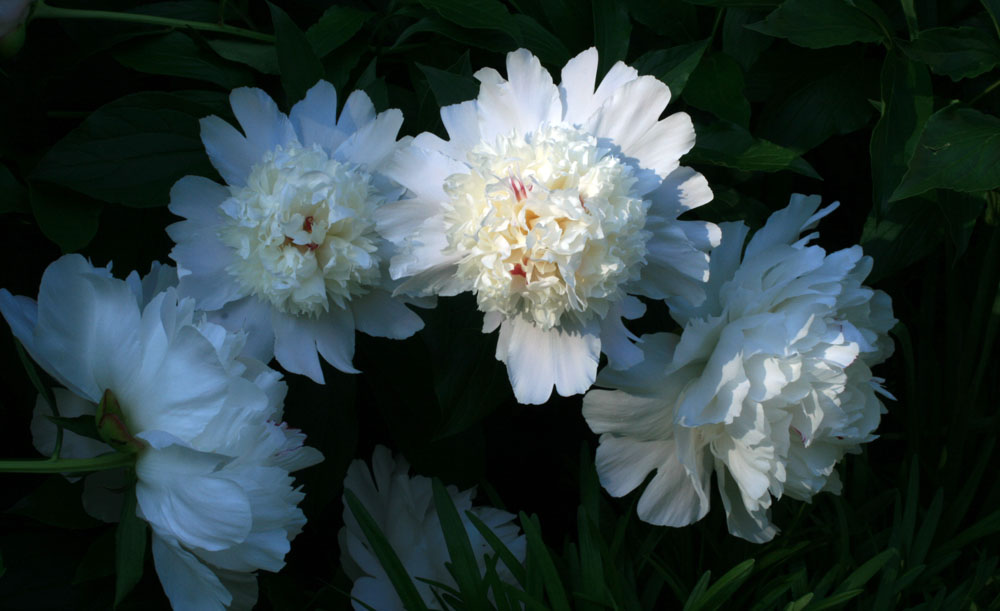
The temple bell stops.
But the sound keeps coming
out of the flowers.
– Basho
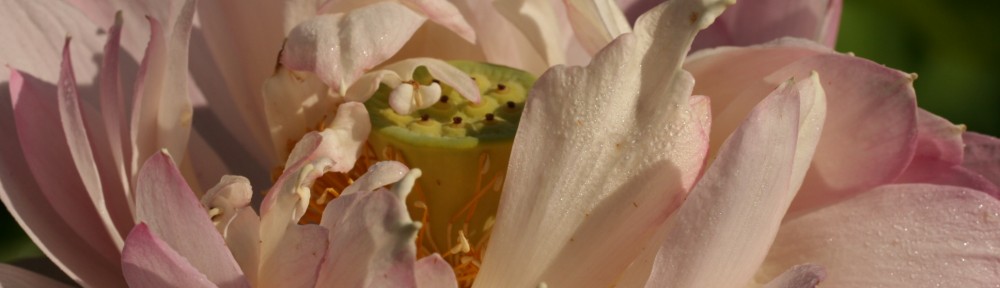
The temple bell stops.
But the sound keeps coming
out of the flowers.
– Basho

Something there is, prior to heaven and earth,
Without form, without sound, all alone by itself.
It has the power to control all the changing things;
Yet it changes not in the course of the four seasons.
– Fu Ta-shih
Meditation teachers in the West rarely emphasize thought as a primary object of meditation, even though mindfulness of mental factors is the fourth foundation of mindfulness. There’s a reason for this – from the time we’re young children, many of us are taught to revere thought above all else. When we first come to meditation we may feel as though we’re lost in the rapids of thought, tumbling down a treacherous river with no escape. Initially, establishing awareness at the breath and sensations of the body helps to calm these rapids. But not entirely. The thoughts don’t and won’t stop.
So why not learn to listen to your thoughts like you listen to a good friend? This means bringing your full awareness, with kindness, to your internal dialog. From this perspective, listening practice translates well from hearing external sounds like bird song or passing cars to awareness of the tone and quality of your thoughts, not simply the content. The practice may sound simple, but it takes skill to listen without reacting, judging or getting caught again in those rapids.
We can categorize our thoughts as positive, negative or neutral, just as we can with feelings and sensations. This can help us dis-identify with the specific content of the thought so we can simply observe. Most of us spend a lot of time problem solving, strategizing and planning. Often this activity is necessary and useful. But at other times it diverts us from our present moment experience. Listening to thought can help us to discern when we are using thought to escape and when we are using it wisely.
How often are your thoughts angry, comparing or judgmental? How frequently do you carry on internal dialog with someone who has hurt you or made you angry, but you never verbalize those thoughts skillfully or resolve the conflict? What narratives do you cling to as undisputed truths about yourself or others that narrow your possibilities? As your awareness deepens, you may notice how often your thoughts support the mistaken belief that you are a fixed, separate self, at odds with the outside world. Though listening practice, you may also become aware when compassionate and generous thoughts arise from a sense of interconnection and find opportunities to cultivate more of these. Deep concentration, Samadhi, during meditation practice helps support our insights into interconnection, which we can then bring into our daily lives.
Through listening practice I have discovered that whenever I feel a strong sense of self and other, my thoughts tend toward self-clinging or judgment. When I feel an intuitive sense of interconnection, my mind naturally opens to a more compassionate way of thinking about my life and the world. I am able to listen from the heart and respond with kindness, rather than though old thought patterns that reinforce separation.
These calendars were created with photos from our 2014 October Contemplative Photography Retreat. Created once again this year by Shelley Davis-Wise, each photo includes a dharma quote or poem. The calendars are for sale during our regular hours and are $20 each. They are a fund raiser for One Dharma. Here is a sample image:

To reserve your calendar(s) or arrange for pickup, email onedharmainfo@gmail.com
Once again this year, One Dharma will offer a Refuge and Precepts Ceremony for committed practitioners. If you’re interested, here is some general information:
About the Refuge Ceremony
Taking refuge means relying wholeheartedly on the Three Jewels of the Buddha, Dharma and Sangha to inspire and guide us toward a constructive and beneficial direction in our lives. The real taking of refuge occurs deep in our hearts and isn’t dependent on doing or saying anything. Nevertheless, we may wish to participate in the refuge ceremony by requesting a dharma teacher to formally give us refuge. The refuge ceremony is simple: we repeat the passages after the teacher and open our hearts to make a strong connection with the Three Jewels.
About Taking Precepts
Precepts are a joy, not a burden. They aren’t designed to keep us from having a good time and to make us feel deprived. The purpose of taking precepts is to give us internal strength so that we won’t act in ways that we don’t want to. Having understood that killing, stealing, selfishness and so forth only lead us to harm ourselves and others now and in the future, we’ll want to avoid these. Taking precepts give us energy and strength to do so. Therefore, it’s said that precepts are the ornaments of the wise.
To help people overcome their disturbing attitudes and stop committing harmful actions, the Buddha set out five precepts. During the refuge ceremony, in addition to taking refuge in the Three Jewels, we can take any or all of the five precepts, and become a lay Buddhist.
The five precepts
1. I observe the precept of abstaining from the destruction of life.
2. I observe the precept of abstaining from taking that which is not given.
3. I observe the precept of abstaining from sexual misconduct.
4. I observe the precept of abstaining from falsehood.
5. I observe the precept of abstaining from intoxicants that cloud the mind and cause carelessness.
The refrain “I observe the precept of abstaining from …” which begins every precept clearly shows that these are not commandments. They are instead codes of conduct that lay Buddhists undertake out of clear understanding and conviction that they are good for both themselves and for society.
If you are interested or have questions, please contact ernst.lisa@gmail.com no later than November 17.

The withered flowers
drop their seeds
like tears.
– Basho
Saturday, October 25, 1 – 4 p.m., 12 South Dharma Center
Cost: $35
Led by Lisa Ernst
Learning to integrate our meditation practice with speech and communication is a vital step to bring mindfulness, compassion and realization into our daily lives. In this half day retreat we will extend deep listening and mindfulness from our sitting meditation into relational practices. These practices will help us listen and communicate from the heart as well as stay fully present in both silence and speech.
The workshop will include sitting meditation, mindful dialogue and group interaction. Cost is $35. Payment may be made through paypal here. If paying by check, make it out to One Dharma Nashville and send to: 12 South Dharma Center, 2301 12th Avenue South, Suite 202, Nashville, TN 37024. Be sure to include your email address.
Lisa Ernst is a Buddhist Meditation teacher in the Thai Forest lineage of Ajahn Chah. She is the founder of One Dharma Nashville. In her teaching, Lisa emphasizes both transformational insight and everyday awakening as an invitation to embrace all of the path’s possibilities. She regularly leads classes, daylong and residential meditation retreats.
For information, email onedharmaretreat@gmail.com
Sunday Evening, November 9 – Sunday Noon, November 16
Sponsored by One Dharma Nashville
Bethany Hills Retreat Center, Kingston Springs, TN
Led by Lisa Ernst
 As winter approaches and daylight wanes, there is a natural tendency slow down and turn inward. Yet, in the busyness of the approaching holiday season we may forget that true refuge is right where we are. This silent retreat will focus on cultivating a quality of compassionate presence that embraces our experience with equanimity and insight. Through this practice we begin to pierce the illusion of separateness and taste the joy of interconnectedness to all things.
The retreat is offered on a sliding scale basis from $425 – $550, which includes lodging and all meals. Teacher compensation (dana) is separate. A deposit of $300 is due upon registration with the balance due no later than November 1. To make your deposit, go here. For paypal, please use the donate button. For questions, email onedharmaretreat@gmail.com.
Lisa Ernst is an authorized Buddhist Meditation teacher in the Thai Forest lineage of Ajahn Chah, Jack Kornfield and Trudy Goodman. She is the founder of One Dharma Nashville. In her teaching, Lisa emphasizes both transformational insight and everyday awakening as an invitation to embrace all of the path’s possibilities. She regularly leads classes, daylong and residential meditation retreats.
For questions, email onedharmaretreat@gmail.com
 To what shall I compare this life of ours?
Even before I can say
it is like a lightning flash or a dewdrop
it is no more.
– Sengai

“I came to realize clearly that mind is no other than mountains and rivers and the great wide Earth, the sun and the moon and the stars.”
~~ Eihei Dogen
 The Lotus Blooms in The Mud