Dharma Talk: The Flood and The Heart Tree

In this talk I share my experiences from the Nashville flood of 2010, how it devastated Radnor Lake and how the lake recovered. From a larger perspective, I explore the question of how we proceed when a tree falls into our path, or when the path is flooded beyond recognition. Can we discover a new way even as we mourn what is lost?

Hard Relativity and The Gateway to Freedom

A few days ago I saw a social media post by a Zen teacher, commenting on a video in which CEOs revealed that meditation was their secret to success. The dharma teacher jokingly observed, “I’ve been doing this shit for 30 years. How come I’m not successful?” He went on to write a blog post about the conflict inherent in materialistic, idealized definitions of success related to meditation. The video showcased how meditation helped CEOs focus and overcome fear. One CEO said she spent her meditation time thinking about the goals she wanted to achieve. The narrator never mentioned how living a life of compassion, generosity and non-harming were also cornerstones to success, something that is integral to the Buddhist path of meditation. Without these qualities most people are hopelessly caught in the craving self that is never satisfied with wealth, fame and achievement. Meditation only becomes a means to an end, a way to strengthen our competitive muscles and along with it, our entrenched, relative sense of self.

Much of the time we define and experience our lives in the relative, conditioned realm. In this world we are tempted to focus on “myself” and how I am fairing against a yardstick that defines whether I am successful, attractive, healthy, having a good day or week, and generally living up to my (and our culture’s) ideas of the perfect life. This focus on me and my ideals in relation to others creates a barrier to experiencing the open space of awareness that is free from self identification, which can be all but forgotten during a busy day of running from one activity to the next, or trying to alleviate anxiety and boredom through social media, television and other distractions.

Out of this near exclusive focus on the conditioned world, a sense of restriction arises, a lack of space, a feeling that there’s always something else we need to do, another place we need to reach, a better “I” that needs to be built. But of course wherever we go, whatever we do, the relative self always feels incomplete and continues seeking fulfillment through yet another scheme or activity. A simple moment of coming back to this moment, seeing this endless loop of striving, can help us remember that when we define ourselves only through this lens of self, we are stuck at the very root of dissatisfaction or dkkha.

I think of hard relativity as the time I spend lost in the whirlpool of activity and craving, when I’ve completely forgotten what available to me right now, the mind that is open, unconditioned and spacious. When the balance tips so far into conditioned awareness and activity that nothing else seems to exist, I feel hopelessly lost. Yet with a moment of remembering, of waking up from the illusion, it becomes clear that I’m not as stuck as I thought. In fact, I’m not stuck at all because who is stuck?

Why do we so often forget and get lost in this “hard relativity?” We can easily flip that question to, “why do we suffer?” Take a moment to reflect: how do you define yourself? Are you frequently trying to alter and make your sense of identity other than what it is in this moment? Who are you without your goals, your achievements, all the ways you define yourself? What if you began to reflect on this question more often in your daily life?

I’m not suggesting we let go of our heartfelt aspirations to excel or achieve. These have their place. Without some ambition, not much in this world will get done. Instead, I’m suggesting we create an intention to find ways to include spacious awareness of the unconditioned in our busy days and not only when we meditate. It sounds simple, but we tend to make it complicated: relative and unconditioned are not mutually exclusive even though they seem otherwise. They are two sides of one coin. Unconditioned, open awareness is always accessible, even when we feel caught in the vise grip of our activities, wants and self-driven cravings.

As a wake up call, you may want to pay more attention to those moments when you feel pressured to get to the next thing, be the next better version of yourself, squeezed and lacking in any space. See if you can create an intention, like a mindfulness bell, to take a moment to remember and reconnect with the open space of unconditioned awareness. Here’s a simple, yet profound Zen koan you can ask yourself to open this up: “What is my original face before I was born?” The answer is right here and nowhere else.

Mind Like Sky Guided Meditation

I’ve had a number of requests to offer a recorded version of the open awareness guided meditation I often do at retreats, “Mind Like Sky.” This guided meditation facilitates open awareness, a mind as wide and limitless as the sky.

Summer Dedicated Practitioner Class

Five Session course starting on June 30, 2016
Led by Lisa Ernst

lisaprofilehosp

This five week practice and study course is designed for committed practitioners and will allow for deeper exploration of the process and practices of meditation and awakening. Patterned on Sprit Rock’s Dedicated Practitioner Program and led by Lisa Ernst, the class will offer specific teaching and practice approaches based on the Noble Eightfold Path. There will be plenty of time for group discussion and interaction. The basic requirements are that everyone attending has an established daily meditation practice, or will re-commit to one, and has attended at least one daylong or longer meditation retreat.

The class fee is $150. Two reduced fee spots are available in the case of financial need. A deposit of $35 reserves your spot with the balance due by June 23. To pay by paypal go here  and use the “donate” button. Instructions on paying by check are at the same link. Please include your email address. Meeting will be held Thursdays, 7 – 8:30n p.m. at the 12 South Dharma Center. With one exception we will meet weekly: we will not meet on Thursday, July 7 due to the 4th of July holiday that week.

For questions contact ernst.lisa@gmail.com.

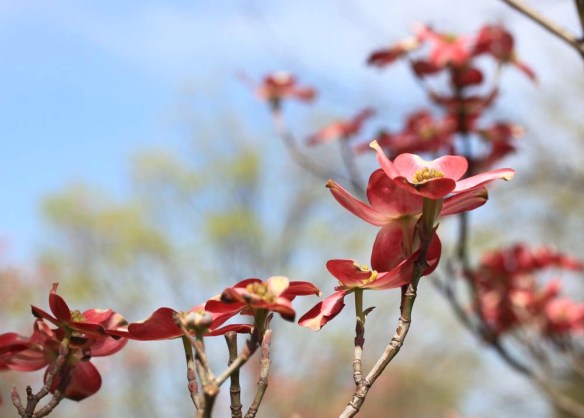
Spring Flowers

dogwoodsinarow

Spring flowers, the autumn moon;

Summer breezes, winter snow.

If useless things do not clutter your mind,

You have the best season of your life.

-Wu Men


Saying Yes: The Cabin in the Woods

This dharma talk focuses on the aggregate of thought as it applies to perceived limitations we may encounter in our meditation practice. The main focus of the talk is in working with trauma and I tell my own story about my cabin in the woods — the most difficult time of my life.


Why Retreats are Important to Me

by Frankie Fachilla

After completing my seventh One Dharma retreat in December, I have reflected quite a lot on the importance of retreats in my life. The retreats have varied in length from three days (4 of them), to five days (two of them), and one seven day. Every retreat is a gift to my own ability to cultivate peace of mind as I navigate the waves of my life. They are a training ground for this delicate and, often, nebulous task of being present with my own heart. Retreats allow me the time, space, and safety to make this journey to the core of things and stay there outside of the usual patterns of avoidance and distraction that sweep me along in my normal life routines. The more retreats I do, the more I think of them as essential for my mental well being and ability to live a fulfilling life.

Still, retreating from life is challenging as I disengage from my family, my work, my email, my phone. The process of letting go of all of this, even for a few days, feels to me like prying a young child’s grasping arms from her parents’ neck as she tearfully screams in protest at being dropped off for the first day of kindergarten. Once she’s in her classroom, though, she quickly begins making friends and learning about the beauties of this other existence… A world away from her usual comforts and routines but safe and secure under the watchful gaze of her teacher, with her basic needs provided for and more. So it is at retreat: I learn to sit and watch the anxiety come and go as I wonder what emails I might be getting that need attention. I watch the loneliness dance with me as I miss hearing my husband’s voice or hugging my cats. Then, I get to see what’s on the other side of those feelings, instead of merely feeling bound by a constant struggle to avoid emotions that are inevitable. Returning to life, I have a new confidence that I can touch what’s underneath the waves of pain and fear and “come home” wherever I am.

I already feel so fortunate to have a trusted dharma teacher live close by and offer retreats at an accessible location, and I feel even more fortunate that these retreats are sometimes offered for an extended amount of time. I find that, after the first day of a retreat, things get very interesting as my patterns take a backseat to noticing what is present within me. The more time I have at a retreat, the more I get to discover. Since the biggest challenge of retreat is always the initial disconnection itself (figuring out who will take my stepson to school, deferring tasks at work until I return, the anxiety of having no contact with my husband, etc), it seems like the opportunity to stay longer at a retreat offers much more gain for very little additional sacrifice. Once we’re there, why not stay for longer to get even more benefit and even more practice doing what is so hard to do in the thick of our lives? Why not give ourselves the gift of an additional day or two to connect more strongly with our heart-center, our core, the true nature of things? It reminds me of the choice to exercise or go to the gym: the hardest part is always getting started, but once those endorphins start flowing, we often don’t want to stop. I hope that others will choose to give themselves this additional practice time at our upcoming Spring retreat!

Frankie Fachilla has been practicing with One Dharma for 10 + years. She is a licensed professional counselor in the mental health field.

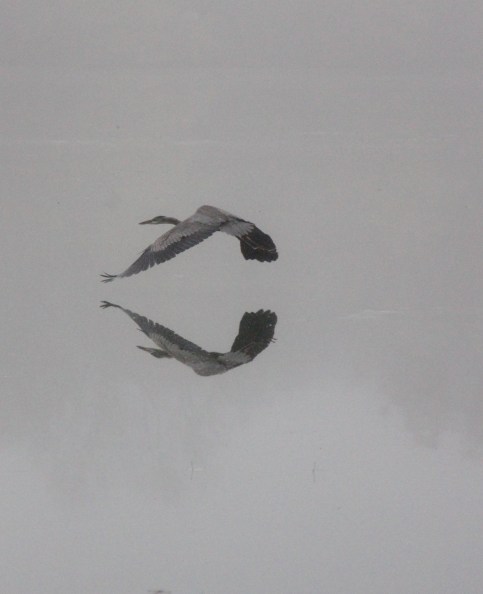
A Heron’s Cry

IMG_0657

Lightning:
Heron’s cry
Stabs the darkness

– Basho