A Phantom and A Dream: Social Media, Connection and Loneliness During the Holidays

As I scrolled through my Facebook feed the day after Thanksgiving, I saw numerous photos of people celebrating the holiday with family and friends. I shared their joy as they basked in the warm glow of their loved ones. Yet I couldn’t forget the people who had not posted, some who were either alone or lonely.

For the most part, people who share their holiday moments on social media have no ill will or intent to arouse jealousy. Often these photos are quite meaningful to distant family or others who appreciate seeing their friends in joyful times. But because people who feel less fortunate are unlikely to share, a false picture emerges. We can easily overlook that these feeds hardly represent the full spectrum of human experience  – we may forget to extend compassion to those who need our kindness or to simply acknowledge that not everyone is celebrating.

Mudita, or sympathetic joy, is the capacity to appreciate the success and good fortune of others without reservation. When I scroll the feeds and see happy, fulfilled faces of friends and relatives surrounded by loved ones, mudita arises in me. But if you are alone or lonely, as I was for many years, it’s not so easy to summon sympathetic joy. Social media can amplify feelings of disconnection with its easy access to images of warm, happy clans on the screen, even though not all of these images paint a true picture. In fact, this is a good time to remember Buddha’s teaching in the Diamond Sutra that this fleeting world is but a phantom and a dream.

Having spent many holidays alone when I was younger, I became quite intimate with the seasonal pressure to be joyful and connected. That’s partly why I’m sensitive to those who may not communicate their loneliness or feelings of detachment during the holidays.

Although I wasn’t raised Christian, growing up I immersed myself in the spirit and excitement of the holidays. When I was 13 my mother died in the fall and I moved to Nashville to live with my grandmother. Even with my mother gone I prepared for the season with great anticipation. It would only be Granny and me, but that was enough. When Christmas finally arrived, we started the day with Gran’s whipped cream topped custard and presents. As the day progressed, however, she fell into grief for what she had lost: her only child and her husband. She began drinking heavily and I spent the rest of Christmas alone in my room, devastated that the day didn’t live up to my expectations.

This pattern would repeat itself for years.  My disappointment, at its core, reflected the grief and loneliness that I couldn’t yet face. I unconsciously hoped that the warm promise of the holidays would wash away my pain. When my father died from alcoholism a few years later, my holiday loneliness only intensified and extended well in to the grey, wet Tennessee months of January and February. Often relief came only when the longer, sunny days of spring finally arrived.

After struggling with loneliness and depression for many years, I started to address my losses, which helped me untangle from my holiday gloom. The shame of being alone slowly lifted. During meditation, I began to feel a deep heart connection to all that is present, or as Dogen put it, intimacy with all things. In my daily life I cultivated friendships and relationships that nourished me. Slowly, the holidays and those dark grey winters that followed were easier to bear.

These days I’m grateful to have loving people in my life.  Yet my heart still touches that deep loneliness from time to time. Mostly I have room for it now; I can feel both connection and loneliness in the fullness of my heart. And I remember that, despite the images on social media, some people are lonely and grieving this year. If you’re one of them, may your heart find peace. May you know that you are not alone.

 filterheart

Winter solitude –
in a world of one color
the sound of wind.

-Basho


Identity, Healing and Unconditional Love

Identity, Healing, and Unconditional Love

Lisa Ernst Retreat I attended a meditation retreat last weekend on the subject of identity. It offered immediate lessons I want to share, because I think they offer a very useful framework for looking at how we function in the world. Beyond that, though, the retreat gave me a lot to think about, some in the light of the recent post on “The Problem of Taking Yourself Too Seriously“, and more deeply on giving and receiving love. I think these lessons, if you are able to move towards them, have the power to change your world.

Examining Our Identity

Lisa Ernst, a Buddhist teacher from Nashville who led the retreat, delivered several talks on identity. She set up a framework of a two-layered identity which she described using the analogy of clothes:

  • Outer Identity: Like our everyday clothes, “business casual”, sportswear, monastic robes, or formal suits, this is the identity we wish to show the world. It is how we want people to think of us;
  • Inner Identity: This is our private identity. Like our underwear or sleeping attire, it is a personality we show only to a handful of intimate people. It is the person we think of as the “real” me.

We believe that the inner identity is our core and has some level of permanence to it, and that our outer constructed identity is one over which we exercise control, one which we can shift, if not quite at will, then pretty close to it. But actually, as we will see, the outer identity is far from under our control, and the inner identity is a lot less permanent than it might seem.

Tension in Identity

How do your inner and outer identity compare? Are they pretty similar or very different? Do you allow the world to see your strengths and weaknesses? To extend the clothing metaphor, do you allow people to see your dirty laundry?

The whole point of the inner/outer identity bifurcation in this analysis is to acknowledge that you don’t bare all your secrets to the world, that you reserve some for yourself. The outer identity is both a mask to protect parts of you that you don’t want to allow to be hurt, and also a practical persona that serves your external purposes in the world. For example a cheery, professional demeanor is an expected norm in a business meeting and will allow you to close the deal or wow your management with a presentation far better than allowing your sloppy, maybe somewhat crass or course inner persona to emerge.

It’s perfectly natural and even healthy for there to be differences between your inner and outer identities, but what happens as the difference between the two stretches? If your outer identity is vastly different from your inner, then it takes a great deal of effort to maintain it, and that effort creates stress. On top of that tension – which is palpable to those observing the outer persona – you will not be able to keep the two completely separate, and at times the inner identity will surface.

By way of example, I’d like to contrast my life today with that four or five years ago shortly before initiating divorce proceedings, ending an important business relationship, and severing the relationship with my spiritual teacher. You won’t be surprised to know that I was under a lot of stress back then! So while I think I manifest the same external identity today as I did then, the inner identity – the identity we think of as fixed – was very different in important ways. What today is peaceful and at ease, four or five years ago was swirling confusion and anxiety. So the gap between the external and internal identity back then was far greater. I thought I was pretty good at sustaining my outer identity when I was in a business meeting, but those with whom I interacted knew that something was wrong. For example there were far fewer “buy” decisions back then, largely, I am convinced, because the people I spoke to subconsciously registered the inter-identity tension in me.

The Arising Of Ego

When you take your inner identity to be permanent, you create an ego and you can become attached to it. But if you let yourself get attached to your identity, you can become stuck on it and create a problem. You move into the territory of taking yourself too seriously!

When we see someone with serious physical or mental condition who smiles and laughs, who delivers motivational speeches, who inspires and encourages others, we praise them and think them remarkable. They probably are remarkable, but beyond that they are people who have not allowed themselves to get stuck on their injury, their condition, the labels of their lives. They have not over-identified with such matters as their permanent self. Rather they have chosen to see possibility and opportunity. And in that they are a lesson to the rest of us. They are an inspiration that however tough it might be to look beyond what you see as your permanent inner self, it is possible to transcend it.

Don’t Completely Lose the Ego

A word of caution or acknowledgement before we move on: while it is important to hold the inner identity lightly and not to let it calcify into a fixed ego, equally it is important not to let it go completely. Just as functioning effectively in the world requires an outer identity that fits with the environment, so the outer identity must be founded on some inner core, some inner identity. And it is important, also, to examine the ego and see those elements that pop up from time to time. For example, you may occasionally express impatience or control tendencies that come from an inner anger, though without looking closely you may never have realized the source. And that anger itself could be a mask for some deeper identity which you don’t know.

The Importance of Falling Apart

If you take the long view, you can see the arc of your life from infancy through childhood, youth and adulthood into old-age and death. You can see that the outer identity you assumed as a teenager is very different from your outer identity as a lover, a business person, a parent – or whatever roles you move into through your life. And you can similarly see that your inner identity has shifted over time, perhaps as a result of being the victim of a horrible personal invasion, an illness or accident, or conversely as a result of a wonderfully intimate partnership which gave rise to children, grandchildren, and a vastly different world than you had ever imagined could be possible. You know that your identity shifts over time. But it is nonetheless all too easy to find yourself holding on to your inner identity and not wanting to let it shift.

But when you hold on to inner identity you allow do not allow your “real” self to shift with the shifting circumstances of your life and of your understanding. To hold on to your identity, your hold it down and wrap it up. You do not allow yourself to grow and open. You do not allow yourself to flower as a human being.

Healing and Love

We all want to receive unconditional love but most of us, in some way, have had this withheld from us. Most of us feel damaged in some way and want to be healed. And most of us look to relationships with others to heal us. Whether we had an abusive father or an alcoholic mother, whether it was parental expectation of academic or sports success or it was, we all carry forward scars that we want healed.

Identity is a practical tool in the world, but it is also a way of protecting our hurt, of hiding our damage, maybe even hiding it from ourselves.

Healing can be extraordinarily difficult, for the pain and suffering may be immense. It may be that you are not truly ready to deal with your suffering, and that is fine. But if you think you are, then know that it can never be truly healed from outside. The only way of healing your hurt is to allow yourself to be with it without judgment. And before you can do this, you must first see your suffering, which in turn requires allowing yourself, your ego, that scaffolding you have created to protect yourself, in a sense to fall apart.

We all want to receive unconditional love, but in doing so we misunderstand. What we need is to give unconditional love. We have been raised to believe that our love must be validated by another, but that is not true. Your love need only be validated by yourself. If you can allow your identity to soften, you can start to see this. And once you do so, all the rules change.

To visit Gareth’s informative and reflective blog go here.
Riding Free

Its like you’re throwing away your canoe and oars and are riding the waves of emptiness. Its scary at first, you’ve no control. You feel vulnerable and completely without knowledge of where you are going, or even where you are. So you have to surrender completely to the waves when they come. It may take a while. It may take weeks or months or years. You may ask, “what if I drown?” Then I ask you, “who and what drowns? What do you lose? And what might you gain?”

You may decide to climb back into your canoe if you can. But if you’re truly on this path, the water will draw you in again and again until finally you drown and then you’re riding the waves and those waves are you, and you are the waves, there’s really no difference any more, and you arrive exactly where you need to be, where you always have been, but just didn’t know it until now. You are home.

~Lisa Ernst

Morning Beams

Morning Beams

Flowering Lotus Lovingkindness Retreat Recap

Last weekend I led a lovingkindness retreat at a beautiful retreat center in Magnolia Mississippi, a place I’d never been before. Magnolia is a small town aptly named – the minute we entered the city, blooming magnolias were everywhere. Founded by Dolores Watson about 5 years ago, Flowering Lotus Retreat Center has grown considerably and has hosted teachers such as Phillip Moffitt, David Loy and John Orr. Dolores is a remarkable and energetic woman who so obviously loves the dharma. I first met her last November when she attended my seven day residential retreat here in Middle Tennessee. I wasn’t at all surprised that the care and thought she has put into the center shines through in every detail. She has her own bold and unique style, which I loved.

Dolores Watson Meditation Hall The experience level for this retreat ranged from four or five people who had never meditated before to several with extensive retreat experience, and everything in between. We focused on lovingkindness (metta) practice for the weekend, which I always appreciate teaching. Watching hearts open and barriers dissolve, seeing people finally realize its ok to offer kindness and love to themselves, is a deeply fulfilling experience for me. I remember how hard it was the first time I tried it many years ago, how I felt guilty and even selfish spending so much time giving metta to myself. But when my heart finally cracked open, I was able to receive and extend love to all beings for the first time. That has stayed with me ever since when I practice metta. At this retreat, as we moved our metta outward to loved ones, family friends, indifferent and difficult people, some at the retreat got a taste of the heart that is not separate from all beings, the heart that can love unconditionally. This is the realm of true compassion. Lodge at Flowering Lotus May all beings be free from suffering. May they live in equanimity.

You Don’t Have to Believe Your Thoughts

by Lisa Ernst

You’ve probably heard that before, right? It sounds pretty simple and maybe sometimes it is, but at other times, nearly impossible. Why? Because for many of us, certain thoughts appear as unassailable “truths,” specific stories about our lives, about ourselves and others. As long as these thoughts operate below our awareness as stealth narratives, they can’t be seen for what they are, impermanent conditions that arise and pass away. We remain bound by these thoughts and they may lead to significant suffering and even depression.

When we identify with a thought or emotion as “I” or “mine,” our boundaries of inside and outside remain intact. There’s me, and then there is the outside world. This is only a perception, but its so strong as to feel solid and real. Buddha taught that this idea of a separate, inherent self is the root of suffering.

As a practice, try asking yourself, “is this thought me; is this thought mine?” You can do the same with emotions. This exercise is not intended to suppress or push away thoughts or emotions, but to allow you to begin seeing them without personal identification. This opens space to perceive the thoughts and experience the emotions as they are. This practice, reflective inquiry, isn’t a form of analysis. You’re letting the question remain open ended, to allow experience itself provide the answer. As you do this, you are opening yourself to the realm of dharma, where customary ideas and everyday perceptions don’t apply. The good news is, you don’t need them as you experience your thoughts and emotions appearing and falling away. Here you can access the heart’s true wisdom.

“When Ajahn Chah said it was possible to learn as much from stupid thoughts as wise ones, that was such a radically different approach. A wise thought arises and ceases. A stupid thought arises and ceases. A painful thought arises and ceases. A painful feeling arises and ceases. A pleasant feeling arises and ceases. I realized I didn’t have to feel ashamed when there was confusion in the mind. Just let it be and know it for what it is. They are all just states of mind, coming and going. Rather than anxiously holding on or to try to make sense of everything all the time, I got a feeling for letting go and letting be.”- Kittissaro, Listening to The Heart.


2015 Spring Renewal Meditation Retreat Recap

One Dharma just completed our fourth Spring Renewal Residential Retreat at Bethany Hills. Each April I especially enjoy our time in this beautiful and natural setting where our hearts can open in tandem with the flowers and leaves after spring rains.

Ferns by the Pond at Bethany Hills

Ferns by the Pond at Bethany Hills

altarflowers

Altar Flowers by Frankie Fachilla

I appreciate all of nature’s seasons but spring is my favorite. In my twenties, during some of the darkest, loneliest years of my life, immersing myself in spring each year gave me a sense of possibility that my life could be more than the sadness and grief I lived with daily. As I witnessed newly leafed trees growing greener each day, purple wild iris opening along the water’s edge, and birds breaking into a melodious but raucous symphony every morning as the sun rose, I allowed my heart to open completely, to release my armor and touch the warmth and vulnerability of new life. This tenderness of heart nourished and fortified me through this otherwise long and lonely season of my life. Slowly, as the years passed and I reached my 30’s, the possibility of renewal that had once seemed so removed from the rest of my life blossomed at last. This awakening enabled me to live my life more fully, to move through my grief and find friends and love again. Thank you spring for sustaining and warming my heart when I had no other way to touch this moment with love and gratitude.

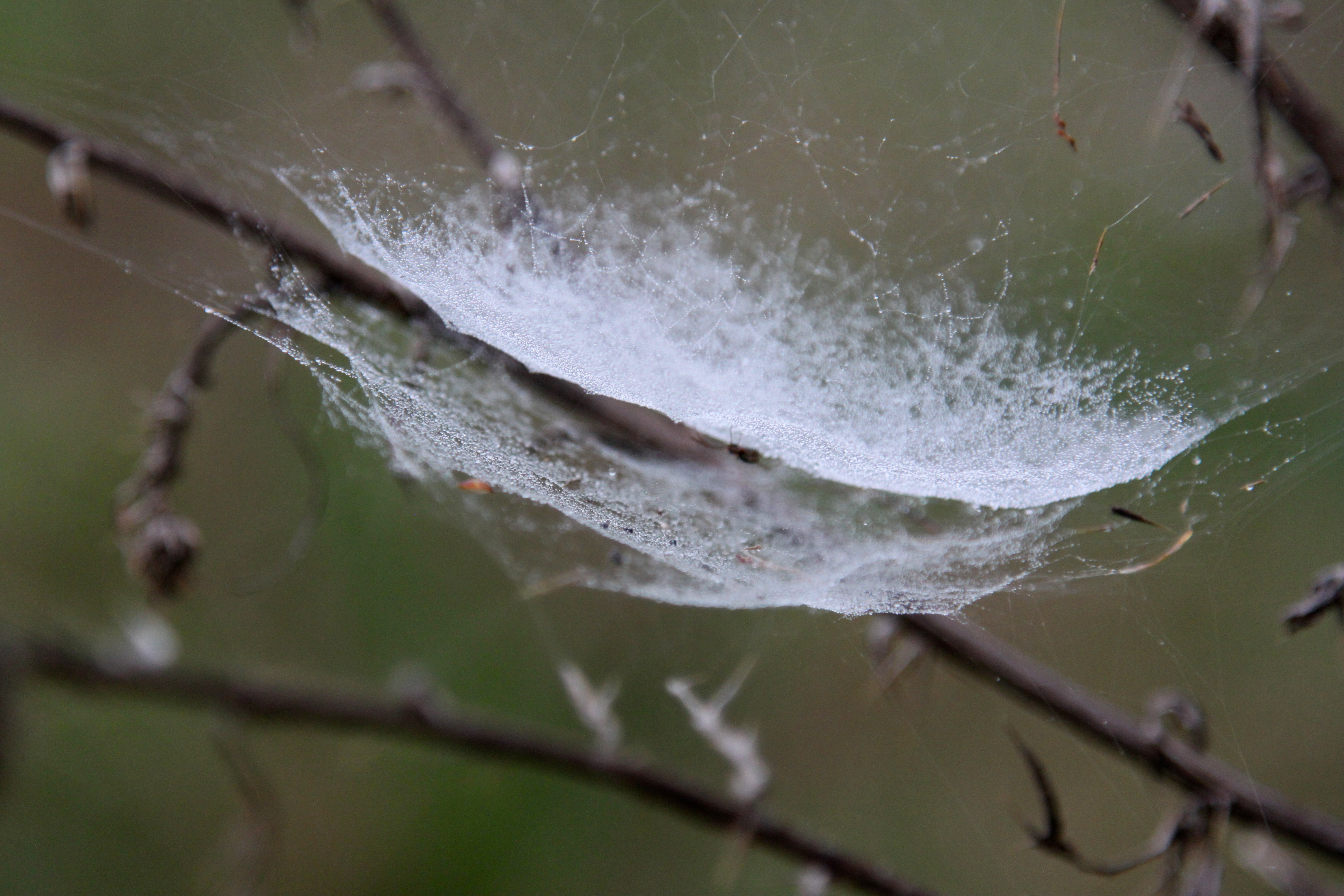
Double Web

Double Web

These two lovely poems, speak to the retreat experience of opening heart and mind in this moment. Both were written by attendees at our spring retreat.

Water Meditation

Water extinguishes fire
Takes away the angry,
burning desire to eat
everything in its path.
Be water,
drown in this moment.
Watch the world and its stories
pass like waves.
They aren’t yours to grab.
Try to grab them and
they disappear like
scattered stars,
reforming later, still
constellations of emptiness.

Instead, let the waves
crash over you,
their powerful fingers
tear at you then recede
into foamy nothing.
Crash and recede, crash and recede.
Nothing to do
but feel the sun.

– Andrea Hewitt

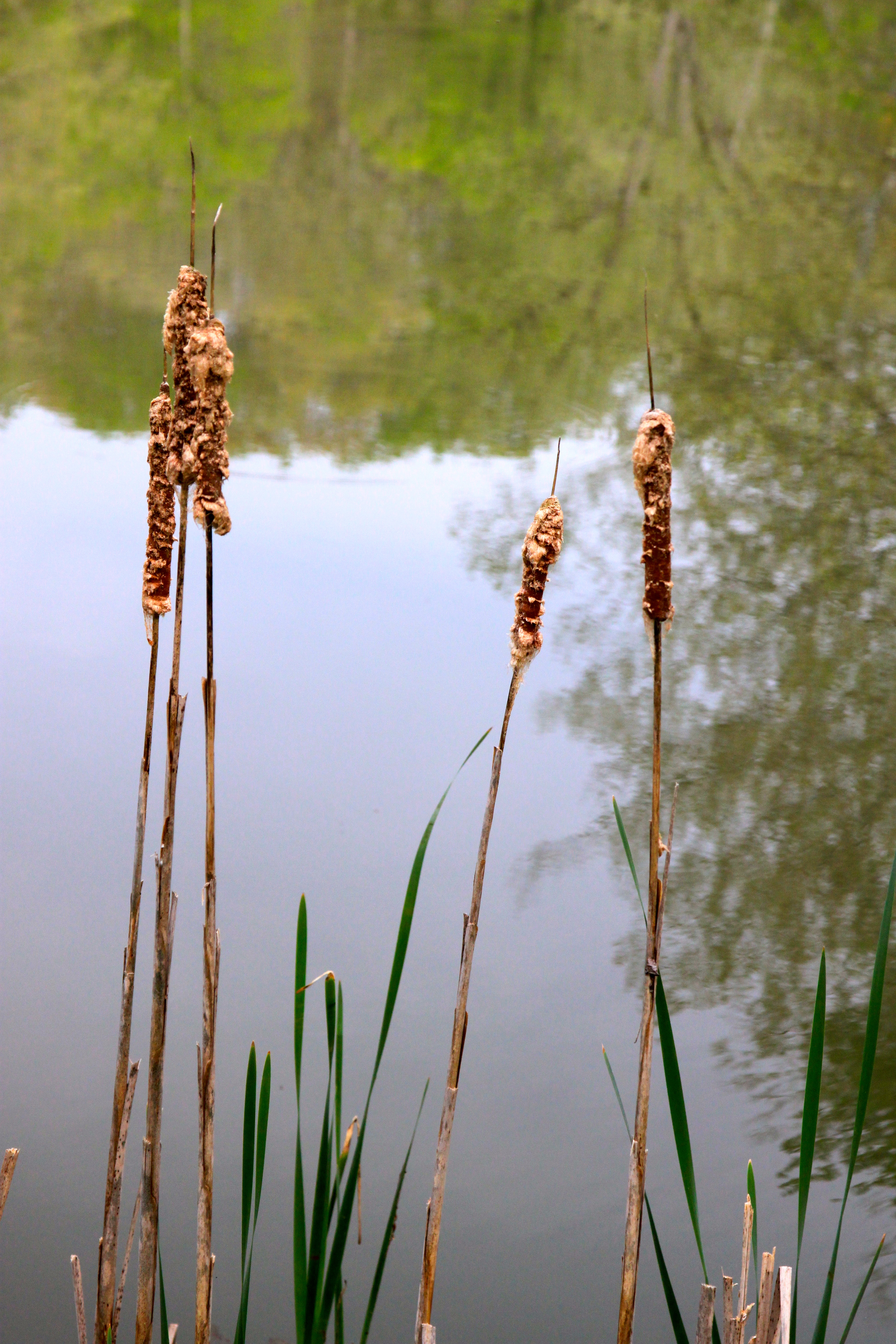
Cattails by Pond

Cattails by Pond

The retreat ended, rain stopped.
The geese have landed at the lake,
Sun shining thru clouds, I see clearly.

– Jeff Miller

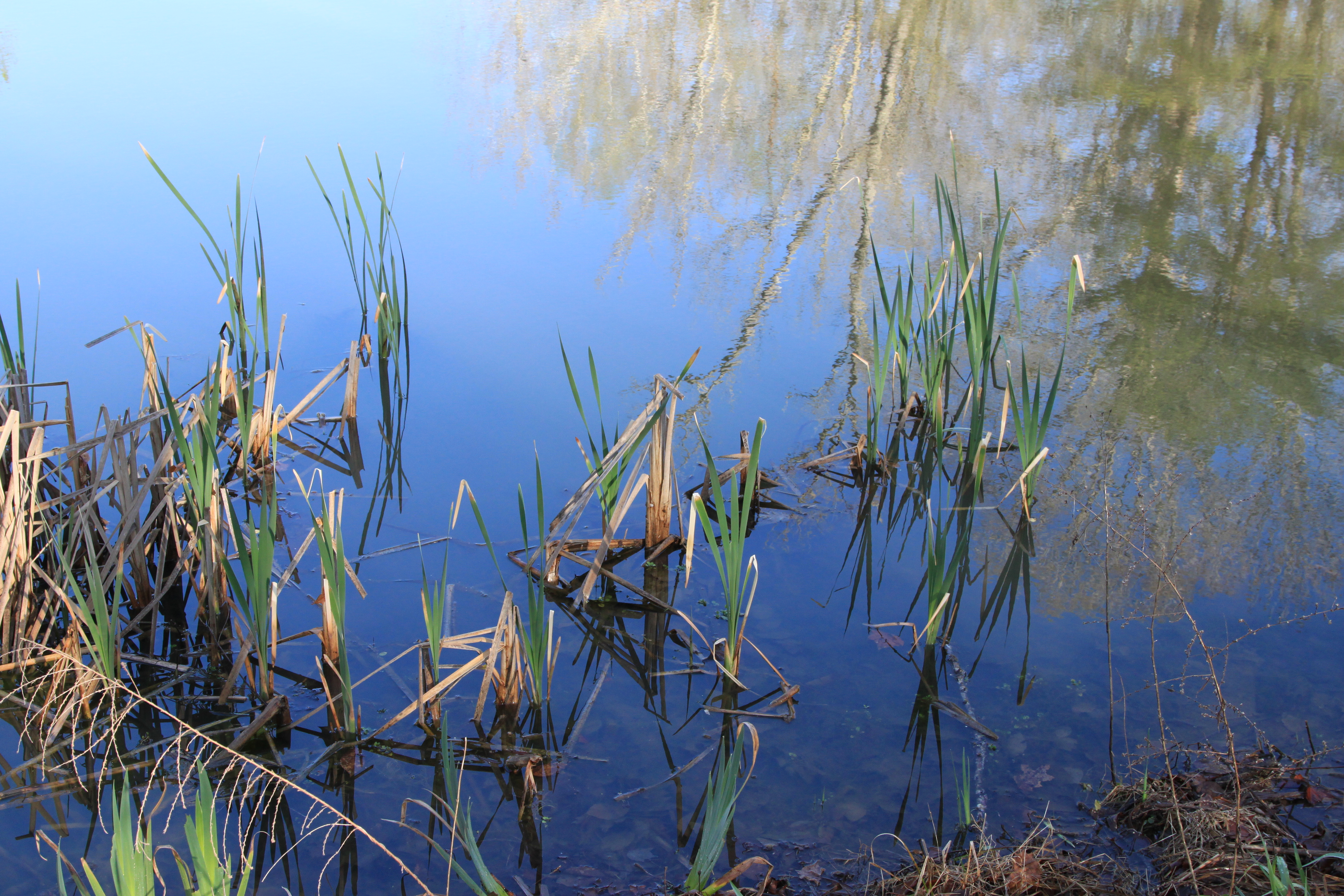
Reflect1

Clear Skies Reflected in Pond

Inspiration: Zen Garden and Meditation at Vanderbilt

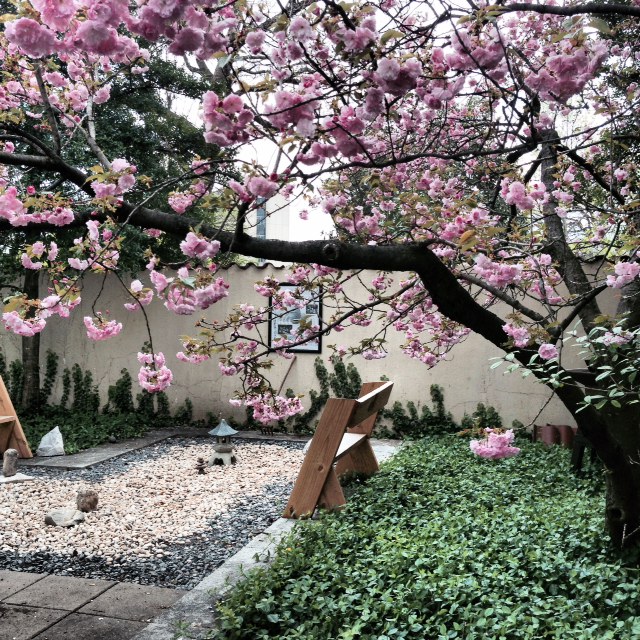
cherry

Zen Garden at Vanderbilt

A few weeks ago I received an invitation from a Vanderbilt University student to lead an hour long meditation workshop designed to coincide with the opening of their Zen Garden. The new garden is just outside of the Office of Religious Studies on campus. I accepted the invite even though it was short notice, and I’m very glad I did. It was an inspiring hour and I believe what I experienced bodes well for the future of Buddhist meditation in this country.

At the Zen Garden, a cherry tree was in full bloom, a perfect compliment to the serene and simple garden. We started with a dedication and went inside for a 20 minute guided meditation. The organizer had set up a Facebook event for the workshop not long before and 60 people RSVP’d. She was concerned that there wouldn’t be enough room and hoped closer to 20 would show up instead! As we gathered to meditate, about forty people joined in the circle. We all fit at close quarters without a problem. From the silence and stillness in the room, I could tell that many of the students had meditation experience.

After the meditation we had refreshments and an open discussion. I was truly inspired by the quality and depth of the questions. Meditation wasn’t a passing curiosity for many of these students. Their interest went beyond stress reduction or secular mindfulness; they wanted to know more about Buddhist mediation and how to deepen their practice, which most had already started. What inspired me the most is that a number of the students were clearly looking beyond the benefits they would personally accrue through meditation. They were interested in how the practice can help alleviate suffering for humanity as a whole. This is truly a wonderful intention that can be realized directly; our practice will ripple outward and positively impact those near and far.

May many of these students become life long meditators and help bring the dharma to future generations.

Brothers and Sisters in Suffering

This morning I read an article from Ajahn Sumedho that inspired me to post this excerpt about our shared humanity. Thanks to Geoff Lovettf for the link.

In Thailand they say: “Brothers and sisters in suffering, old age, sickness and death.” When we think of ourselves as brothers and sisters in old age, sickness and death, we stop the foolishness. But if we want to build up an army to fight, we can’t say we’re brothers and sisters in old age, sickness and death. We have to say, `Those people over there are demons. The more you kill, the better. They don’t have any feelings. They like to bayonet babies and butcher old women. They have no respect for anything.’ And then you think, `Oh, I’m going to kill them.’ Propaganda is like that. It’s a way of making you think the best thing you can do is kill them. But in reflective knowledge we see the common bond — from the most despicable human being to the most saintly. That is a reflective teaching. We think, `Yes, yes, that is the truth. When you think about that — brothers and sisters in old age, sickness and death — we’re all getting old and . . . ‘

Excerpted from Brothers and Sisters in Suffering, Old Age, Sickness and Death by Ajahn Sumedho.

Meditation or Medication?

“Allow dark times to season you.” Hafiz

25 years ago I took a hesitant step into a psychiatrist’s office. My boyfriend at the time was worried about my mental state and urged me to seek help. My grandmother had just died, preceded in death by my mother and my father. My grandmother was my last close family connection and I felt utterly alone. I had no idea what was happening to me as I sunk further and further into a dark hole of despair.

The psychiatrist said I was clinically depressed and wanted to prescribe anti depressant meditation. This threw me. I had been living with depression for so many years it seemed like an irreparable part of me. I had come to accept that I was chronically depressed and perhaps always would be. But as we talked, and I assessed my mental state more objectively, I knew in my heart that I couldn’t go on this way any longer. At that very moment I decided I would try meditation. I let the shrink know I would not be taking him up on his offer of medication, but I did agree to begin seeing a psychotherapist to help me deal with childhood trauma and grief from my losses. This was a vital step for my mental well being. But I knew therapy alone wouldn’t be enough. In fact, my new therapist was very supportive and encouraging that I had begun a meditation practice.

Taking up meditation was an easy decision for me. Looking back, I have no idea why I was so confident. 25 years ago there wasn’t nearly the volume of information on meditation and the brain that there is now. But I had always been inspired by Buddha’s emphasis on meditation as a part of the path to freedom from suffering. Intuitively I knew meditation was for me, but I also knew I would have to commit myself to the practice with my whole heart.

As a meditation teacher I frequently meet people who are seeking relief from stress and depression through meditation. Often they’ve read encouraging studies and scientific papers and they hope to see the same results. But it works for only a few. Its not that meditation isn’t effective; what I’ve consistently observed is that only a small number of people truly commit to the practice wholeheartedly. If relieving depression is the only reason to meditate, most people will become impatient and doubtful too soon to experience any significant change. Others will practice only sporadically, yet still expect results. This won’t work.

For some, meditation isn’t the right path, at least not initially. Certain mental illnesses need to be treated clinically and sitting in the midst of grief and depression may overwhelm or intensify anxiety. Some may combine medication with meditation initially. Longer term, meditation can be a wonderful way to further steady the mind and begin to see and relieve the roots of human suffering, of clinging and aversion.

When I began my meditation practice, I committed to sitting a minimum of 30 minutes each day. I gave myself no leeway at all on this. No matter what, I meditated daily. Sitting through grief, anxiety and fear, along with joy, equanimity and bliss. The practice itself stabilized my mind enough that I could stay present in my experience without being overwhelmed. As Thich Nhat Hanh explained, “when we go home to ourselves with the energy of mindfulness, we’re no longer afraid of being overwhelmed by the energy of suffering. Mindfulness gives us the strength to look deeply and give rise to understanding and compassion.”

I quickly forgot about whether meditation was helping with my depression. I became so interested in the process itself that my mental state actually took a back seat. Not that it was unimportant, but it wasn’t my primary focus. Studying and seeing my mind, as well as the world around me, in such an intimate way each day fascinated me. Those moments when I broke through a barrier to deeper insight into my heart and mind had a liberating and profound effect on me.

Gradually, almost without even noticing it, my depression lifted and I became less isolated and lonely. Even today, daily meditation is a foundational element of my mental health even though it isn’t the primary reason I’ve continued to practice.

Some people will take up a serious meditation practice at a very dark and desperate time in their lives and it works – they begin feeling better and slowly their meditation practice falls away. Maybe it was all they needed and they had no further aspiration with this form of practice. Personally I’m glad I didn’t stop. I so appreciate the clarity that arises when I witness and experience the myriad manifestations of thought and emotion I encounter. Most of all, this path has helped me deepen compassion for myself and others, to pierce the illusion of a separate self, which allows me to be more kind, open and receptive to life in its ever changing forms.

When Peace Will be Born

This is a beautiful guest post from Najmeh Jami, a student and practitioner at One Dharma and reflects the fruits of compassionate dharma practice.

“When Peace Will be Born”

I’d been waiting all my life for a moment, for a moment that shouts itself “Hey! Look at me! I am clear. Hey! Look at me, I am perfect.”

I missed a lot when I was waiting. I missed the pain behind my mom’s eyes when she was expecting me to do “nonsense” and I called that moment imperfect. I missed my dad’s suffering when he was angry, really angry and I called him an imperfect dad. And I missed a lot of beauties and joys when I was judging the imperfection of those moments waiting for that clear, perfect moment.

Some got clear, while I was still busy waiting for the perfections to happen.

Those moments happened again, my dad got angry, my mom expecting me to do “non-sense”. I wasn’t thinking about perfection or non-perfection. I was seeing that clarity; I was dissolved in my mom’s pain and my dad’s suffering; There’s no pain, no suffering, no me no dad, no me no mom. It was a pure clarity and it was perfect.

Some didn’t get clear. But I have already made my decision. I am not looking for clarity or perfection. I am just dying in the moment with love and the moment gets clear, the moment gets perfect. The moment IS clear, the moment IS perfect. We just need to die in the moment with love, and it gets clear and it gets perfect. And that’s when peace will born.”

– Najmeh Jami