A Meaningful Life

“Given the scale of life in the cosmos, one human life is no more than a tiny blip. Each one of us is a just visitor to this planet, a guest, who will only stay for a limited time. What greater folly could there be than to spend this short time alone, unhappy or in conflict with our companions? Far better, surely, to use our short time here in living a meaningful life, enriched by our sense of connection with others and being of service to them.”

Dalai Lama

A Day of Mindfulness Retreat

Cultivating Insight and Interconnectedness

Saturday, July 14, 8:30 a.m. – 4:00 p.m.

Led by Lisa Ernst

Please join us in a beautiful, rural West Nashville setting for a day of sitting and walking meditation. According to the Buddha, the greatest suffering arises from a sense of separation. Through the practice of mindfulness meditation we begin to access insight, which allows us to pierce the illusion of separateness and taste the joy of interconnectedness to all things.

Led by meditation teacher Lisa Ernst, the retreat is suitable for both beginning and experienced meditators; it will include periods of sitting and walking meditation, practice instructions, optional private interview and a dharma talk. Please bring a sack lunch. Tea and coffee will be provided as well as refreshments after the retreat.

Cost: $35, plus dana (donation) to the teacher. A deposit of $35 will reserve your space and is due by Monday, July 9. You may bring your deposit to the dharma center during one of our meditation sessions, or mail a check made out to One Dharma Nashville to: 12South Dharma Center c/o One Dharma Nashville, 2301 12th Ave. South, Suite 202, Nashville, TN 37204. Please include your email address. Directions and additional information will be emailed prior to the retreat. Please contact onedharmaretreat@gmail.com with any questions.

I’d Rather Feel

I’d rather feel the raw sting of grief,

Alive in my heart

Than to keep it at bay and only know

The dry ache of something

Too far away to touch

Mind Programs and The Dharma Operating System

When you turn on your computer, do you have specific programs that automatically start along with the operating system?  Both the Windows and Mac Operating Systems let you select programs that will turn on immediately each time you boot up. In daily life, most of us have specific mental programs that automatically start as we get up and move into our day. Its unlikely we made a conscious decision to activate these programs and we may not even be aware of them, but they regularly influence our thoughts, emotions and our perceptions of who we are.

Even during meditation, these programs are often running stealthily in the background, affecting the quality of meditation. At times the programs may induce anxiety and restlessness, making it difficult to concentrate or cultivate presence on the cushion. One of the basic benefits of meditation is the enhanced awareness that allows us to see our hidden programs. Even for experienced meditators, however, the hardest mind programs to see clearly are related to self identity and the need to affirm that identity.

To work with these programs in meditation you first have to recognize they are running. If you regularly feel anxiety or restlessness on the cushion, for example, you may discover familiar themes playing out in your mind as you look more closely. Perhaps you are anxious about how you will perform on an upcoming project, maybe you’re criticizing yourself for not living up to your or someone else’s expectations or worrying about how effectively you’re navigating an important relationship in your life. These programs are related to our perceptions of who we are, yet they are not our  “dharma operating system.“ They are only a limited element of our consciousness, just as our favorite computer programs have no functionality without the operating system. Our mental programs are a byproduct of something larger, our great nature that sustains life and allows life to pass away.

Your identity needn’t be caught in repetitive, often invisible programs. With consistent practice, you can gradually cultivate your awareness to recognize when the programs are running. When you truly realize they aren’t who you are, the programs might still run but not run your life nearly as much.

Your true nature includes the totality of what you experience in this moment, nothing excluded. All of the sounds, sensations, thoughts and feelings; the barking dog and the wind in the trees, the pain in your knees, tightness in your chest, and the joy of realizing all of this  is continually arising and passing away. So let the programs run if they must, but expand the scope of your consciousness so you can see them for what they are:  only a small part of the greater whole of awareness. Soon the programs will lose some of their power over your mind and you’ll discover you can operate quite effectively without them.


The Scientist and The Baker

By Lisa Ernst

Most people who take up meditation will find over time that they are drawn to a particular practice style that becomes their foundational approach. Usually the approach will tend either toward what I call the “scientist” orientation or the “baker” orientation.

The scientist gets to know the object of his or her study through objective observation. This is a classic Vipassana style of practice, where the meditator uses an object of concentration to still and focus the mind. The value of this practice is in allowing the practitioner to observe arising phenomena such as physical sensations, emotions and thoughts without becoming swept away by attachment, aversion and personal identification.  Through committed practice, the meditator gains experiential insight into impermanence, suffering and no-self.

Bakers like to get their hands dirty, to put them in the flour and other ingredients and work with them as an extension of their bodies.  Through repeated practice, bakers lose the separation of themselves and the ingredients, diving deeply into immediate experience of baking.  In meditation, this style is known as direct experience, where the meditator immerses him or herself in whatever is arising and becomes “one” with it, losing a sense of fixed self and dissolving into emptiness. This sometimes challenging approach is associated with Zen and certain Tibetan forms of meditation, although it can be found in some Vipassana approaches as well.

I use the analogy of baking because, unlike other forms of cooking, it is a science. Without very specific ingredients in measured quantities, baking will fail. So without the underlying science to support the recipes, bakers won’t achieve successful outcomes.  Conversely, bakers provide sustenance for the scientists, resulting in a mutually beneficial relationship.

Although most meditators tend toward the scientist or baker style as their primary practice orientation, often they move between the two as needed as they become more experienced.

Which practice approach most closely fits your own?

“Seekers who disdain clamor to seek quietude are as it were throwing away flour but seeking cake. Cake is originally flour, which changes according to use. Afflictions are none other than enlightenment.”

–Pao-Chih, from THE ZEN READER

Maintenance for the Mind

Sometimes meditation students ask me if taking time out for retreats is truly worthwhile. In my own experience, I have found retreats to be one of the most important things I do to refuel and replenish my mind. Often in the West, we understand how to take care of our key possessions such as our cars, yet many of us put less emphasis on deep maintenance for our minds.

In caring for our cars we perform routine practices such as cleaning the windshield, keeping enough gas in the tank, checking tire pressure.  For dharma students, daily meditation is a basic, routine maintenance for the mind along with sangha practice once or twice per week.  Daylong sits are akin to getting the oil and filter changed – we’re taking the time to fuel and replenish parts of ourselves that might be running on low. Longer retreats are mind and heart tune ups, going much deeper into the workings of our being and getting the parts functioning harmoniously and smoothly.

If you’re on the dharma path and meditation is an important part of your life, all of these steps, from daily sitting to weekend retreats and longer, will lead to a fuller, more complete practice. They help to insure your mind and heart are running optimally and you’re better equipped to meet the challenges of everyday life.

Letting Go of The Ladder

by Lisa Ernst

On a recent visit to Colorado, I enjoyed a hike with my two teenage nieces to a place outside of Boulder called Mattress Rock. My oldest niece, Mary Katherine, had recently spent the night camping at the top of this rock and she wanted to show us the view. When we arrived, I saw the top was quite high and completely inaccessible through climbing. But a ponderosa pine was fairly close to the rock, and my niece said that’s how she and her friends had climbed up.

Nancy, my younger niece, enthusiastically grabbed a pine branch and began climbing. With some encouragement and guidance from Mary Katherine, she got across to the top of the rock without too much difficulty. Then Mary Katherine suggested I climb the tree. This caught me completely off guard. I looked up and didn’t like what I saw, not to mention the fact that I hadn’t climbed a tree since I was about my nieces’ age. Seeing my hesitation, Mary Katherine said, “Oh, Aunt Lisa, it’s just like climbing a ladder.” Suddenly an image of a ladder popped into my mind and I saw myself climbing with ease. My hesitation gone, I grabbed the tree and began climbing.

My mental association with the ladder had broken me out of my fear of the unfamiliar; I had confidence from my ingrained memories of easily climbing ladders. About halfway up, however, the ladder vanished from my mind and nothing was left but my immediate experience of climbing the tree. It was far more challenging than climbing a ladder and required a good bit of maneuvering. I didn’t look down and kept my mind completely focused on the task at hand. At the top, there was a daunting gap between the tree and the rock. I had to reach across and find a toe hold on the side of the boulder and carefully hold a thin branch while I maneuvered over to the top. A little shaky, but pleased to be done with the climbing, I enjoyed a beautiful view of the Colorado mountains.In Buddhist psychology, we often speak of ingrained patterns and associations that prevent us from fully experiencing our lives in the present moment. The mind is hard wired to filter experience through past associations and to label these experiences according to what it already knows. Pure, present moment experience, without this mental veil is very challenging and goes against our mind’s blueprint. Seeing and undoing these patterns and reaching pure experience are at the heart of mindfulness meditation.

When I was a young child, before my mental associations became fully ingrained, the feeling of walking barefoot on the fresh grass of spring was a blissful delight and the sensation of the ocean washing at my ankles brought a moment of pure magic. As I grew older, the childlike wonder of fresh and pure experience began to fade. Perhaps I could briefly touch it from time to time, but mostly it became a distant memory.

Through my meditation practice I learned that returning to this pure experience requires courage and commitment to see things as they are, without the filter that alters the moment into something other than what it is. In the case of my associating tree climbing with a ladder, it was a positive comparison that gave me the courage to climb. Once that association evaporated, however, I was left with the immediate challenge of climbing the tree. This was essential as the situation demanded that I bring my full attention to the task at hand – safely getting up the tree and onto the rock.

Quite often our past associations are of fearful or unpleasant experiences that cause us to seek refuge from this moment, where we imagine the danger remains. Meditation practice provides an excellent opportunity to see this pattern clearly. For instance, during a phase in my early years of practice I encountered a high degree of financial and career anxiety, at times so strong that I often avoided meditation because I feared the anxiety would overwhelm me. I had an ingrained tendency to try and avoid the anxiety, which felt unsafe. This is a normal human response to anxiety. The true origin of the anxiety had some deep roots and I knew I didn’t want to experience it directly.

Over the course of a few months, I saw that the anxiety wasn’t abating and realized that resuming my daily meditation practice might help prevent the anxiety from ruling my life. So I began sitting again, committing myself to staying as fully present in the discomfort as I could. I also began to see and disassociate from the story lines that accompanied my anxiety. At first, I had a strong impulse to escape just moments after I settled onto the cushion. But as I gently recommitted myself to presence in the face of fear, I slowly found room for the anxiety in my immediate experience. I didn’t need to follow the embedded thoughts and stories to cover it over. Just touching the discomfort lightly at first gave me confidence that nothing bad was going to happen; this began the process of undoing the chain of reactivity that had kept me in stuck in anxiety.

As my confidence increased, I often extended my sitting practice to an hour or more in order to fully experience the discomfort. Usually, about halfway through the session, the anxiety would melt away into the sweetness of the morning birdsong and the sunrise filtering through the window. As my heart opened to the fear, it also opened to the unconditioned beauty of this moment. Out of this intimacy a sense of gratitude and peace would arise. Repeatedly doing this practice revealed that I didn’t need to be afraid of embracing the discomfort, and my mental association of anxiety with danger began to fade.

To this day when anxiety arises I often feel the urge to escape. Mental patterns have power, and it is unrealistic to believe they can be completely eliminated. Although the impulse to turn away remains with me, less time elapses before I remember to meet the anxiety intimately with an open heart. Just as my association with the ladder faded into the immediate reality of climbing the tree, my experience of anxiety, just as it is, dissolves into the spacious, unconditioned nature of this moment.
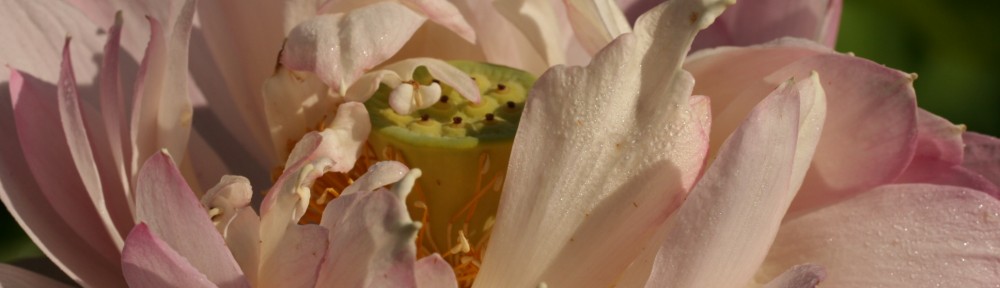
The Flame of Mindfulness

Many people are initially drawn to meditation in hopes of finding a more peaceful, less stressful life. Science has proven that consistent meditation practice can reduce stress over time, but there’s a lot more to the practice than cultivating a relaxed mental state. Skillful mindfulness meditation brings us into intimate contact with the thoughts and habitual patterns of craving that are usually hidden from our everyday awareness, the very thoughts at the root of our suffering. This practice opens the door to a gradual release from the patterns that bind us; it is nothing short of the path to liberation.

Through meditation and awareness practices, most of us uncover habitual reactive thoughts of one kind or another, old conditioned patterns that are usually set into motion by specific events.  Something may go wrong on the job, a loved one makes a critical comment, or a sensitive email or phone call isn’t returned.  If one of these events hit a trigger point, we may find ourselves  drowning in a flood of thoughts about our inadequacy, our failure to live up to some kind of standard we have set for ourselves, or what we believe the world “out there” expects from us. Without mindfulness, these self-referencing thoughts can begin to grow and strengthen until we fall into a state of intense anxiety or even depression.

This knotted, painful response occurs when we believe our self-critical thoughts are real. Unexamined, they can become an uncontested life narrative, something barely perceived because the thoughts are so ingrained and habitual, as regular and unnoticed as a steadily beating heart or the oxygen we breathe. Analyzing the conditioned roots of these patterns may help us understand them better, but that alone rarely frees us from their grip.  One of the most effective antidotes is mindful awareness practices, strengthened and honed through daily meditation, which begins to act as flame to paper, at times strong enough to burn away these habitual narratives on contact.

For over a decade in my teens and 20′s I was in a chronic state of clinical depression. Some people, including myself , are prone to depression, and it can become a hole so deep that finding a way out seems impossible. During this time I lived in a well of unrelenting depression, drowning in the murky waters of unexamined grief and loneliness, never able to see them mindfully. Finally after of years of living in depression as a way of life, a crisis brought me to a point of desperation and I began committed meditation practice.

Initially during my meditation I experienced a flood of sadness and grief, staying present in the midst of strong emotion that I had tried to ignore for years. This was a great relief to me as it finally liberated me from my attempts to repress or escape the pain.

Gradually, through this process of mindful, compassionate awareness, my grief was released and my chronic depression lifted.  But awareness of my habitual self criticism wasn’t yet strong;  all too often  a flood of negative thoughts were unleashed with seemingly minimal cause and I’d be tangled for days in a knot of self denigration. Trapped in the illusion that my thoughts were real, I’d find myself teetering at the brink of that old, familiar depression.

As my practice grew stronger, I could often see self-critical thoughts at their very arising, before they threw me into anxiety or emotional upset. At other times I might get sucked in for a while before  waking up.  But at any point along the way, my willingness to make mindful, compassionate contact with the tangle of thought/emotion grew into the very flame that burned the suffering away. This is the mind of awareness and insight that we all share, the mind that sees thoughts for what they are – transient, and eternally passing away.

Lisa Ernst

A Day of Mindfulness Retreat

Cultivating Clarity though Living The Questions
Saturday, January 28, 10 a.m. – 3:30 p.m., sponsored by One Dharma Nashville

“Be patient toward all that is unsolved in your heart and try to love the questions themselves. Do not now seek the answers, which cannot be given you because you would not be able to live them. And the point is to live everything. Live the questions.” – Rainer Maria Rilke

Please join us for a day of mindfulness retreat at the 12 South Dharma Center. During the winter months it is customary to look inward and clarify our deepest intentions, yet unanswered questions may stand in the way. During this day of mindfulness, we will have the opportunity to practice opening our hearts to our unresolved questions. These questions contain a rich source of insight; learning to live them brings about a radical shift that opens the door to clarity and equanimity.

This retreat is appropriate for newer and more experienced meditators who wish to deepen their practice. Led by meditation teacher Lisa Ernst, the retreat it will include sitting and walking meditation, practice instructions, and a dharma talk. Please bring a sack lunch. Cushions and chairs are available at the center.

Cost: $35, plus dana (donation) to the teacher. Reduced fees are available in the case of financial need. Reservation deadline is Friday, January 20. Please contact onedharmaretreat@gmail.com to reserve your space or for questions. Please mail a deposit of $35, made out to One Dharma Nashville, to: 12South Dharma Center c/o One Dharma Nashville, 2301 12th Ave. South, Suite 202, Nashville, TN 37204. Alternatively, you can bring your deposit to one of Monday sits. Please include your email address with your deposit. Additional information will be emailed prior to the retreat.

Practicing With Boredom

This was my first dharma essay, which I wrote about four years ago.

Practicing With Boredom
by Lisa Ernst

Often in dharma writings and talks, emotions and mind states such as fear, despair, craving and aversion are given plenty of attention. But how often do you hear about boredom? Although it’s mentioned less frequently, boredom can be a deceptive mind state that easily leads us away from an opportunity to awaken to this moment. I feel inspired to write about this mind state because recently I had an experience that reminded me of how deceptive “boredom” can be and how it can also be a gate into liberation.

One morning recently I hit a creative block in my painting. It had been a long time coming, but it finally came to a head, and I abruptly put down my brush and ended my painting session. Distressed, but not in a mood to face it fully, I headed to the kitchen and made a batch of brownies. Everyone who knows me is aware of my deep love of anything chocolate. But I hadn’t had an unplanned brownie bake like that in a long time. I must say that the brownies were quite good, and I decided to take a long hike at Radnor Lake to atone for the indulgence.

As I got onto the trail I noticed how strongly my mind was caught in the drama of my creative block, separating me completely from my experience of hiking in the woods. This awareness in itself helped me to become a little more present. Yet I encountered an unexpected feeling — boredom; my mental drama seemed more interesting than simply walking quietly along the trail. For a brief moment I was tempted to avert my attention away from the boredom and back to the spinning thoughts. But instead I decided to investigate the boredom.

I have practiced with boredom at long meditation retreats, when the hours and the sitting seemed interminable. Unexamined feelings of boredom can lead to what the Buddha called “sloth and torpor” where our minds become dull and completely inattentive. Is it truly a mind state that is stale and uninteresting, the very essence of something we should ignore or try to change, or is it something more? Often, boredom is a kind of aversion to whatever is happening in this moment, leading us to believe that we need to divert or occupy ourselves with “something else” rather than our present experience.

As I looked into this question as I hiked, paying attention to and experiencing my boredom, my aversion to being present simply vanished. Suddenly any desire to cling to my drama, any feelings of separateness from the moment were gone, replaced by the sounds of the birds singing, the soft ground beneath my feet and a gentle breeze against my skin. There was no longer an “I” apart from the experience of hiking through the woods. The act of paying attention to the boredom, of letting it in, was also the act of letting go into the moment. As one of my favorite dharma teachers, Stephen Levine says, “Letting in is letting go.” With a calmer, less reactive mind, I also gained a few insights into my creative block.