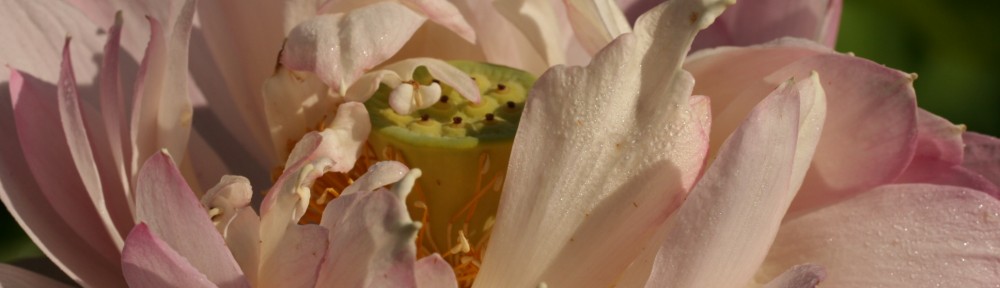
 this world
is full of needles and thorns …
yet lotus blooms
Kobayashi Issa
this world
is full of needles and thorns …
yet lotus blooms
Kobayashi Issa

Frozen Water with Reflection
All beings by nature are Buddha,
As ice by nature is water.
Apart from water there is no ice;
Apart from beings, no Buddha.
How sad that people ignore the near
And search for truth afar:
Like someone in the midst of water
Crying out in thirst.
– Hakuin

Bubble freezing in the midst of popping!
Photography by Lisa Ernst
Diamond Sutra
So you should view this fleeting world
A star at dawn, a bubble in a stream
A flash of lightning in a summer cloud
A flickering lamp, a phantom and a dream
Saturday, February 15, 2014
9:00 a.m. – 3:30 p.m., Nashville Friend’s House
Led by Lisa Ernst
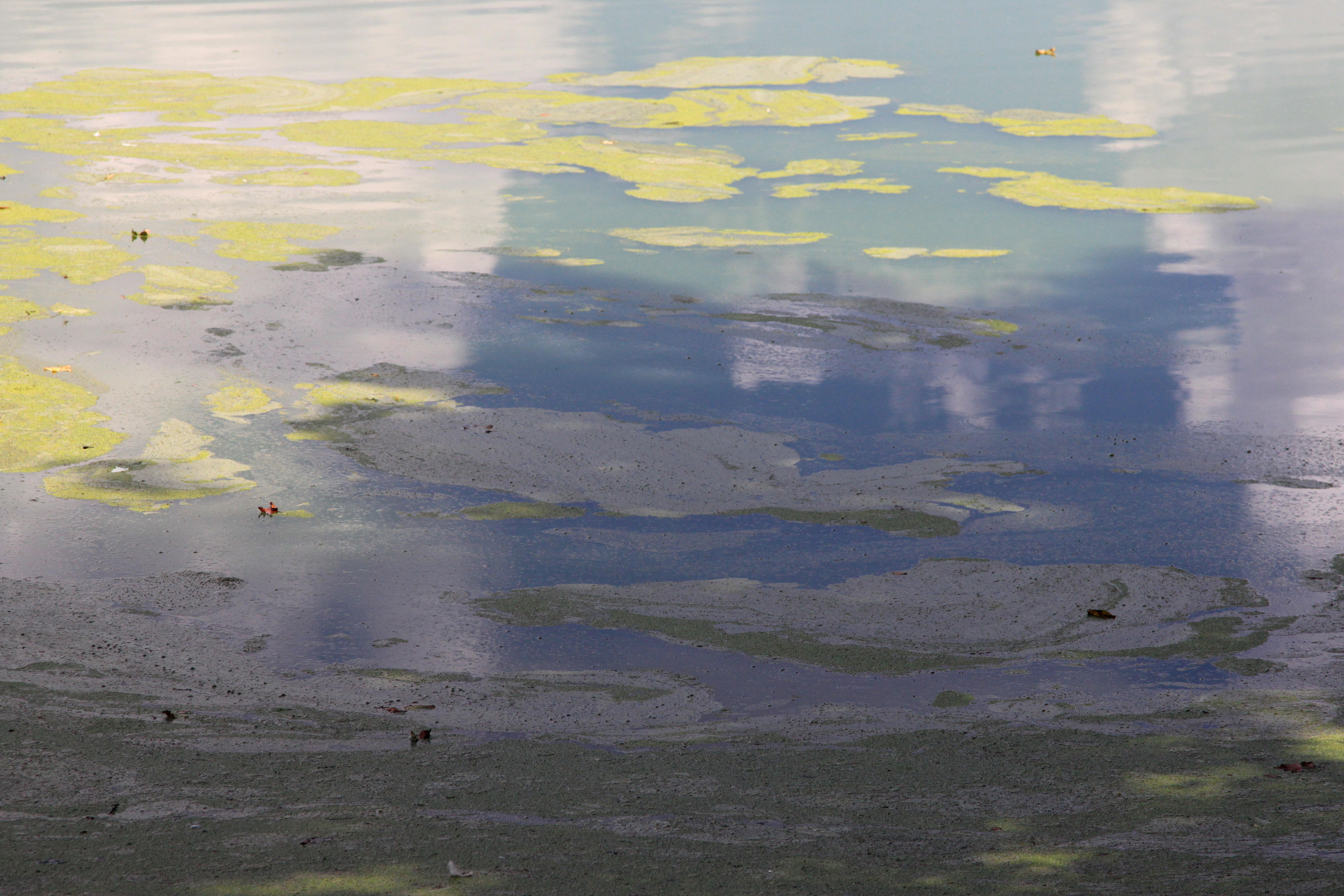
Still Lake with Clouds
Photography by Lisa Ernst
Please join us for a day of contemplative writing and meditation practice. We will cultivate writing inspiration through meditation and exercises that help us open our hearts to the truth of what we most want to express. These practices will also help us to communicate more eloquently from our authentic voice, both in written and verbal form. In addition, we will have an opportunity to share our writing in an atmosphere of compassionate support. This workshop is suitable to beginning and experienced writers and meditators.
Cost is $75 – $100, sliding scale. Two reduced fee spots are available in the case of financial need. Your fee reserves your spot and you can pay by PayPal here using the “donate” button.
Lisa has been meditating for 25 years in both the Zen and Vipassana traditions. She is the founder and guiding teacher of One Dharma Nashville. In addition to regularly teaching meditation classes and retreats, Lisa has written numerous articles for magazines, newspapers and newsletters. She was the technical editor for the current edition of Meditation for Dummies. Her blog includes many essays and poetry: http://www.thelotusbloomsinthemud.com.
For questions email onedharmaretreat@gmail.com
Many people, myself included, come to Buddhism because we can’t find an escape from our suffering. Full of fear and uncertainty, we find that Buddha’s Four Noble Truths provide some mental relief. There is suffering. There is a cause to suffering. There is an end to suffering. The is a path out of suffering (the Noble 8-fold path). As we learn to walk this path, to let go of our resistance to the endless arising and passing away of conditions, we begin to experience this moment just as it is and we see our suffering diminish. The path opens up, we see that Buddha’s teachings are applicable in our own lives. The dharma works. But the mind is a tricky little fox and soon the very path that was leading us to liberation may become yet another thing to cling to, something to keep us safe from the inevitable storms of life. We probably don’t even see this subtle shift until we’ve strayed far from the path.
A man walking across a field encounters a tiger. He fled, the tiger chasing after him. Coming to a cliff, he caught hold of a wild vine and swung himself over the edge. The tiger sniffed at him from above. Terrified, the man looked down to where, far below, another tiger had come, waiting to eat him. Two mice, one white and one black, little by little began to gnaw away at the vine. The man saw a luscious strawberry near him. Grasping the vine in one hand, he plucked the strawberry with the other. How sweet it tasted!
This is our life, we will never be protected from the tigers and the vine will whittle away until we fall to our death. No one has ever escaped death. So what is our response? If we use this practice to keep us safe, it will fail us. Genuine practice isn’t safe.
If you’ve gotten comfortable with your practice, you need to examine with total honesty the boundaries you’ve created. Has the practice become a container or bubble that keeps your heart sheltered from the darkest realms of your own existence? Has it tipped that way without your even knowing it? What happens if you burst the bubble, the boundary that you dwell in? Are you suddenly face to face with what you most fear, what you hoped would protect you from falling, from failing? Can you then, in this very moment, reach for the strawberry right in front of you and enjoy it, no matter what you fate, savoring the perfect sweetness that permeates your whole being? If so, you’ve found your true path, genuine freedom, your home.
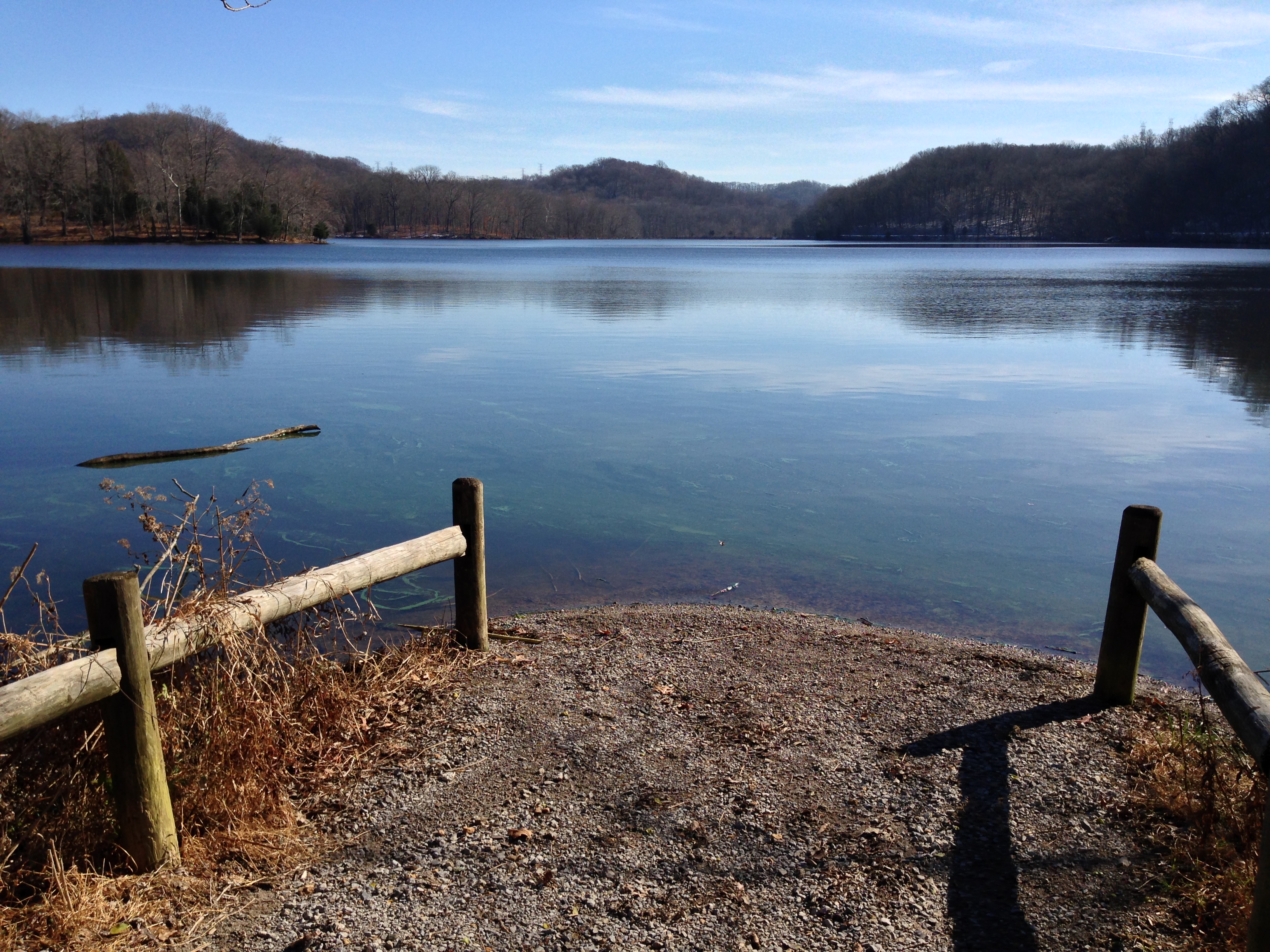
The End of The Path
photography by Lisa Ernst
Over time, if we don’t cultivate awareness through a consistent mindfulness and meditation practice, our minds may become cluttered like a junkyard. Maybe long ago the junkyard was just a pretty field in the country surrounded by trees, grass, and flowers in the spring. Then gradually we began to collect old thoughts, like tarnished, broken down cars. If we grow too accustomed to them, we may even cling to them like ancient treasures.
Slowly they begin to rust and old fluids leak into the ground, polluting the soil so that nothing can grow. But we may not even notice until the day we decide to plant a garden. Taking a fresh view of the yard, all we can see is junk from one end to the other: not one spot for planting
With this perspective we have to take a closer look at our collection of old thoughts and beliefs, to find a way to make space for a garden. But how? It’s not as simple as doing a quick clean up and replacing all the old rotting cars we’ve accumulated for years or decades with a nourishing vegetable garden. We have to start with what we’ve already got—to take time and really see the junk in the yard, to spend time with it, to live there for while. Not to drink the contaminated water in the ground, but to make our way through the clutter, to see each and every thing we’ve clung to and refused to let go.
The amazing thing about this practice is that we don’t need to make an aggressive project of clearing out the junkyard, even if we’re totally surrounded. Once we begin the practice of genuinely seeing our mess, but not adding to it, the debris begins clearing out on its own. Soon there’s a little spot for a garden, and new plants grow that nourish us. Pretty soon the field has more open patches as the junk inhabits a smaller space. Some debris is still there, and that’s ok. We don’t have to have to clear the entire yard to begin growing our garden. Even if we’re still left with some old hardware, we may appreciate the patterns and colors of the rust, and we may find uses for the old tires. Perhaps a tree swing would be nice, just over the garden.
A bird in a secluded grove sings like a flute.
Willows sway gracefully with their golden threads.
The mountain valley grows the quieter as the clouds return.
A breeze brings along the fragrance of the apricot flowers.
For a whole day I have sat here encompassed by peace,
Till my mind is cleansed in and out of all cares and idle thoughts.
I wish to tell you how I feel, but words fail me.
If you come to this grove, we can compare notes.
Ch’an master Fa-yen
Winter solitude –
in a world of one color
the sound of wind.
-Basho
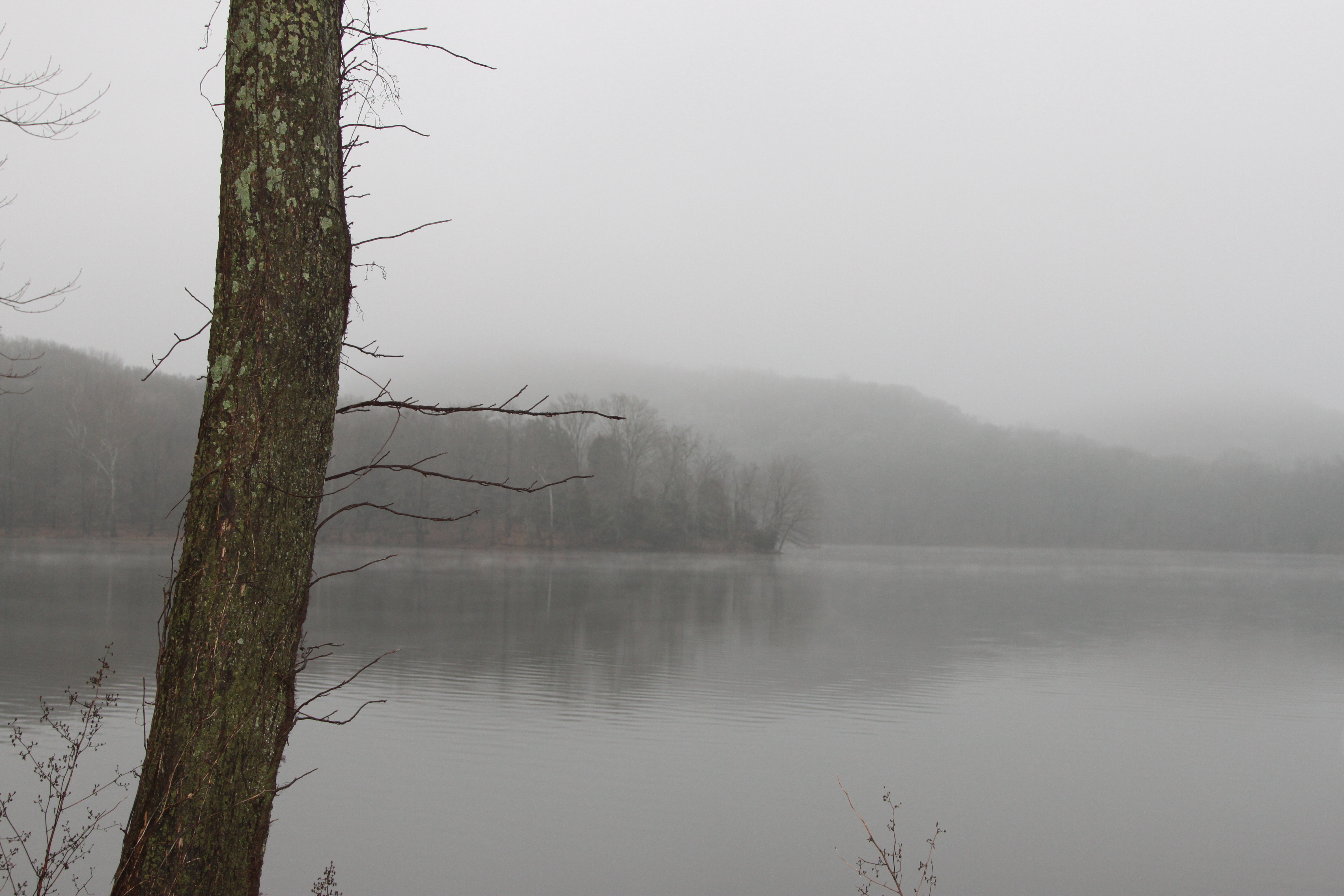
Foggy Winter
A recent TED talk by Kelly McGonigal about stress reminded me of a short article I wrote about fear with a complimentary viewpoint — its not the stress or fear that is the real problem, but our relation to it. When we view it as the enemy, something to get rid of, we set the stage to increase our tension and anxiety until it actually is a problem. But there are ways we can create a healthier relationship to our fear and stress.
As Fearful as You Need to Be: Joy in the Midst of Fear
There’s a popular saying about how to eliminate fear, I’m sure you’ve heard it: “Choose love, not fear.” This is reassuring; it makes people feel that they always have a choice not to be afraid if they can love instead. It is the principle of replacing what’s considered a negative, fear, with a perceived positive, love. But it doesn’t always work, if it works at all. Sometimes we just feel afraid and there’s nothing we can do to eliminate the fear. We can try, perhaps we can do it for a while, but often the fear just pops back up in another way, just like grief or anger. Maneuvering to get rid of it can have unwanted repercussions and often intensifies the anxiety.
So what do you do when your maneuvering fails? Be as fearful as you need to be. Open to it, feel it, don’t try to get rid of it. Stop viewing it as a problem and approach it as a friend. But also be aware of the thoughts and projections that are feeding the fear. You don’t have to nourish those thoughts. What would happen if you just let your fear live inside your body for a while, just as it is? What if you quit viewing fear as the enemy, something to get rid of? Would it overrun you and eat you up? Not if you cultivate a steady mind and an open heart in the presence of the fear. Take a few deep breaths and step in. Through this practice you can reach a still and open dwelling place. You can freedom in the midst of fear, and maybe even joy.
Here’s a link to Kelly McGonigal’s TED talk: The Truth About Stress
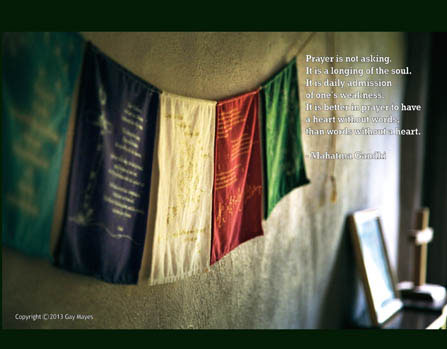
Image by Gay Mayes
The calendars have arrived and will be available for sale at the 12 South Dharma Center starting this Saturday, November 23 at 10:15 a.m, before our bi-weekly intro to meditation. class. You don’t need to attend the class if you only want to purchase calendars.
Calendars are $20 each and are a fundraiser for One Dharma. You can also purchase them on Monday nights at 6:30, before our regular weekly meditation session. I hope you will support this fundraiser; your calendar purchase helps to fund One Dharma’s ongoing presence in the Nashville community, where we ensure that meditation, dharma classes and retreats are accessible to all.
Before dawn, not yet light
crickets touch the dark
with their soft sounds
Rain drops, slow and steady
tap the leaves, fall to the ground
So close, unbound by walls
My skin is dry
but the rain soaks me through.
– Lisa Ernst

Peony with Rain photography by Lisa Ernst
 The Lotus Blooms in The Mud