The Undying

This human form repeats itself

born again and again in numbers beyond count.

A pineapple has needles and fronds and is juicy sweet inside,

how many have graced this world since the first one dropped to the ground?

Trees, flowers, insects and animals repeat themselves

endless reproduction, yet a mystery at the core.

Science tells us how, but can’t get to the rood of why.

Its a a gift of our life

this endless repetition of what we need to live.

Without the trees, the flowers, the bees and the fruit, we die.

Yet the sun in our world doesn’t repeat itself

it doesn’t birth new suns — all we need is one.

What is always here, with us now

undying

what doesn’t repeat itself?

– Lisa Ernst

A Three Way Stop of Awakening: Intersecting Dependent Arising, Equanimity and Emptiness

For many students of Buddhism, reaching an experiential understanding of equanimity and emptiness is quite challenging. Throw dependent origination into the mix and it may lead to all out confusion. But pulling the three together into an understanding of how we suffer and how we get out of suffering may simplify the matter.

Let’s start with dependent origination, also known as Buddhist psychology. Buddha taught that everything arises in dependence upon multiple causes and conditions, that nothing exists as a separate, independent object or entity, including ourselves. Because most humans perceive and react to circumstances as if there were an isolated, distinct cause, we easily become trapped in a chain reaction of suffering. We usually see a situation only through our personal viewpoint and conditioning, only a small part of what’s arising. If we then try to control, change or get rid of it, we create problems for ourselves and others. But when the illusion of a separate, independent self dissolves, we begin to see conditions more clearly. Our vision expands beyond our limited viewpoint, which leads to wise view, insight, and right action when necessary.

For example, when something arises, say, a twinge in your knee during a meditation retreat, you may initially tense against it, try to ignore it, or begin worrying that the pain will get worse. You may analyze where it came from, what you could have done differently, etc. Soon you are lost in and suffering. If you just return to the discomfort, see that it has already arisen, recognizing that many conditions led to that pain, and just let yourself experience it directly, you begin to dismantle the suffering. How? If you don’t nourish your reactivity through resistance and habitual thoughts, there’s nothing to feed your karma and ingrained patterns. The duality of you against the pain begins to dissolve. What’s left is an ever changing pattern of sensation. But you have to be willing to take down your protective veil of separation from the pain itself to reach this insight.

The protective veil arises from a sense of self against the external world. Our boundary of the skin, or somewhere just beyond that, creates a perception of separateness. Of course, that relative boundary is very important in many situations for protection and care of our health and well-being. But suffering occurs when we believe this boundary of self is fixed and unchanging. In reality our bodies and minds are constantly in flux and the concept of our identity is also subject to perpetual change. Just look back ten years and see if your identity, who you believe you are now and who you believed you were then, are exactly the same. There may be an underlying awareness or spark of life that feels unchanging, but is this something fixed to your self-identity?

Quite often, people who haven’t yet experienced no-self will call Buddha’s teaching on emptiness a concept. Yet how many of us refer to our sense of self as a concept? It’s easier for most of us to perceive the self as real and emptiness as an esoteric idea or concept. In reality, if we reverse the two we will be closer to a genuine understanding.

It helps when we can meet our experience, what arises in the moment, with equanimity. People often mistake equanimity for indifference or detached neutrality. But it’s actually the ability to stay present with our situation without reactivity, or if we do react, to see it and stop feeding it. If we experience a loss, for instance, meeting the pain of that loss with equanimity doesn’t mean we don’t feel the pain. Instead, we allow the arising of that pain without interference, and eventually it passes on its own.

To pull the three together, equanimity, dependent origination and no-self, I’ll share an example from my own experience. For many years I was in an unstable romantic relationship. I was sure he was “the one” and did everything I could to ensure his long term commitment. Yet, he kept pulling away. I would go through waves of pain and suffering whenever he left and rely on my therapist to help me find the root of the problem so I could get on with life.  She was quite helpful to me, yet each time I reached a point of acceptance, my boyfriend came back. Again and again I took him back into my life while ignoring the troublesome patterns inherent in our relationship. “This time things will be different,” I repeated like a mantra. Regardless of my hopeful attitude, our old patterns always reemerged along with his restlessness.

This pattern went on for a number of years.  Through therapy and meditation, I learned to work with my reactions, clinging and desires until significant space opened up. I felt more relaxed and less needy, I dated other men and felt relatively content. But just when I felt truly ready to get on with my life, he asked me to move in with him. Intuitively I knew it was a bad step. But the more I thought about it, the more I convinced myself that we had both changed enough to make it work. Soon, however, our new level of togetherness revealed our incompatibilities even more acutely. I stubbornly persevered until one night we had an irreconcilable disagreement. Suddenly all my years of effort and therapy, everything I did to make it work, came crashing down. I had been so focused on trying to control the situation, to make it right, to fix the “cause” of the problem, that I ignored the obvious and deeper conditions that prevented us from being compatible. In my limited view of the situation, I missed to the full spectrum of conditions that were beyond my control.

I had been blinded to dependent origination because I craved his attention so badly. I thought his love would complete my identity, my sense of self, even though living with him didn’t fulfill me at all. I finally saw the disconnect, the broader conditions that made our relationship incompatible. At last I had the courage to completely let go. I realized I had been holding on to a fixed idea of my identity as someone who needed to be in a relationship no matter how flimsy it was. And most of all, I was finally able to meet the situation with equanimity. The truth hurt but I didn’t push it away. I quit trying to cover it over with a worn out narrative about how one more step, one more effort at self improvement, would unlock the door to our love.

This awakening was one of the most liberating moments of my young adult life.  I realized that this “self” didn’t need someone outside of me to validate my very existence. There was nothing fixed about my identity; moment to moment my “self” was in flux, yet also worthy of kindness and compassion. This realization didn’t mean I quit longing for a loving relationship. But I realized that it wasn’t essential to my existence or happiness. Living this moment brought true fulfillment, with an open heart, in sadness and in joy. At last I could embrace my loneliness, my broken heart, something that had been with me long before I met and lost my “ideal” man. Through accepting that broken heart with equanimity I found for the first time in my life the joy I had been seeking for so long.

– Lisa Ernst
New Huffington Post Live Segment “Be More Miserable”

Recently I was invited to participate in another Huffington Post Live segment, “Be More Miserable.” Interesting name for a webcast…..I was there to represent the perspective of artists, but all of us on the panel had Buddhist and meditation backgrounds so my dharma experience influenced my comments as well.  You can click on the photo to see the full segment or on the link here. huffpomis

Daylong Summer Meditation Retreat

The Joy of Interconnection

Saturday, August 3, 2013, 9:30 a.m. – 4 p.m.

Led by Lisa Ernst

shylotuscropPlease join us in Nashville for a day of sitting and walking meditation. According to the Buddha, the greatest suffering arises from a sense of separation. Through the practice of sitting and walking meditation we begin to access insight, which allows us to pierce the illusion of separateness and taste the joy of interconnectedness to all things.

Led by meditation teacher Lisa Ernst, this silent retreat is suitable for both beginning and experienced meditators; it will include periods of sitting and walking meditation, practice instructions, optional private interview and a dharma talk. Please bring a sack lunch. Refreshments will be provided at the end of the retreat.

Cost: $50, plus dana (donation) to the teacher. A deposit of $50 will reserve your space.. Paypal is available at this link. Please email onedharmaretreat@gmail.com with any questions or to confirm your spot.

Wisdom on The Rocks

On a cool, sunny June afternoon I started one of my frequent hikes at Radnor Lake. There’s a steep paved road just past the parking lot that leads to the lake.  In one area, damaged by a major flood, the road is all gravel and a bit bumpy to traverse. As I approached the graveled area, I saw a young man in a wheelchair suddenly grab his wheels and try to turn back toward the parking lot. He protested loudly about riding over the gravel and appeared quite frightened. One of his companions calmly encouraged him not to be afraid, reminding him that the lake was just past the gravel so he needed to go through it to enjoy the scenery. This seemed to calm him down a bit and he let go of his efforts to escape the gravel. At that point he had already ridden halfway through anyway, so either going or returning meant equal contact with the gravel.

As I walked past, he appeared more relaxed as one of his companions moved him forward in the chair.  Suddenly he opened his mouth and allowed the sound of his voice to reflect the bumpiness of the gravel. It was as if his whole body had become one with the gravel, completely connected with the experience of going over the rocks. I realized he was giving a wonderful dharma talk – directly reflecting how he had let go of aversion and was allowing himself to experience the moment fully. There was no fear in his voice, just a manifestation of the moment’s bumpiness.

I smiled as a deep gratitude arose in my heart for the inherent wisdom we can all access through the simple, yet often challenging act of letting go. This young man was intellectually disabled in a way that kept him from communicating as freely and easily as most of us. Yet in facing his fear and releasing his efforts to escape the gravel, he relaxed into the moment and allowed the bumpiness to penetrate his whole body. Soon he was back on the smooth pavement and had the opportunity to enjoy the beautiful lake just ahead.

May we all find the wisdom to let our whole hearts and bodies meet the gravel when it comes and to enjoy the serene, deep lake that follows.

by Lisa Ernst

Dipa Ma’s 10 Lessons To Live By

1. Choose one meditation practice and stick with it. If you want to progress in meditation stay with one technique.

2. Meditate every day. Practice now. Don’t think you will do more later.

3. Any situation is workable. Each of us has enormous power. It can be used to help ourselves and help others.

4. Practice patience. Patience is one of the most important virtues for developing mindfulness and concentration.

5. Free your mind. Your mind is all stories.

6. Cool the fire of emotions. Anger is a fire.

7. Have fun along the way. I am quite happy. If you come to meditate you will also be happy.

8. Simplify. Live simply. A very simple life is good for every thing. Too much luxury is a hindrance to practice.

9. Cultivate the spirit of blessing. If you bless those around you this will inspire you to be attentive in every moment.

10. It’s a circular journey. Meditation integrates the whole person.

Love Letters

“Every day priests minutely examine the Dharma and endlessly chant complicated sutras.They should learn how to read the love letters sent by the wind and rain, the snow and moon.”
~~ Ikkyu

An Owl’s Perfect Song

This moment of joy is an owl’s perfect song

Again and again each time the same

How does it know to sing just this way?

The thought like the owl can’t be caught and held

It drifts on its way but the joy remains.

An open heart leaves nothing outside

receives all yet holds none

so owls can sing and then fly away.

– Lisa Ernst

Aching with Longing

This is a blog post from Gareth Young, a co-founder of Red Clay Sangha in Atlanta. His sangha, along with the Insight Meditation Community of Georgia hosted a Lovingkindess and Brahma Vihara retreat that I led March 2 – 5 in the North Georgia Mountains. Thanks to all who made this happen. Here’s Gareth’s post:

Aching with Longing

Today I finished a short meditation retreat led by Lisa Ernst from Nashville and co-hosted by the Red Clay Sangha and the Insight Meditation Group of Georgia: Zen-based and Vipassana traditions coming together for an interdenominational Buddhist retreat.  We had invited Lisa to lead the retreat using her own style of practice and she focused the retreat on metta.

Like most Buddhist teachings (for my mind this is actually an attribute of all legitimate Buddhist teachings) metta practice is a set of tools that can be used by anyone regardless of their faith tradition.  In simple terms it is is designed to cultivate loving kindness and compassion for self and other, and it centers upon repeating continuously a series of phrases such as:

May I/him/her/all beings be free from danger
May [I/they] have mental happiness
May [I/they] have physical happiness
May [I/they] have ease of well being.

It may sound banal, even silly, but it is extraordinary and it works – though it does require a lot of patience!  And by focusing on the self first it naturally allows one to deal with feelings of self-loathing, inadequacy, being unlovable and the like that are so common in our culture.  The premise, which I think is correct, is that only from a place of self-loving can one move into the world and unconditionally love the other.

The genesis of this blog post is not metta practice itself – though I commend it to you – but a beautiful poem by Tagore, a giant of Indian literature who I knew shamefully little about until I just read about him.  Lisa waited until this morning after our hearts had been opened up by a couple of days of metta practice before reading the poem to us and it blew the doors open for me.  It is a piece of pure beauty that hopefully will blow a tempting gust of air through your own doors, too:
On the day when the lotus bloomed, alas, my mind was straying, and I knew it not. My basket was empty and the flower remained unheeded.

Only now and again a sadness fell upon me, and I started up from my dream and felt a sweet trace of a strange smell in the south wind.

That vague fragrance made my heart ache with longing, and it seemed to me that it was the eager breath of the summer seeking for its completion.

I knew not then that it was so near, that it was mine, and this perfect sweetness had blossomed in the depth of my own heart.

To read more of Gareth’s blog, go here.

Mostly Smooth Sailing

Every retreat has its own flavor for its participants, both individually and collectively. Our Spring Renewal retreat was mostly smooth sailing with a dedicated and focused group of practitioners. After Thursday’s hard afternoon rains most participants were able to arrive in time for our 7 p.m. meditation.  For the rest of the retreat we enjoyed sunny, although somewhat chilly spring weather.

At our previous retreat, the site still needed cleaning when we arrived and a few of us pitched in to insure the facilities were ready. This time, to our great appreciation, the camp manager spared no effort in assuring we arrived to spotless facilities. At this retreat people really wanted to sit — usually most everyone was in place a good five minutes before each session’s start time. I had the feeling that some would have happily stayed on for additional practice days, schedule permitting.

Self-compassion is vital during the early hours and days of meditation retreats, when participants are adjusting to the silence and intentional lack of external distraction. Often people feel that they are alone in their struggles, possibly doing it wrong, even imagining that others are swimming through the hours with joy and ease. “Comparing mind” rears up and leads to self-criticism and even self-loathing for some. At this vital point, learning to extend compassion to all parts of ourselves, especially the broken, pained and imperfect, can soften the heart and mind enough to accommodate our immediate experience. Then the resistance begins to ease, just as Buddha taught. This allows us to settle into the practice, to truly appreciate this moment just as it is.

Some people struggled a bit with the walking mediation, which is pretty normal at Vipassana style retreats. Walking slowly yet going nowhere for 30+ minutes at a time feels awkward and counterintuitive to some, especially at first.  Without a target, a specific destination, people have to let go and rest their attention only on their immediate surroundings along with the movement of their bodies, one foot and one breath at a time. It is a deep and profound practice once the restlessness and resistance is gone. Concentrated walking meditation can reveal deep glimpses into interconnectedness and no-self. Some people are more naturally attuned to sitting and it may take patience and time for them to appreciate the walking practice. For those who prefer Zen style line walking, we always include one session of this practice in the evenings.

Meditation retreats may challenge us in ways we have never imagined; yet they can also open us to extended periods of joy and ease. Retreats can reveal glimpses and even deep insights into the unlimited and boundless nature of true mind that is our birthright, that is always here and ready for us to receive whenever our minds and hearts are fully present.

Altar Flowers by Frankie Fachilla

Altar Buddha by Frankie Fachilla

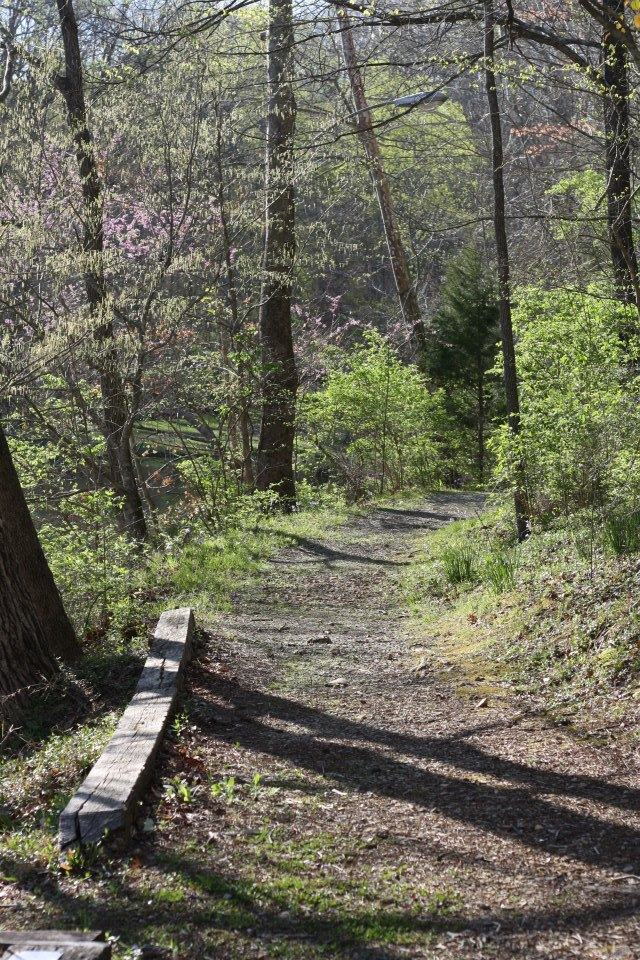
Walking Path at Bethany Hills by Frankie Fachilla

Walking Path at Bethany Hills by Frankie Fachilla

Early morning light at Bethany Hills by Lisa Ernst

Early morning light at Bethany Hills by Lisa Ernst

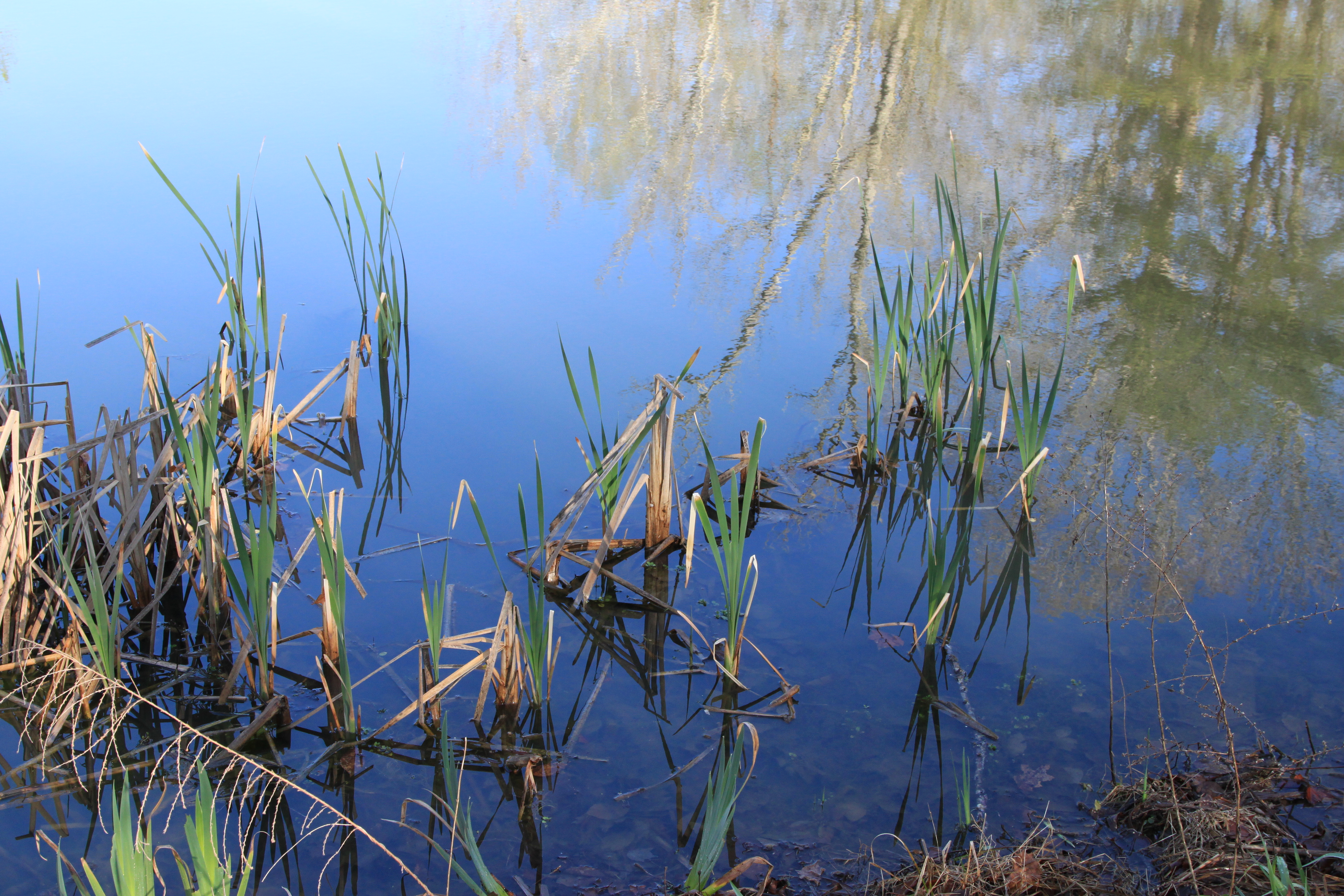
Reflection by Lisa Ernst

Reflect 2 by Lisa Ernst