
“I came to realize clearly that mind is no other than mountains and rivers and the great wide Earth, the sun and the moon and the stars.”
~~ Eihei Dogen
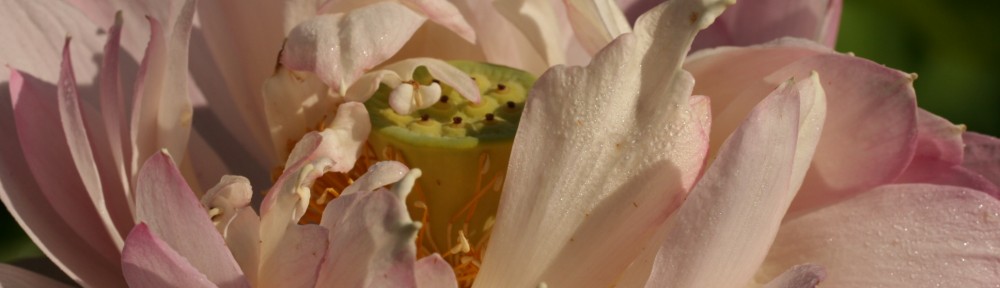
“I came to realize clearly that mind is no other than mountains and rivers and the great wide Earth, the sun and the moon and the stars.”
~~ Eihei Dogen
If you have a daily meditation practice, you inevitably experience sessions when you feel restless, anxious, or uncomfortable. This is something I mention often because it’s a near universal experience. Some days you may settle onto the cushion and feel relaxed and spacious. At other times, you might quickly seek reasons to end the session, if you make it to the cushion at all.
When you sit daily, you become intimate with your heart and mind in ways both wondrous and disturbing. How do you skillfully face anxiety and restlessness on the cushion? When you first take a seat, you may see a daunting meditation session stretching out in front of you. How do you stay put when every impulse in your body says to leave? First, be fully aware of it, don’t push it away. You might start by offering gratitude to the anxiety – it is a present moment experience – this is what we have in this life. The flavor may not be your favorite, but it is worth tasting nonetheless. Give it a try. Gratitude practice, even toward our unwanted visitors on the cushion, can help notch down resistance.
Remember to return to your body and the physical sensations associated with the discomfort. This is especially important in working with anxiety. Don’t try to get rid of it. I’ve discovered that as soon as I commit to staying present with anxiety or restlessness, my sense of time and the impulse to escape begin to dissolve. There’s no longer a “me” that is separate from what appeared to be a problem, what I thought of as “anxiety.” Labels have practical uses, but they can easily cause us to react from old scripts that separate us from experiencing what’s arising.
The apparent duality of our self and our experience creates an illusion that there is something separate to be rid of. This dichotomy leads to myriad forms of suffering because it’s a struggle with no end. As long as we identify as a self that is trying to eliminate discomfort and inconvenience, we’ll stay stuck in this conundrum. But when we let go, the sense of self and separation dissolve. What we define as a problem is gone. What’s left? Something delicious. Beyond that, you’ll have to taste it yourself. Keep practicing. It’s well worth it!
This dharma talk was recorded at Insight Nashville on March 19, 2014. I explore the parami of generosity, especially in the context of receiving as an interconnected act of lovingkindness. The full audio is 30 minutes; the final portion is a guided meditation on opening our hearts to receive as well as give metta.
Before dawn, not yet light
crickets touch the dark
with their soft sounds
Rain drops, slow and steady
tap the leaves, fall to the ground
So close, unbound by walls
My skin is dry
but the rain soaks me through.
– Lisa Ernst

Peony with Rain photography by Lisa Ernst
In a moonlit night on a spring day,
The croak of a frog
Pierces through the whole cosmos and turns it into
a single family!
-Chang Chiu-ch’en
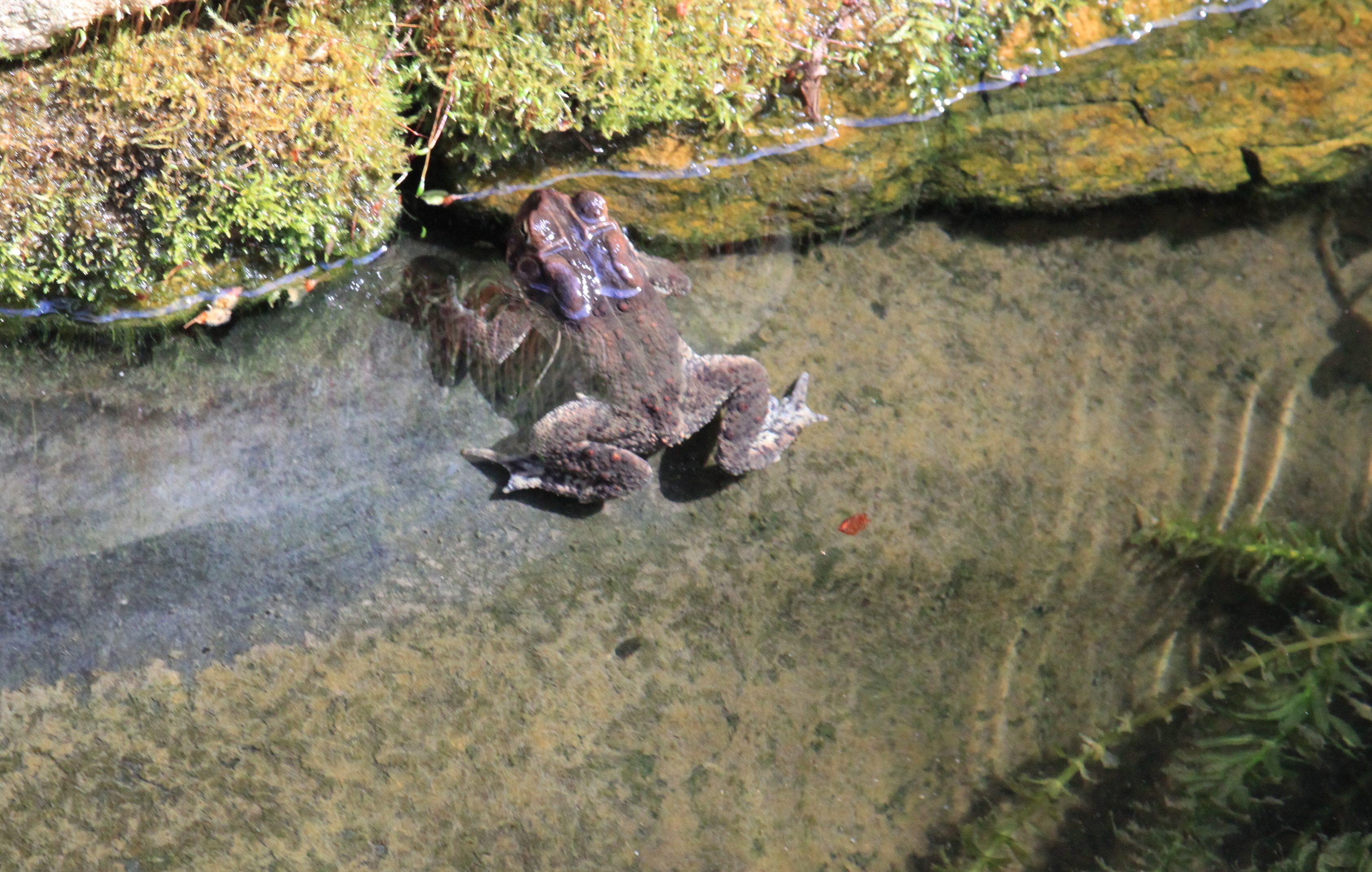
Frog in Spring
For many students of Buddhism, reaching an experiential understanding of equanimity and emptiness is quite challenging. Throw dependent origination into the mix and it may lead to all out confusion. But pulling the three together into an understanding of how we suffer and how we get out of suffering may simplify the matter.
Let’s start with dependent origination, also known as Buddhist psychology. Buddha taught that everything arises in dependence upon multiple causes and conditions, that nothing exists as a separate, independent object or entity, including ourselves. Because most humans perceive and react to circumstances as if there were an isolated, distinct cause, we easily become trapped in a chain reaction of suffering. We usually see a situation only through our personal viewpoint and conditioning, only a small part of what’s arising. If we then try to control, change or get rid of it, we create problems for ourselves and others. But when the illusion of a separate, independent self dissolves, we begin to see conditions more clearly. Our vision expands beyond our limited viewpoint, which leads to wise view, insight, and right action when necessary.
For example, when something arises, say, a twinge in your knee during a meditation retreat, you may initially tense against it, try to ignore it, or begin worrying that the pain will get worse. You may analyze where it came from, what you could have done differently, etc. Soon you are lost in and suffering. If you just return to the discomfort, see that it has already arisen, recognizing that many conditions led to that pain, and just let yourself experience it directly, you begin to dismantle the suffering. How? If you don’t nourish your reactivity through resistance and habitual thoughts, there’s nothing to feed your karma and ingrained patterns. The duality of you against the pain begins to dissolve. What’s left is an ever changing pattern of sensation. But you have to be willing to take down your protective veil of separation from the pain itself to reach this insight.
The protective veil arises from a sense of self against the external world. Our boundary of the skin, or somewhere just beyond that, creates a perception of separateness. Of course, that relative boundary is very important in many situations for protection and care of our health and well-being. But suffering occurs when we believe this boundary of self is fixed and unchanging. In reality our bodies and minds are constantly in flux and the concept of our identity is also subject to perpetual change. Just look back ten years and see if your identity, who you believe you are now and who you believed you were then, are exactly the same. There may be an underlying awareness or spark of life that feels unchanging, but is this something fixed to your self-identity?
Quite often, people who haven’t yet experienced no-self will call Buddha’s teaching on emptiness a concept. Yet how many of us refer to our sense of self as a concept? It’s easier for most of us to perceive the self as real and emptiness as an esoteric idea or concept. In reality, if we reverse the two we will be closer to a genuine understanding.
It helps when we can meet our experience, what arises in the moment, with equanimity. People often mistake equanimity for indifference or detached neutrality. But it’s actually the ability to stay present with our situation without reactivity, or if we do react, to see it and stop feeding it. If we experience a loss, for instance, meeting the pain of that loss with equanimity doesn’t mean we don’t feel the pain. Instead, we allow the arising of that pain without interference, and eventually it passes on its own.
To pull the three together, equanimity, dependent origination and no-self, I’ll share an example from my own experience. For many years I was in an unstable romantic relationship. I was sure he was “the one” and did everything I could to ensure his long term commitment. Yet, he kept pulling away. I would go through waves of pain and suffering whenever he left and rely on my therapist to help me find the root of the problem so I could get on with life. She was quite helpful to me, yet each time I reached a point of acceptance, my boyfriend came back. Again and again I took him back into my life while ignoring the troublesome patterns inherent in our relationship. “This time things will be different,” I repeated like a mantra. Regardless of my hopeful attitude, our old patterns always reemerged along with his restlessness.
This pattern went on for a number of years. Through therapy and meditation, I learned to work with my reactions, clinging and desires until significant space opened up. I felt more relaxed and less needy, I dated other men and felt relatively content. But just when I felt truly ready to get on with my life, he asked me to move in with him. Intuitively I knew it was a bad step. But the more I thought about it, the more I convinced myself that we had both changed enough to make it work. Soon, however, our new level of togetherness revealed our incompatibilities even more acutely. I stubbornly persevered until one night we had an irreconcilable disagreement. Suddenly all my years of effort and therapy, everything I did to make it work, came crashing down. I had been so focused on trying to control the situation, to make it right, to fix the “cause” of the problem, that I ignored the obvious and deeper conditions that prevented us from being compatible. In my limited view of the situation, I missed to the full spectrum of conditions that were beyond my control.
I had been blinded to dependent origination because I craved his attention so badly. I thought his love would complete my identity, my sense of self, even though living with him didn’t fulfill me at all. I finally saw the disconnect, the broader conditions that made our relationship incompatible. At last I had the courage to completely let go. I realized I had been holding on to a fixed idea of my identity as someone who needed to be in a relationship no matter how flimsy it was. And most of all, I was finally able to meet the situation with equanimity. The truth hurt but I didn’t push it away. I quit trying to cover it over with a worn out narrative about how one more step, one more effort at self improvement, would unlock the door to our love.
This awakening was one of the most liberating moments of my young adult life. I realized that this “self” didn’t need someone outside of me to validate my very existence. There was nothing fixed about my identity; moment to moment my “self” was in flux, yet also worthy of kindness and compassion. This realization didn’t mean I quit longing for a loving relationship. But I realized that it wasn’t essential to my existence or happiness. Living this moment brought true fulfillment, with an open heart, in sadness and in joy. At last I could embrace my loneliness, my broken heart, something that had been with me long before I met and lost my “ideal” man. Through accepting that broken heart with equanimity I found for the first time in my life the joy I had been seeking for so long.
– Lisa Ernst
This morning I fell
into a well of silence.
Not a push, not a jump,
just a breath and an instant
and all is still
like a snow covered morning
at first light.
Before the mind stirs
Before the heart wants
something else
this silence
enters me, washes me away
into the joy of this
undying moment.
– Lisa Ernst

Misty Winter Morning at Radnor Lake
Even if you have a regular meditation practice, you probably encounter moments when you feel overwhelmed and challenged to sit in the midst of your experience. Especially when strong feelings of anxiety or fear arise, the mind’s tendency to identify with thought and avoid the present moment is particularly strong.
What is your resistance point? When do you reach the precipice of overwhelm, when you believe you can no longer stay present? Cultivating awareness of this tipping point, when you exceed your capacity for presence, can help you expand your awareness beyond any imagined self limitations you have.
How? First it helps to remember and practice this core teaching from the Buddha:
“Nothing whatsoever is to be clung to as “I” or ‘mine.’ Whoever has heard this truth has heard all the Teachings, whoever has realized this Truth has realized all the Teachings.”
You may ask how Buddha’s teaching of non-clinging applies to resistance and emotional overwhelm. As our practice deepens, we begin to recognize when we cling to desired things such as relationships, possessions, health and happiness. But we may overlook how we cling to our unwanted mental states and interpret them as “I” and “mine.” It’s all too easy to perceive depression, shame, fear and anxiety as part of who we are. As soon as we create this self-identification, the emotions feel fixed and personal. Letting go, releasing our clinging, is challenging.
When I speak of letting go, I don’t mean trying to get rid of anything, but instead allowing our emotions and mind states to be exactly as they are, without self-identification. This is how we begin to loosen the knot. As soon as we quit identifying with these feelings as “me,” we see them for what they are – the temporary and changing mosaic of thought and emotion that we experience throughout our lives. If these emotions and mind states were only a kaleidoscope of color passing by our eyes, we wouldn’t identify with them as ourselves; we could allow them to simply come and go. No resisting and no clinging. When we cultivate this attitude toward emotions we invite equanimity and non –identification. We may still feel the anxiety or sadness, perhaps even more deeply, but we don’t interpret them as “I” or “mine.” They are simply part of the moment, along with the sounds, scents, and physical sensations, everything that is here. We have room for it all. This is a heart at rest.
The unfolding immigration tragedy that has left children separated from their parents, detained in prison-like cages, has provoked one of the strongest outpourings I’ve seen of grief, despair, anger and confusion, along with fierce protests and calls to our politicians to end the practice immediately. Through these efforts we’ve seen some movement on this issue but know there’s much more to be done. Even in the midst of this energetic effort, I’m reminded that we also need to remember that there is no “other” out there, or anywhere, to hate. Otherwise, weariness and despair can easily overtake us. We can protest, speak out, call our politicians; we can also remember our interconnected nature at the deepest place in our hearts. We are capable of both. Recently I was moved by a quote from Phillip Moffitt and want to share it here:
“The Buddha said, “Hate never yet dispelled hate. Only love dispels hate.” By holding the truth of our interdependency and refusing to participate in this endless cycle of hatred, you can help to heal the wound of the world. Jesus said, “If you love those who love you, what credit is that to you? Even sinners love those who love them. But if you love your enemies, do good to them, and lend to them without expecting to get anything back, then your reward will be great.’
No one can accuse Jesus or Buddha of being cowards in the face of injustice; therefore, their teachings are about how to hold the difficult in the heart. You have to decide if you share their beliefs, and if so, you practice living in this manner as a reflection of your deepest values. It is a proactive, courageous way to live. This does not mean responding passively when you encounter wrong action, for you should always act to stop those who harm others.”
This reflection on interdependency reminds me of an article I wrote a few years ago after I watched a movie about a woman who was stoned to death in Iran. As the movie ended, I was overwhelmed and struggled to get to sleep that night. During the next morning’s meditation, however, I gradually remembered that the mental creation of good and bad, enemies and friends just brought about separation that prevented my heart from bearing the pain of this act. In remembering the truth of interconnection, I found that I could open my heart to the stunning pain I felt at the stoned woman’s plight and to feel compassion for the great suffering of her entire community, even the perpetrators. To experience interdependency at this level in no way precludes wise action to stop suffering. While there was little I could do personally to stop the practice of stoning in Iran, there is much I can do in this country to help turn the tide away from cruelty. I can’t know if my efforts will succeed, but I know they are worth doing.
The One Who Casts the Stone and The One Who is Hit
by Lisa Ernst
Recently the impending stoning death of an Iranian woman made worldwide headlines and sparked international outrage. The pressure on the Iranian government to change her sentence has been immense. For most of us, it is incomprehensible that death by stoning is still a form of capital punishment in some parts of the world.
I was especially moved by the cause of this woman because I had recently watched a movie about the stoning death of another Iranian woman, “The Stoning of Soyora M.” The movie is based on a book of the same name, the true story of a woman falsely accused of adultery and stoned to death in her home town in the 1980s. This movie depicted the woman’s stoning in a very accurate, unflinching way and it was one of the hardest things I’ve ever watched on film. She was dressed in white and marched through the streets of her home town while men lined the way, rhythmically clapping stones together as a prelude to the execution. When she reached the stoning ground, her arms were bound to her sides and she was buried to her waist. A perimeter line was drawn, perhaps 20 feet away, behind which everyone in the town stood to stone her or to watch. A barrel of stones had been collected so the townsmen could all have their turn.
For a stoning execution, the stones are chosen for their size – not too large to kill the person immediately, but not too small as to do little harm. In Soroya’s case, I had hoped that her suffering would be brief, but stonings are deliberately stretched out over a period of time to create a gruesomely painful form of torture. The woman’s dignity was completely stripped away as her husband, her sons, and the men in her community threw stone after stone at her head, as she cried out in pain and disbelief, fell over to the ground, yet continually lifted herself back up with whatever strength she could muster. Slowly her white dress became completely stained with red. Finally, after perhaps an hour she was dead.
As the movie ended, I sat stunned and speechless, as tears spilled down my cheeks. It was just before bed and I wondered if I’d be able to sleep after witnessing such heinous torture. Somehow, I was able to fall into a restless sleep. The next morning I got up to meditate, having briefly forgotten what I had seen the night before. As I settled into meditation, the stillness of the morning and the sweet birdsong brought my heart fully awake. Then, in this place of stillness and open heartedness, the stoning images of the night before returned. There was great sadness in my heart, yet I didn’t close down or turn away. What I’ve learned through my practice is that when my heart fully awake, it has the capacity to accommodate not only great love but great suffering. This is the “door of compassion” that Thich Nhat Hahn beautifully speaks of in this poem:
“Please Call Me by My True Names”
I am the 12 year old girl, refugee on a boat, who throws herself into the ocean after being raped by a sea pirate. And I am the pirate, my heart not yet capable of seeing and loving.
I am member of the politburo, with plenty of power in my hands, and I am the man who has to pay his “debt of blood” to my people, dying slowly in a forced labor camp.
My joy is like spring, so warm it makes flowers bloom in all walks of life.
My pain is like a river of tears, so full it fills up the four oceans.
Please call me by my true names, so I can hear all my cries and
my laughs at once, so I can see that my joy and pain are one.
Please call me by my true names so I can wake up,and so the door of my heart can open the door of compassion.
– Thich Nhat Hahn
Buddha taught that there is no inherent self separate from others; no self separate from all phenomena. This is called emptiness. Through committed meditation practice, we gradually increase our capacity to experience emptiness. We begin to understand at an experiential level that all of existence is none other than our own true nature. This insight is the basis for recognizing that all beings are Buddha, the awakened one. But what is often not stated, yet cannot be otherwise, is that we also are the pirate who rapes the 12 year old girl, and the man who stones his wife. If we selectively associate our understanding of non-separation with the highest of good, choosing to see only what we like and admire, we risk closing off our hearts to the often unspeakable suffering of our own humanity. Unconditional compassion and love can only arise when the heart is open to the full spectrum of experience, from great kindness to profound cruelty. This is true non-separation. Admittedly however, this kind of open- heartedness is not always easy; there are times when we may see or experience suffering that is beyond our heart’s capacity to bear. During these moments, some compassion for our own inevitable limits can soften the edges of our pain. At other times we may find the way to truly open our hearts and no longer look away:
You can hold back from
suffering of the world,
you have permission to do so,
and it is in accordance
with your nature,
but perhaps this very holding back
is the one suffering
you could have avoided
Franz Kafka
With a compassionate heart, we may weep at the inconceivable cruelty of this world and feel joyous when witnessing a deed of true kindness. During the quiet of the morning when my heart touched the great suffering inherent in the act of stoning, for a few moments I could see without flinching the depths of unkindness that is part of human nature. The same heart that fills with joy upon hearing a symphony of birds greeting the morning sun, also breaks for the woman who died the most unimaginable death at the hands of her own husband and community. They are all none other than me.
As I sit for meditation
I’m struck by the morning’s
complete generosity.
It gives all,
holding not a thing
back for itself.
It asks nothing of me
except to fall into its open arms
completely
like a lover’s warm embrace.
The birds sing this song
from my very heart
until the birds and I disappear
and nothing remains
except all that is here.
– Lisa Ernst
 The Lotus Blooms in The Mud