Joan Halifax on Mindful Photography

I found this blog post this morning and thought it was quite timely considering my last post about  mindful photography. This is Roshi Joan’s  own moving journey with a camera.

Seeing Inside by Joan Halifax

When I was a kid, I got really sick. For two years, I couldn’t see. It was then I discovered I had an inner world, and it was a visual one. Since I was born with two good eyes, I knew the visual experience. Then suddenly, one morning, I felt my way down the hall of our house in Coral Gables, Florida, my hand sliding along the wall, and told my parents that I couldn’t see.

A cascade of physical disabilities followed and after a while disappeared. During the time when I was in bed, recovering from an unidentified virus, another world opened up to me. I began to re-create the outer world inside of me; I began to see inside.

When I got better, my mother and father gave me a Kodak Brownie Box Camera. Just as my interior life had appeared to me when I was sick, here was a little box that would capture what I saw. It could see inside. I was fascinated, and I was hooked. And I began to photograph the world that caught my eye, beginning from the age of six on, and now I am 70.

Today, a collection of nearly a hundred thousand photographs exists, a thread of images that span time and the world. When I was a kid, I photographed my handsome father standing proudly beside his Lincoln Continental. Soon thereafter, I photographed Cologne Cathedral with my Brownie. The haunting black and white image captured a heavy sky hanging ominously over the bombed cathedral. Recent photographs portray the faces of Tibetans, riven with the elements, Burmese elders, incandescent with innocence, and the landscapes of Zen and the Himalayas.

I never cared about or studied f/stops and shutter and film speeds. I only cared about composition and connection. I never took a class in photography, though I had friends who were great photographers, including Robert Frank, Ralph Gibson, Julio Mitchell, and others. I thought Diane Arbus was nothing but courage, and met her several times when I lived in New York. I was a huge fan. I loved the work of Ansel Adams and traveled with his daughter. Dorothea Lange’s photographs always took my breath away, as did the work of Gordon Parks and Eugene Smith. In the 70’s, I stayed in Eliot Porter’s house on occasion in Tesuque, and studied his work. More recently, the photographs of Matthieu Ricard show a view of space and light that is resonant with my Buddhist practice. Yet, though the work of other photographers interested me, I had no interest in emulating anyone. I just did my own thing, privately and joyfully, capturing light, seeing inside

As I lived with the camera, the camera was not only my eyes but also my heart. It captured and held light, light that I was always seeking and finding, light that filled the world, even the world of suffering, when light shines through the darkness.

When I was in my twenties, I discovered meditation. What a surprise! It was not so different than the gift of my childhood blindness. I could, through meditation, see inside. I could also see the world in a different way, a way the camera had taught me. The camera had given me a view, a view that accepted everything into its lens. I had a viewfinder (meditation), and a way to develop the world or action. View, meditation, action are one way that Buddhism is described. It is a summary of the Eight-fold Path of the Buddha. And it was to become my way of life, and the life I have followed and noted through my friend, teacher, and constant companion, the camera.

June 13, 2012
Prajna Mountain Forest Refuge

Be Aware of the Inner Gatekeeper

by Lisa Ernst

How many times have you encountered the inner gatekeeper in your life but didn’t let it stop you? Maybe you wanted to get an advanced degree, or change careers, eat a healthier diet or begin a committed exercise program.  The inner gatekeeper is the voice that tires to hold you back, tells you that you can’t do it. Most of us have times in our lives when we just don’t listen, move ahead with our intentions and find success.

If we’re not mindful, our inner gatekeeper can impede our dharma practice. Why? Because a key element of genuine practice is becoming aware of habitual and unconscious patterns that run our lives. Through mindfulness, we can gradually see and undo those patterns. But the inner gatekeeper wants to protect the status quo and may try to convince us that we can’t. I believe a lot of people who intend to observe a daily mediation practice, for instance, will sit more consistently if they cultivate awareness of their inner gatekeeper. In my own practice this has served me well. Some mornings, especially if I’ve slept a little later than intended and have a busy day ahead, the gatekeeper will try to convince me I don’t need to take time to meditate. I hear the voice loud and clear and admit at times I feel tempted to act on it. But I don’t – I acknowledge the gatekeeper’s voice and meditate anyway. Once I’m settled on the cushion, I’m always grateful I wasn’t deterred.

Developing mindfulness in daily life is much like building our muscles through repeated workouts. At first our attention is weak and gets swept away in habitual patterns, many of which are ingrained stress responses. Our inner gatekeeper is fully in charge at this point because our capacity to maintain presence in the face of unconscious responses is not yet developed. Our attention is overtaken by habit. The key is not to give up or get discouraged, but to remember that with each “mind workout” we make our mindfulness a little stronger. Even if you can only bring your attention fully into the present for a few seconds during a stress response, you will gradually increase your capacity. As you do you’ll become more aware of the inner gatekeeper’s voice directing you to return to your patterns. Each time you hear the voice and don’t follow it, you take a little power away from the gatekeeper. Slowly, the gatekeeper will lose its sway over you and you’ll begin to undo those old stress responses.

Uneasiness is the inner gatekeeper’s closest companion.  (If you’re unsure, take a closer look next time you hear that doubtful voice.) For this reason we are well served to meet the inner gatekeeper with compassion, even as we learn not to give in. The gatekeeper knows that releasing the anesthetizing veil of distraction and avoidance will bring us fully into this moment. With nothing to cling to, we eventually come face to face with a lifetime of evading what appears threatening: the realization that our sense of “I” as a separate, fixed self is an illusion. Even if we feel uneasy initially, however, as our practice strengthens, we can catch a glimpse beyond the illusion of safety and into the freedom of no-self. We have the chance to realize, with joy, that we are nothing, yet also everything.

A Meaningful Life

“Given the scale of life in the cosmos, one human life is no more than a tiny blip. Each one of us is a just visitor to this planet, a guest, who will only stay for a limited time. What greater folly could there be than to spend this short time alone, unhappy or in conflict with our companions? Far better, surely, to use our short time here in living a meaningful life, enriched by our sense of connection with others and being of service to them.”

Dalai Lama

A Day of Mindfulness Retreat

Cultivating Insight and Interconnectedness

Saturday, July 14, 8:30 a.m. – 4:00 p.m.

Led by Lisa Ernst

Please join us in a beautiful, rural West Nashville setting for a day of sitting and walking meditation. According to the Buddha, the greatest suffering arises from a sense of separation. Through the practice of mindfulness meditation we begin to access insight, which allows us to pierce the illusion of separateness and taste the joy of interconnectedness to all things.

Led by meditation teacher Lisa Ernst, the retreat is suitable for both beginning and experienced meditators; it will include periods of sitting and walking meditation, practice instructions, optional private interview and a dharma talk. Please bring a sack lunch. Tea and coffee will be provided as well as refreshments after the retreat.

Cost: $35, plus dana (donation) to the teacher. A deposit of $35 will reserve your space and is due by Monday, July 9. You may bring your deposit to the dharma center during one of our meditation sessions, or mail a check made out to One Dharma Nashville to: 12South Dharma Center c/o One Dharma Nashville, 2301 12th Ave. South, Suite 202, Nashville, TN 37204. Please include your email address. Directions and additional information will be emailed prior to the retreat. Please contact onedharmaretreat@gmail.com with any questions.

Mind Programs and The Dharma Operating System

When you turn on your computer, do you have specific programs that automatically start along with the operating system?  Both the Windows and Mac Operating Systems let you select programs that will turn on immediately each time you boot up. In daily life, most of us have specific mental programs that automatically start as we get up and move into our day. Its unlikely we made a conscious decision to activate these programs and we may not even be aware of them, but they regularly influence our thoughts, emotions and our perceptions of who we are.

Even during meditation, these programs are often running stealthily in the background, affecting the quality of meditation. At times the programs may induce anxiety and restlessness, making it difficult to concentrate or cultivate presence on the cushion. One of the basic benefits of meditation is the enhanced awareness that allows us to see our hidden programs. Even for experienced meditators, however, the hardest mind programs to see clearly are related to self identity and the need to affirm that identity.

To work with these programs in meditation you first have to recognize they are running. If you regularly feel anxiety or restlessness on the cushion, for example, you may discover familiar themes playing out in your mind as you look more closely. Perhaps you are anxious about how you will perform on an upcoming project, maybe you’re criticizing yourself for not living up to your or someone else’s expectations or worrying about how effectively you’re navigating an important relationship in your life. These programs are related to our perceptions of who we are, yet they are not our  “dharma operating system.“ They are only a limited element of our consciousness, just as our favorite computer programs have no functionality without the operating system. Our mental programs are a byproduct of something larger, our great nature that sustains life and allows life to pass away.

Your identity needn’t be caught in repetitive, often invisible programs. With consistent practice, you can gradually cultivate your awareness to recognize when the programs are running. When you truly realize they aren’t who you are, the programs might still run but not run your life nearly as much.

Your true nature includes the totality of what you experience in this moment, nothing excluded. All of the sounds, sensations, thoughts and feelings; the barking dog and the wind in the trees, the pain in your knees, tightness in your chest, and the joy of realizing all of this  is continually arising and passing away. So let the programs run if they must, but expand the scope of your consciousness so you can see them for what they are:  only a small part of the greater whole of awareness. Soon the programs will lose some of their power over your mind and you’ll discover you can operate quite effectively without them.


Three Day Meditation Retreat Recap

“Without spending some time alone with yourself, looking at your own mind, going through the withdrawal process of whatever habits you are most addicted to, and facing some level of pain in that withdrawal process, gaining strength and clarity in the end, there’s no way you can become a fully developed, mature, spiritual person.”
– Dzigar Kongtrul Rinpoche


This quote nicely sums up the value of taking time out for meditation retreats. In fact, our three day meditation retreat at Bethany Hills provided an ideal time to slow down, open our hearts and experience what is always with us but frequently overlooked. With our everyday distractions far removed, it was a perfect time to see our minds more clearly and glimpse our true nature. Or even spend significant time fully awake in it.

Nine of the people attending were on their first residential meditation retreat. To most, it required an adjustment initially — many of them discovered that engaging in sitting and walking meditation all day was more challenging than expected. But by Saturday as I scanned the circle, I often  saw a settled and deeply peaceful look on everyone’s faces. By Sunday morning most people reported having an important breakthrough or two into their practice. Sitting for three days with sincerity and commitment almost always yields this fruit.

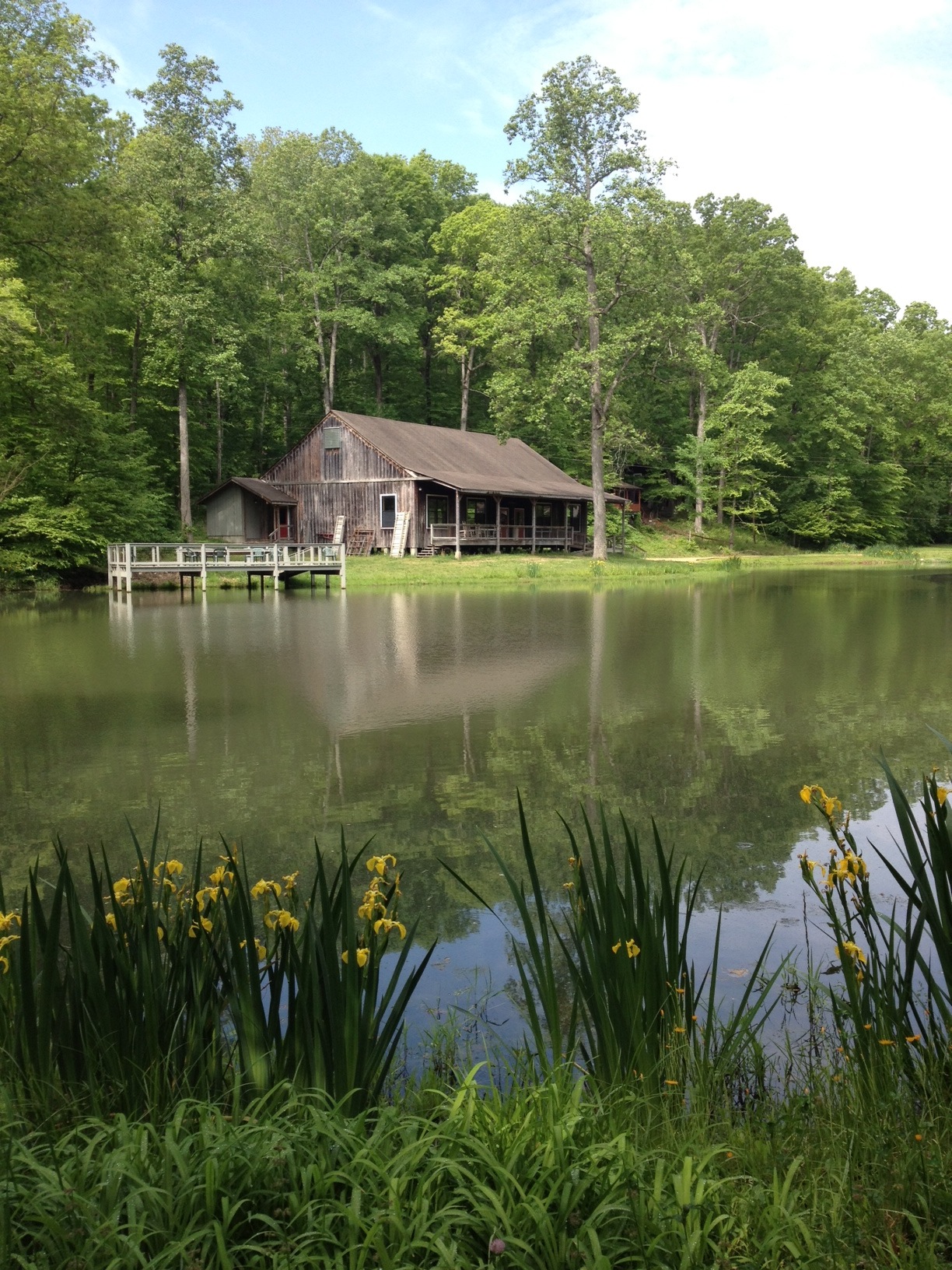
It’s been two and a half years since I organized and led a weekend residential retreat in the Nashville area. The facilities we used in the past aren’t quite up to what we need now and it took a while to find a suitable location. I was very fortunate to have found Bethany Hills, which is set in a beautiful private area in Kingston Springs. The lodge has a large room perfectly suited to meditation, surrounded by windows and and a big wrap around deck. When the windows were open we were deeply immersed in the natural world, with the birds and frogs providing a beautiful, sometimes comical symphony. (When four or five bullfrogs call out in harmony, their ungainly croaking is simultaneously lovely and amusing.)

Saturday evening I led a contemplation and guided meditation on “emptiness of the breath” which I recorded and plan to post soon. Stay tuned for information about upcoming One Dharma meditation retreats.

Photo of Bethany Hills lake by John Young

The Scientist and The Baker

By Lisa Ernst

Most people who take up meditation will find over time that they are drawn to a particular practice style that becomes their foundational approach. Usually the approach will tend either toward what I call the “scientist” orientation or the “baker” orientation.

The scientist gets to know the object of his or her study through objective observation. This is a classic Vipassana style of practice, where the meditator uses an object of concentration to still and focus the mind. The value of this practice is in allowing the practitioner to observe arising phenomena such as physical sensations, emotions and thoughts without becoming swept away by attachment, aversion and personal identification.  Through committed practice, the meditator gains experiential insight into impermanence, suffering and no-self.

Bakers like to get their hands dirty, to put them in the flour and other ingredients and work with them as an extension of their bodies.  Through repeated practice, bakers lose the separation of themselves and the ingredients, diving deeply into immediate experience of baking.  In meditation, this style is known as direct experience, where the meditator immerses him or herself in whatever is arising and becomes “one” with it, losing a sense of fixed self and dissolving into emptiness. This sometimes challenging approach is associated with Zen and certain Tibetan forms of meditation, although it can be found in some Vipassana approaches as well.

I use the analogy of baking because, unlike other forms of cooking, it is a science. Without very specific ingredients in measured quantities, baking will fail. So without the underlying science to support the recipes, bakers won’t achieve successful outcomes.  Conversely, bakers provide sustenance for the scientists, resulting in a mutually beneficial relationship.

Although most meditators tend toward the scientist or baker style as their primary practice orientation, often they move between the two as needed as they become more experienced.

Which practice approach most closely fits your own?

“Seekers who disdain clamor to seek quietude are as it were throwing away flour but seeking cake. Cake is originally flour, which changes according to use. Afflictions are none other than enlightenment.”

–Pao-Chih, from THE ZEN READER