Wisdom on The Rocks

On a cool, sunny June afternoon I started one of my frequent hikes at Radnor Lake. There’s a steep paved road just past the parking lot that leads to the lake.  In one area, damaged by a major flood, the road is all gravel and a bit bumpy to traverse. As I approached the graveled area, I saw a young man in a wheelchair suddenly grab his wheels and try to turn back toward the parking lot. He protested loudly about riding over the gravel and appeared quite frightened. One of his companions calmly encouraged him not to be afraid, reminding him that the lake was just past the gravel so he needed to go through it to enjoy the scenery. This seemed to calm him down a bit and he let go of his efforts to escape the gravel. At that point he had already ridden halfway through anyway, so either going or returning meant equal contact with the gravel.

As I walked past, he appeared more relaxed as one of his companions moved him forward in the chair.  Suddenly he opened his mouth and allowed the sound of his voice to reflect the bumpiness of the gravel. It was as if his whole body had become one with the gravel, completely connected with the experience of going over the rocks. I realized he was giving a wonderful dharma talk – directly reflecting how he had let go of aversion and was allowing himself to experience the moment fully. There was no fear in his voice, just a manifestation of the moment’s bumpiness.

I smiled as a deep gratitude arose in my heart for the inherent wisdom we can all access through the simple, yet often challenging act of letting go. This young man was intellectually disabled in a way that kept him from communicating as freely and easily as most of us. Yet in facing his fear and releasing his efforts to escape the gravel, he relaxed into the moment and allowed the bumpiness to penetrate his whole body. Soon he was back on the smooth pavement and had the opportunity to enjoy the beautiful lake just ahead.

May we all find the wisdom to let our whole hearts and bodies meet the gravel when it comes and to enjoy the serene, deep lake that follows.

by Lisa Ernst

Partners in Crime

Yesterday afternoon I got word that a friend and long time Buddhist practitioner Rita Frizzell died of cancer. Rita and I were dharma friends, having first met as board members of the Nashville Buddhist Festival back in the early 2000’s. Rita was always ready to offer her time and talent, giving so much to establishing Buddhism in Nashville. She even designed One Dharma Nashville’s beautiful logo as a dharma gift. After many years affiliated with the Padmasambhava Buddhist Center, Rita broke away to begin her own sangha, Luminous Mind. She created a dedicated community of practitioners who met every Friday at her home. I know Rita’s sangha will deeply miss her guidance and love of the dharma.

 A couple of years ago, shortly before she was diagnosed with cancer, Rita and I met for lunch and shared notes about our sanghas, upcoming retreats and Buddhism in Nashville. As we parted, I’ll never forget the sly grin that came over her face as she said in a conspiratorial tone, “You and me, we’re partners in crime.” Thinking of that moment today brought tears to my eyes.

In Rita’s honor I decided to meditate at dusk. As I began my meditation, I reflected on her life and journey through cancer over the last 18 months. Just three weeks ago she was optimistic after getting some good news about her one of her tests, which gave hope that the cancer was diminishing. But it wasn’t to be; she had a sudden decline just two days before she died. Gone so fast, I thought as a tear trickled down my cheek. Where did she go? But the question dissolved into the sound of frogs singing and rain falling softly on the trees. Love, just like this.

Rita with her beloved rescue dog Stella

Rita with her beloved rescue dog Stella

Aching with Longing

This is a blog post from Gareth Young, a co-founder of Red Clay Sangha in Atlanta. His sangha, along with the Insight Meditation Community of Georgia hosted a Lovingkindess and Brahma Vihara retreat that I led March 2 – 5 in the North Georgia Mountains. Thanks to all who made this happen. Here’s Gareth’s post:

Aching with Longing

Today I finished a short meditation retreat led by Lisa Ernst from Nashville and co-hosted by the Red Clay Sangha and the Insight Meditation Group of Georgia: Zen-based and Vipassana traditions coming together for an interdenominational Buddhist retreat.  We had invited Lisa to lead the retreat using her own style of practice and she focused the retreat on metta.

Like most Buddhist teachings (for my mind this is actually an attribute of all legitimate Buddhist teachings) metta practice is a set of tools that can be used by anyone regardless of their faith tradition.  In simple terms it is is designed to cultivate loving kindness and compassion for self and other, and it centers upon repeating continuously a series of phrases such as:

May I/him/her/all beings be free from danger
May [I/they] have mental happiness
May [I/they] have physical happiness
May [I/they] have ease of well being.

It may sound banal, even silly, but it is extraordinary and it works – though it does require a lot of patience!  And by focusing on the self first it naturally allows one to deal with feelings of self-loathing, inadequacy, being unlovable and the like that are so common in our culture.  The premise, which I think is correct, is that only from a place of self-loving can one move into the world and unconditionally love the other.

The genesis of this blog post is not metta practice itself – though I commend it to you – but a beautiful poem by Tagore, a giant of Indian literature who I knew shamefully little about until I just read about him.  Lisa waited until this morning after our hearts had been opened up by a couple of days of metta practice before reading the poem to us and it blew the doors open for me.  It is a piece of pure beauty that hopefully will blow a tempting gust of air through your own doors, too:
On the day when the lotus bloomed, alas, my mind was straying, and I knew it not. My basket was empty and the flower remained unheeded.

Only now and again a sadness fell upon me, and I started up from my dream and felt a sweet trace of a strange smell in the south wind.

That vague fragrance made my heart ache with longing, and it seemed to me that it was the eager breath of the summer seeking for its completion.

I knew not then that it was so near, that it was mine, and this perfect sweetness had blossomed in the depth of my own heart.

To read more of Gareth’s blog, go here.

This Precious Shining Moment

By Michael Crowder

Today another piece of Dharma surfaced at a dentist’s office, of all places.  I went to a new dentist for an exam and cleaning.  Being new to his practice, I completed a detailed medical history, which included illnesses, procedures and prescribed medication.  After assessing my medical history the dentist sat with me to review and plan dental procedures for the future.  He led off the conversation by stating that I had officially taken over first place as the patient with the most complicated and demanding prior medical history in his current practice.

He was honest and forthright by stating that any complicated procedures could result in life threatening consequences.  He further stated that he would usually refrain from any extended procedures on patients with my history; there was a high probability that they would not live long enough to benefit in any substantial way from the costly and painful procedures.  He felt it was unethical to reap the financial rewards by performing these procedures on a patient that would surely die in a relatively short period of time.

His honesty was refreshing and I felt comforted by his ethical standards.  I am fully aware of the precarious condition of my health and I was pleased that he did not dance around the issues or take advantage of my situation.  He went on to say that my health placed me in an unusual position of having a life span that could stretch to ten weeks, ten months or ten years or more.  He stated that most patients like me would generally appear to be lethargic, morose, and slightly depressed.  He went on to say that he detected within me a strong spark of life that could help sustain me for an indefinite period of time, so he found it difficult to predicate treatment upon this unknown.

At this point I felt like telling him that what he perceived as a spark of life was the undeniable benefits of my Buddhist practice.  That the teachings of the Buddha do not give way to remorse over past events or succumb to the pressures of an unknown future.  It is the practice of staying in the moment that allows me to benefit from a life that does not stay entangled in bad decisions and their unwholesome results, or worry myself into a ball of hopeless depression over events that have not made themselves manifest, and for all I know may never.  It is this experience of the present moment as something free of stress and worry that gives my practice what he refers to as “a spark of life.” In reality, it is simply seeing my life as it is without the stories I could easily build into problems. Once again the Buddha has shown me that this “precious shining moment” is all there is and is all there ever will be. What an extraordinary gift this is.

“The Single Most Precious Moment” – Majjhima Nikāya 131-4

One night, under the light of a bright full moon, the Buddha gave utterance to this poem, which he encouraged his followers to remember and to frequently ponder:

Do not chase after what is gone,

Nor yearn for what is yet to be.

For the past has been left behind,

And the future cannot be reached.


Those states that are before you now

–Have insight into every one!

Invincibly, unshakably,

Know that well, again and again.


Do this work today, with ardor.

Who knows when death will come calling?

There is no bargaining with Death,

Or with his army of minions.


Abiding ardently like this

Without fail, both day and night, is

“The single most precious moment”


So the peaceful sage has told us.

Michael Crowder found the dharma nearly 7 years ago, shortly after having a stroke. Since then he has maintained a committed daily meditation practice and sits with One Dharma.


Penetrate Everything

What happens when you resist? Have you spent some time in your practice cultivating true intimacy with your mind and body in a state of resistance? You probably know where you hold your tension, where your body contracts and how your mind seeks diversion. But the true payoff comes when you take an even closer look. Can you become truly intimate with the tension in your body? Get to know it like a mate or a best friend? Open your heart and mind wide enough that it penetrates every cell, every infinitesimal particle of time and matter. When you can do this, you will taste complete freedom. This is where transformation occurs; in a moment of full surrender, when your resistance dies, you die.  But your great nature, your true self that embraces all and leaves nothing out, remains. What is this true nature? You can only find out for yourself. Just let your Bodhicitta, your inherent desire to wake up, guide the way.

– Lisa Ernst

The Heart at Rest

IMG_6237

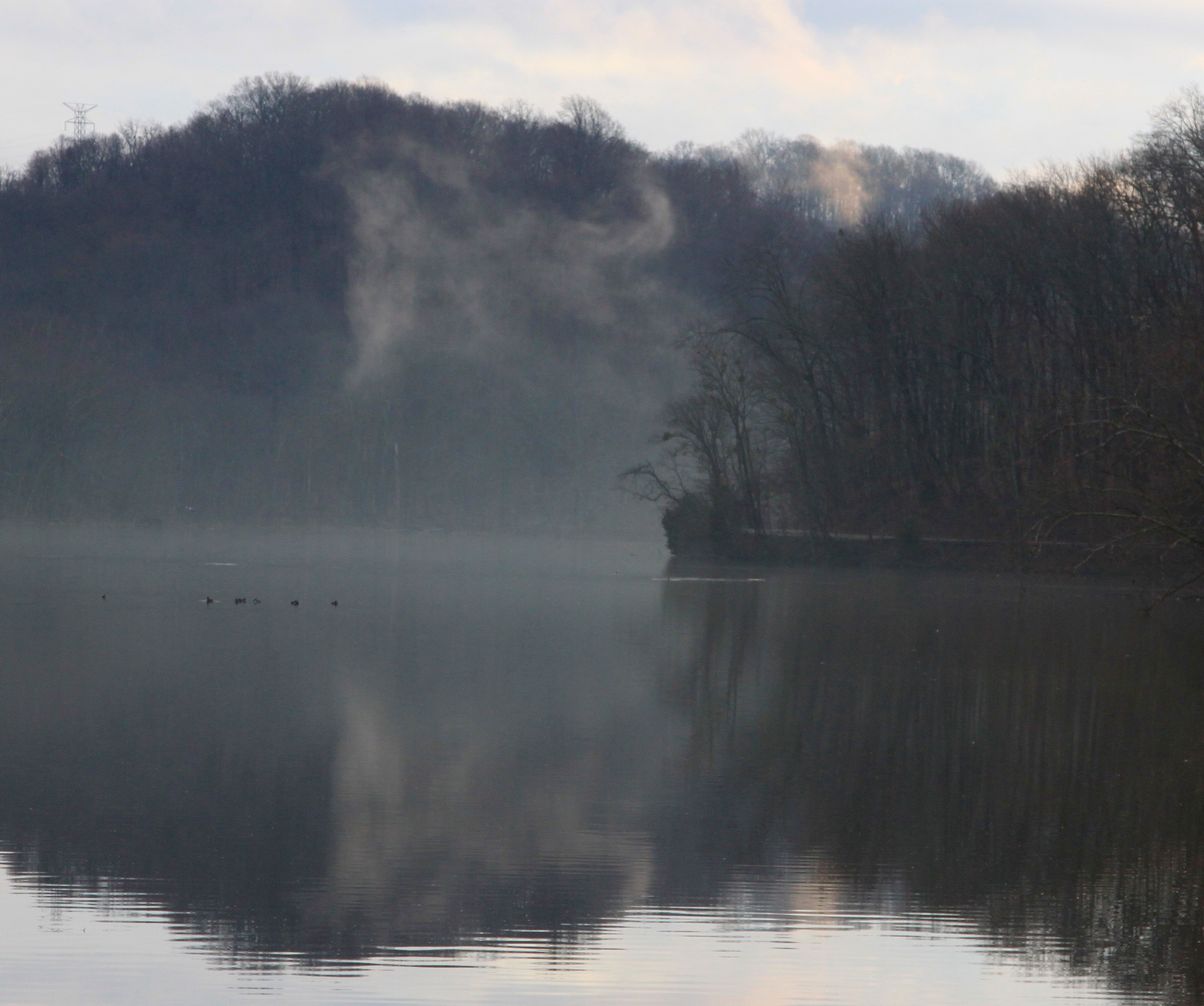
Misty Winter Morning at Radnor Lake

Even if you have a regular meditation practice, you probably encounter moments when you feel overwhelmed and challenged to sit in the midst of your experience.  Especially when strong feelings of anxiety or fear arise, the mind’s tendency to identify with thought and avoid the present moment is particularly strong.

What is your resistance point? When do you reach the precipice of overwhelm, when you believe you can no longer stay present? Cultivating awareness of this tipping point, when you exceed your capacity for presence, can help you expand your awareness beyond any imagined self limitations you have.

How? First it helps to remember and practice this core teaching from the Buddha:

“Nothing whatsoever is to be clung to as “I” or ‘mine.’ Whoever has heard this truth has heard all the Teachings, whoever has realized this Truth has realized all the Teachings.”

You may ask how Buddha’s teaching of non-clinging applies to resistance and emotional overwhelm. As our practice deepens, we begin to recognize when we cling to desired things such as relationships, possessions, health and happiness. But we may overlook how we cling to our unwanted mental states and interpret them as “I” and “mine.” It’s all too easy to perceive depression, shame, fear and anxiety as part of who we are.  As soon as we create this self-identification, the emotions feel fixed and personal. Letting go, releasing our clinging, is challenging.

When I speak of letting go, I don’t mean trying to get rid of anything, but instead allowing our emotions and mind states to be exactly as they are, without self-identification. This is how we begin to loosen the knot.  As soon as we quit identifying with these feelings as “me,” we see them for what they are – the temporary and changing mosaic of thought and emotion that we experience throughout our lives. If these emotions and mind states were only a kaleidoscope of color passing by our eyes, we wouldn’t identify with them as ourselves; we could allow them to simply come and go. No resisting and no clinging. When we cultivate this attitude toward emotions we invite equanimity and non –identification. We may still feel the anxiety or sadness, perhaps even more deeply, but we don’t interpret them as “I” or “mine.” They are simply part of the moment, along with the sounds, scents, and physical sensations, everything that is here. We have room for it all. This is a heart at rest.

Happy Holidays: Live it Up in Loving Awareness

This is from an InsightLA blog post by my teacher and friend Trudy Goodman:

Live It Up!

Recently I’ve been teaching about women in the dharma, about the “Feminine Principal,” as Andrea Miller wrote in her article in Shambhala Sun this past month. I want to tell you a story about Maurine Stuart Roshi, who was my heart teacher from 1979 when I first met her until she died in 1990. A story for this holiday season.

One February night in Cambridge, Maurine was resting on the couch in her living room. It was one week before she was to die. I came over to bring her some supper. I felt close to her. We were intimate in the way you may know from sitting together — you know this from letting go of whatever holds you back, from stripping down to the aliveness and radiance of who you truly are.

Straightening up the cooking magazines on her coffee table, I decided to go for it — maybe it’s my last chance to ask her what I most wanted to know: “After a whole life of Zen practice, teaching and deep enlightenment, what’s the truest thing you can say to me now?” And she didn’t miss a beat. Speaking with her usual authority and power, she said simply, “Live it up!”

I was surprised. After all those years of sitting in the fire….“Live it up!”? This is the wisdom of my Zen teacher, so close to her dying…but what does she mean, exactly? Eat, drink, be merry?

True mindfulness IS living to the hilt, living it up — because it includes everything. When our mindfulness gets strong, nothing is too crazy, too weird, too exciting, too scary, too sad, too upsetting, too tragic, too overwhelming or too huge to be held in our loving awareness. Living it up is living fully, taking the time to look deeply, making the effort to recognize and stay with what’s true for us moment by moment. Like a mirror reflecting just what’s happening, like the water of a pond reflecting the blue sky and the passing clouds. Only here the mirror is awake and sees, and the water is responsive. Our mindfulness, this loving awareness, is our own consciousness actively participating in the ongoing process of being alive — Live It Up! And may your week be graced by moments of boundless love and freedom.

Trudy Goodman

To Make Sense of The Suffering?

The unfolding immigration tragedy that has left children separated from their parents, detained in prison-like cages, has provoked one of the strongest outpourings I’ve seen of grief, despair, anger and confusion, along with fierce protests and calls to our politicians to end the practice immediately. Through these efforts we’ve seen some movement on this issue but know there’s much more to be done. Even in the midst of this energetic effort, I’m reminded that we also need to remember that there is no “other” out there, or anywhere, to hate. Otherwise, weariness and despair can easily overtake us. We can protest, speak out, call our politicians; we can also remember our interconnected nature at the deepest place in our hearts. We are capable of both. Recently  I was moved by a quote from Phillip Moffitt and want to share it here:

“The Buddha said, “Hate never yet dispelled hate. Only love dispels hate.” By holding the truth of our interdependency and refusing to participate in this endless cycle of hatred, you can help to heal the wound of the world. Jesus said, “If you love those who love you, what credit is that to you? Even sinners love those who love them. But if you love your enemies, do good to them, and lend to them without expecting to get anything back, then your reward will be great.’

No one can accuse Jesus or Buddha of being cowards in the face of injustice; therefore, their teachings are about how to hold the difficult in the heart. You have to decide if you share their beliefs, and if so, you practice living in this manner as a reflection of your deepest values. It is a proactive, courageous way to live. This does not mean responding passively when you encounter wrong action, for you should always act to stop those who harm others.”

This reflection on interdependency reminds me of an article I wrote a few years ago after I watched a movie about a woman who was stoned to death in Iran. As the movie ended, I was overwhelmed and struggled to get to sleep that night. During the next morning’s meditation, however, I gradually remembered that the mental creation of good and bad, enemies and friends just brought about separation that prevented my heart from bearing the pain of this act. In remembering the truth of interconnection, I found that I could open my heart to the stunning pain I felt at the stoned woman’s plight and to feel compassion for the great suffering of her entire community, even the perpetrators. To experience interdependency at this level in no way precludes wise action to stop suffering. While there was little I could do personally to stop the practice of stoning in Iran, there is much I can do in this country to help turn the tide away from cruelty. I can’t know if my efforts will succeed, but I know they are worth doing.

The One Who Casts the Stone and The One Who is Hit

by Lisa Ernst

Recently the impending stoning death of an Iranian woman made worldwide headlines and sparked international outrage. The pressure on the Iranian government to change her sentence has been immense. For most of us, it is incomprehensible that death by stoning is still a form of capital punishment in some parts of the world.

I was especially moved by the cause of this woman because I had recently watched a movie about the stoning death of another Iranian woman, “The Stoning of Soyora M.” The movie is based on a book of the same name, the true story of a woman falsely accused of adultery and stoned to death in her home town in the 1980s. This movie depicted the woman’s stoning in a very accurate, unflinching way and it was one of the hardest things I’ve ever watched on film. She was dressed in white and marched through the streets of her home town while men lined the way, rhythmically clapping stones together as a prelude to the execution. When she reached the stoning ground, her arms were bound to her sides and she was buried to her waist. A perimeter line was drawn, perhaps 20 feet away, behind which everyone in the town stood to stone her or to watch. A barrel of stones had been collected so the townsmen could all have their turn.

For a stoning execution, the stones are chosen for their size – not too large to kill the person immediately, but not too small as to do little harm. In Soroya’s case, I had hoped that her suffering would be brief, but stonings are deliberately stretched out over a period of time to create a gruesomely painful form of torture. The woman’s dignity was completely stripped away as her husband, her sons, and the men in her community threw stone after stone at her head, as she cried out in pain and disbelief, fell over to the ground, yet continually lifted herself back up with whatever strength she could muster. Slowly her white dress became completely stained with red. Finally, after perhaps an hour she was dead.

As the movie ended, I sat stunned and speechless, as tears spilled down my cheeks. It was just before bed and I wondered if I’d be able to sleep after witnessing such heinous torture. Somehow, I was able to fall into a restless sleep. The next morning I got up to meditate, having briefly forgotten what I had seen the night before. As I settled into meditation, the stillness of the morning and the sweet birdsong brought my heart fully awake. Then, in this place of stillness and open heartedness, the stoning images of the night before returned. There was great sadness in my heart, yet I didn’t close down or turn away. What I’ve learned through my practice is that when my  heart fully awake, it has the capacity to accommodate not only great love but great suffering. This is the “door of compassion” that Thich Nhat Hahn beautifully speaks of in this poem:

“Please Call Me by My True Names”
I am the 12 year old girl, refugee on a boat, who throws herself into the ocean after being raped by a sea pirate. And I am the pirate, my heart not yet capable of seeing and loving.

I am member of the politburo, with plenty of power in my hands, and I am the man who has to pay his “debt of blood” to my people, dying slowly in a forced labor camp.

My joy is like spring, so warm it makes flowers bloom in all walks of life.

My pain is like a river of tears, so full it fills up the four oceans.

Please call me by my true names, so I can hear all my cries and
my laughs at once, so I can see that my joy and pain are one.

Please call me by my true names so I can wake up,and so the door of my heart can open the door of compassion.
– Thich Nhat Hahn

Buddha taught that there is no inherent self separate from others; no self separate from all phenomena. This is called  emptiness. Through committed meditation practice, we gradually increase our capacity to experience emptiness.  We begin to understand at an experiential level that all of existence is none other than our own true nature. This insight is the basis for recognizing that all beings are Buddha, the awakened one. But what is often not stated, yet cannot be otherwise, is that we also are the pirate who rapes the 12 year old girl, and the man who stones his wife. If we selectively associate our understanding of non-separation with the highest of good, choosing to see only what we like and admire, we risk closing off our hearts to the often unspeakable suffering of our own humanity. Unconditional compassion and love can only arise when the heart is open to the full spectrum of experience, from great kindness to profound cruelty. This is true non-separation. Admittedly however, this kind of open- heartedness is not always easy;  there are times when we may see or experience suffering that is beyond our heart’s capacity to bear.  During these moments, some compassion for our own inevitable limits can soften the edges of our pain. At other times we may find the way to truly open our hearts and no longer look away:

You can hold back from
suffering of the world,
you have permission to do so,
and it is in accordance
with your nature,
but perhaps this very holding back
is the one suffering
you could have avoided
Franz Kafka

With a compassionate heart, we may weep at the inconceivable cruelty of this world and feel joyous when witnessing a deed of true kindness.  During the quiet of the morning when my heart touched the great suffering inherent in the act of stoning, for a few moments I could see without flinching the depths of  unkindness that is part of human nature. The same heart that fills with joy upon hearing a symphony of birds greeting the morning sun, also breaks for the woman who died the most unimaginable death at the hands of her own husband and community. They are all none other than me.
True Refuge Meditation Retreat Recap: Flies and Buddhas

Our True Refuge residential retreat is now complete and the retreat was truly about refuge in all of its forms. Several of us arrived early, on Wednesday evening, to practice an extra day. Thursday was overcast but mild and I had an opportunity to hike one of the trails after breakfast. The landscape in December couldn’t have been more different from the last time we were at Bethany Hills in April. From the warm and sunny days, incredible spring greens and flowers in the fields, to grey skies and barren trees, I barely recognized the place. At first the contrast was jarring. Then as I hiked the trail, I gradually settled into the stripped down winter world and felt a deep appreciation for the stillness and stark beauty. The crunch of the dead leaves on the path opened me to deep gratitude for the opportunity to spend time there on retreat.

I began the afternoon rounds of meditation settled and appreciative of the extra day’s practice. About halfway through the first sit, unexpectedly a fly landed momentarily on my lips. I recoiled and immediately brushed my lips before I realized that I was only spreading around any germs. I began thinking about what might be on my lips, worrying about whether the germs were making their way inside my mouth. Then I clearly saw my reactivity and brought my mind back to the present. I inquired, “how do I find refuge when a fly lands on my lips?” This wasn’t an intellectual inquiry, but rather one of seeking an answer from the place of insight within. Immediately my reactivity stopped and I dropped my worries about the germs. There was nothing I could do at that moment except sit. A few minutes later the fly landed squarely on my nose. I blinked just slightly in surprise, but was aware and nonreactive now, having found refuge in the way things are, even with a fly hovering by my head. It buzzed around me for about five more minutes. By now the fly had become, if not a friend, at least a guest I was willing to welcome. I do admit that after the meditation session ended, I went to my room and washed my face! I spoke of the fly during my dharma talk the next night, and discovered after the retreat that the fly had visited many people. They said they were grateful that they had an opportunity to make their peace with the fly, that it had been a good teacher in learning to cultivate non-reactivity.

Issa, a Zen poet, wrote about flies this way: “Where you find humans, there you’ll find flies and Buddhas.” This is our human condition, to continually experience the shifting movement from pleasure to pain, samsara to awakening, joy to sorrow and back again. When we are able to cultivate non-reactivity to the changing collidescope of experience, we can begin to taste true equanimity. Sometimes we are visited by Buddhas; sometimes flies. Sitting still for long stretches and walking the same ground over and over, we face our experience in every way imaginable. At times it may be painful or boring, other times joyful and transcendent. As our hearts open more deeply to this practice, we begin to appreciate all that life has to offer and we can welcome both flies and Buddhas.

One of the most welcome parts of the retreat was the amazing, ever changing weather during our practice. We had no sun during this retreat, but we enjoyed periodic rain, wind and lightning. The weather was warm enough to walk outside all weekend. Saturday evening we enjoyed a dusk meditation on the deck to a symphony of thunder and light rain. It was a magical moment of being in the midst of nature on our cushions as darkness fell, protected by the deck’s large overhang, yet still immersed in the wiles of the weather. Meditation outdoors allowed us to open our lens of attention to accommodate the wide world of nature in our practice, to take it all in with a receptive mind.

Many people found the retreat challenging, and it is designed to be. At the closing they reported finding an opening into their practice that was very rewarding and far deeper than what they had experienced during their home practice. Most discovered the joy of meeting their visitors, whether flies or Buddhas, with an open, undivided heart. Our next retreat is scheduled for April 11 – 15. You’re welcome to join us.

After the Rain

After the Rain

IMG_6113IMG_6143IMG_6145

Historic Cabin

Historic Cabin


Time Enough to Wake Up

If you’re a regular meditator, chances are that you sometimes feel restless, wishing for the allotted practice time to end. If you have a clock handy you may peek once in a while.  I confess that I have done this myself occasionally when I’ve been in a very busy or challenging time in my life.  But I discovered an antidote to the restlessness that may seem counterintuitive. When I see that I’m checking the clock or longing for the meditation time to end, I extend it. I’ve learned that when I squeeze my meditation into a parameter of time, I cut it off, make it small and constrain my mind from the infinite and unfettered nature of this moment.

Sometimes I may only extend the meditation session five or ten minutes, depending on my schedule, but I’ve extended it longer on mornings when I have time. The actual length of time isn’t that important, even a few extra minutes can make a difference. As soon as I change my orientation from “hurry up” to “I’ll be here for a while,” my entire demeanor changes. I relax and let go of time. I settle into whatever I was resisting. The moment becomes interesting again, no matter how I’m feeling or what I’m thinking. The illusion of some other time or some other place vanishes. There is only this moment, perfect and complete.