I’d rather feel the raw sting of grief,
Alive in my heart
Than to keep it at bay and only know
The dry ache of something
Too far away to touch

I’d rather feel the raw sting of grief,
Alive in my heart
Than to keep it at bay and only know
The dry ache of something
Too far away to touch
Be foolishly in love,
because love is all there is.
There is no way into presence
except through a love exchange.
If someone asks, But what is love?
answer, Dissolving the will.
– Rumi
When you turn on your computer, do you have specific programs that automatically start along with the operating system? Both the Windows and Mac Operating Systems let you select programs that will turn on immediately each time you boot up. In daily life, most of us have specific mental programs that automatically start as we get up and move into our day. Its unlikely we made a conscious decision to activate these programs and we may not even be aware of them, but they regularly influence our thoughts, emotions and our perceptions of who we are.
Even during meditation, these programs are often running stealthily in the background, affecting the quality of meditation. At times the programs may induce anxiety and restlessness, making it difficult to concentrate or cultivate presence on the cushion. One of the basic benefits of meditation is the enhanced awareness that allows us to see our hidden programs. Even for experienced meditators, however, the hardest mind programs to see clearly are related to self identity and the need to affirm that identity.
To work with these programs in meditation you first have to recognize they are running. If you regularly feel anxiety or restlessness on the cushion, for example, you may discover familiar themes playing out in your mind as you look more closely. Perhaps you are anxious about how you will perform on an upcoming project, maybe you’re criticizing yourself for not living up to your or someone else’s expectations or worrying about how effectively you’re navigating an important relationship in your life. These programs are related to our perceptions of who we are, yet they are not our “dharma operating system.“ They are only a limited element of our consciousness, just as our favorite computer programs have no functionality without the operating system. Our mental programs are a byproduct of something larger, our great nature that sustains life and allows life to pass away.
Your identity needn’t be caught in repetitive, often invisible programs. With consistent practice, you can gradually cultivate your awareness to recognize when the programs are running. When you truly realize they aren’t who you are, the programs might still run but not run your life nearly as much.
Your true nature includes the totality of what you experience in this moment, nothing excluded. All of the sounds, sensations, thoughts and feelings; the barking dog and the wind in the trees, the pain in your knees, tightness in your chest, and the joy of realizing all of this is continually arising and passing away. So let the programs run if they must, but expand the scope of your consciousness so you can see them for what they are: only a small part of the greater whole of awareness. Soon the programs will lose some of their power over your mind and you’ll discover you can operate quite effectively without them.
Let the moment consume you,
Let it swallow you whole
All of you,
Until nothing is left
Nothing to cling to, nothing to let go
No ground to stand on and nowhere to fall
Nowhere, and yet
Everywhere
This quote nicely sums up the value of taking time out for meditation retreats. In fact, our three day meditation retreat at Bethany Hills provided an ideal time to slow down, open our hearts and experience what is always with us but frequently overlooked. With our everyday distractions far removed, it was a perfect time to see our minds more clearly and glimpse our true nature. Or even spend significant time fully awake in it.
Nine of the people attending were on their first residential meditation retreat. To most, it required an adjustment initially — many of them discovered that engaging in sitting and walking meditation all day was more challenging than expected. But by Saturday as I scanned the circle, I often saw a settled and deeply peaceful look on everyone’s faces. By Sunday morning most people reported having an important breakthrough or two into their practice. Sitting for three days with sincerity and commitment almost always yields this fruit.
It’s been two and a half years since I organized and led a weekend residential retreat in the Nashville area. The facilities we used in the past aren’t quite up to what we need now and it took a while to find a suitable location. I was very fortunate to have found Bethany Hills, which is set in a beautiful private area in Kingston Springs. The lodge has a large room perfectly suited to meditation, surrounded by windows and and a big wrap around deck. When the windows were open we were deeply immersed in the natural world, with the birds and frogs providing a beautiful, sometimes comical symphony. (When four or five bullfrogs call out in harmony, their ungainly croaking is simultaneously lovely and amusing.)
Saturday evening I led a contemplation and guided meditation on “emptiness of the breath” which I recorded and plan to post soon. Stay tuned for information about upcoming One Dharma meditation retreats.
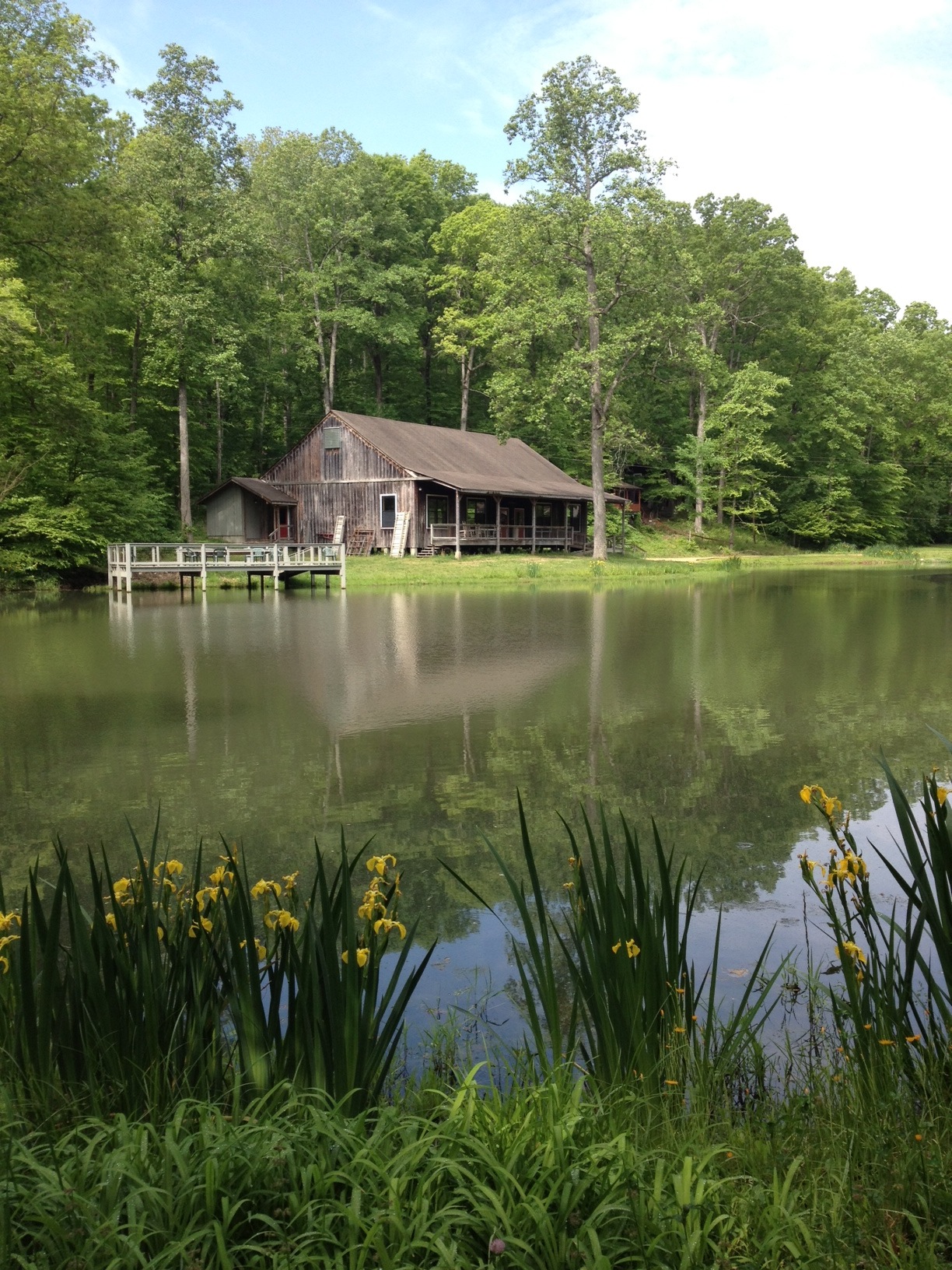
Photo of Bethany Hills lake by John Young
By Lisa Ernst
Most people who take up meditation will find over time that they are drawn to a particular practice style that becomes their foundational approach. Usually the approach will tend either toward what I call the “scientist” orientation or the “baker” orientation.
The scientist gets to know the object of his or her study through objective observation. This is a classic Vipassana style of practice, where the meditator uses an object of concentration to still and focus the mind. The value of this practice is in allowing the practitioner to observe arising phenomena such as physical sensations, emotions and thoughts without becoming swept away by attachment, aversion and personal identification. Through committed practice, the meditator gains experiential insight into impermanence, suffering and no-self.
Bakers like to get their hands dirty, to put them in the flour and other ingredients and work with them as an extension of their bodies. Through repeated practice, bakers lose the separation of themselves and the ingredients, diving deeply into immediate experience of baking. In meditation, this style is known as direct experience, where the meditator immerses him or herself in whatever is arising and becomes “one” with it, losing a sense of fixed self and dissolving into emptiness. This sometimes challenging approach is associated with Zen and certain Tibetan forms of meditation, although it can be found in some Vipassana approaches as well.
I use the analogy of baking because, unlike other forms of cooking, it is a science. Without very specific ingredients in measured quantities, baking will fail. So without the underlying science to support the recipes, bakers won’t achieve successful outcomes. Conversely, bakers provide sustenance for the scientists, resulting in a mutually beneficial relationship.
Although most meditators tend toward the scientist or baker style as their primary practice orientation, often they move between the two as needed as they become more experienced.
Which practice approach most closely fits your own?
“Seekers who disdain clamor to seek quietude are as it were throwing away flour but seeking cake. Cake is originally flour, which changes according to use. Afflictions are none other than enlightenment.”
–Pao-Chih, from THE ZEN READER
Sometimes meditation students ask me if taking time out for retreats is truly worthwhile. In my own experience, I have found retreats to be one of the most important things I do to refuel and replenish my mind. Often in the West, we understand how to take care of our key possessions such as our cars, yet many of us put less emphasis on deep maintenance for our minds.
In caring for our cars we perform routine practices such as cleaning the windshield, keeping enough gas in the tank, checking tire pressure. For dharma students, daily meditation is a basic, routine maintenance for the mind along with sangha practice once or twice per week. Daylong sits are akin to getting the oil and filter changed – we’re taking the time to fuel and replenish parts of ourselves that might be running on low. Longer retreats are mind and heart tune ups, going much deeper into the workings of our being and getting the parts functioning harmoniously and smoothly.
If you’re on the dharma path and meditation is an important part of your life, all of these steps, from daily sitting to weekend retreats and longer, will lead to a fuller, more complete practice. They help to insure your mind and heart are running optimally and you’re better equipped to meet the challenges of everyday life.
by Lisa Ernst
On a recent visit to Colorado, I enjoyed a hike with my two teenage nieces to a place outside of Boulder called Mattress Rock. My oldest niece, Mary Katherine, had recently spent the night camping at the top of this rock and she wanted to show us the view. When we arrived, I saw the top was quite high and completely inaccessible through climbing. But a ponderosa pine was fairly close to the rock, and my niece said that’s how she and her friends had climbed up.
Nancy, my younger niece, enthusiastically grabbed a pine branch and began climbing. With some encouragement and guidance from Mary Katherine, she got across to the top of the rock without too much difficulty. Then Mary Katherine suggested I climb the tree. This caught me completely off guard. I looked up and didn’t like what I saw, not to mention the fact that I hadn’t climbed a tree since I was about my nieces’ age. Seeing my hesitation, Mary Katherine said, “Oh, Aunt Lisa, it’s just like climbing a ladder.” Suddenly an image of a ladder popped into my mind and I saw myself climbing with ease. My hesitation gone, I grabbed the tree and began climbing.
My mental association with the ladder had broken me out of my fear of the unfamiliar; I had confidence from my ingrained memories of easily climbing ladders. About halfway up, however, the ladder vanished from my mind and nothing was left but my immediate experience of climbing the tree. It was far more challenging than climbing a ladder and required a good bit of maneuvering. I didn’t look down and kept my mind completely focused on the task at hand. At the top, there was a daunting gap between the tree and the rock. I had to reach across and find a toe hold on the side of the boulder and carefully hold a thin branch while I maneuvered over to the top. A little shaky, but pleased to be done with the climbing, I enjoyed a beautiful view of the Colorado mountains.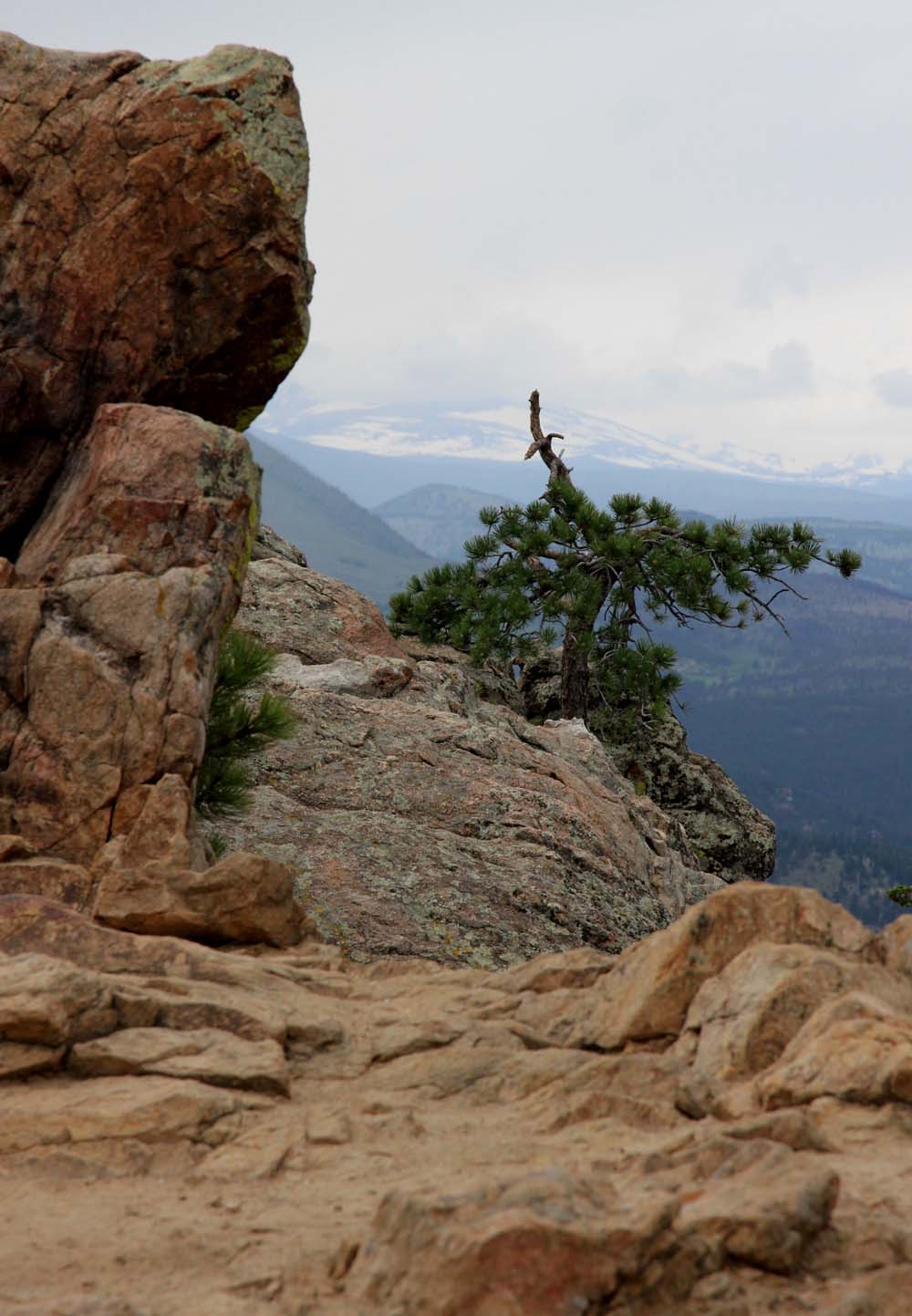 In Buddhist psychology, we often speak of ingrained patterns and associations that prevent us from fully experiencing our lives in the present moment. The mind is hard wired to filter experience through past associations and to label these experiences according to what it already knows. Pure, present moment experience, without this mental veil is very challenging and goes against our mind’s blueprint. Seeing and undoing these patterns and reaching pure experience are at the heart of mindfulness meditation.
When I was a young child, before my mental associations became fully ingrained, the feeling of walking barefoot on the fresh grass of spring was a blissful delight and the sensation of the ocean washing at my ankles brought a moment of pure magic. As I grew older, the childlike wonder of fresh and pure experience began to fade. Perhaps I could briefly touch it from time to time, but mostly it became a distant memory.
Through my meditation practice I learned that returning to this pure experience requires courage and commitment to see things as they are, without the filter that alters the moment into something other than what it is. In the case of my associating tree climbing with a ladder, it was a positive comparison that gave me the courage to climb. Once that association evaporated, however, I was left with the immediate challenge of climbing the tree. This was essential as the situation demanded that I bring my full attention to the task at hand – safely getting up the tree and onto the rock.
Quite often our past associations are of fearful or unpleasant experiences that cause us to seek refuge from this moment, where we imagine the danger remains. Meditation practice provides an excellent opportunity to see this pattern clearly. For instance, during a phase in my early years of practice I encountered a high degree of financial and career anxiety, at times so strong that I often avoided meditation because I feared the anxiety would overwhelm me. I had an ingrained tendency to try and avoid the anxiety, which felt unsafe. This is a normal human response to anxiety. The true origin of the anxiety had some deep roots and I knew I didn’t want to experience it directly.
Over the course of a few months, I saw that the anxiety wasn’t abating and realized that resuming my daily meditation practice might help prevent the anxiety from ruling my life. So I began sitting again, committing myself to staying as fully present in the discomfort as I could. I also began to see and disassociate from the story lines that accompanied my anxiety. At first, I had a strong impulse to escape just moments after I settled onto the cushion. But as I gently recommitted myself to presence in the face of fear, I slowly found room for the anxiety in my immediate experience. I didn’t need to follow the embedded thoughts and stories to cover it over. Just touching the discomfort lightly at first gave me confidence that nothing bad was going to happen; this began the process of undoing the chain of reactivity that had kept me in stuck in anxiety.
As my confidence increased, I often extended my sitting practice to an hour or more in order to fully experience the discomfort. Usually, about halfway through the session, the anxiety would melt away into the sweetness of the morning birdsong and the sunrise filtering through the window. As my heart opened to the fear, it also opened to the unconditioned beauty of this moment. Out of this intimacy a sense of gratitude and peace would arise. Repeatedly doing this practice revealed that I didn’t need to be afraid of embracing the discomfort, and my mental association of anxiety with danger began to fade.
To this day when anxiety arises I often feel the urge to escape. Mental patterns have power, and it is unrealistic to believe they can be completely eliminated. Although the impulse to turn away remains with me, less time elapses before I remember to meet the anxiety intimately with an open heart. Just as my association with the ladder faded into the immediate reality of climbing the tree, my experience of anxiety, just as it is, dissolves into the spacious, unconditioned nature of this moment.
I’ll be leading a weekend mindfulness meditation retreat in April. This retreat is appropriate for newer and experienced meditators. Here’s the information:
A Weekend of Mindfulness
Spring Renewal Meditation Retreat
Thursday Evening, April 26 through Sunday Noon, April 29
Led by Lisa Ernst

Ten thousand flowers in spring, the moon in autumn,
A cool breeze in summer, snow in winter.
If your mind isn’t clouded by unnecessary things,
This is the best season of your life.
-Wu-men
Please join us at a beautiful retreat site near Kingston Springs Tennessee for a three day silent mindfulness meditation retreat. The practice of mindfulness brings us into a deep awareness that sees and touches life with an open and unbiased heart. In this weekend of sitting and walking meditation, we will have the opportunity to embrace this time of renewal as we enliven and deepen our practice. We will cultivate continuous inspiration for meeting all aspects of life with greater openness, lovingkindness and compassion.
The retreat will be held at Bethany Hills Retreat Center beginning Thursday at 7 p.m. and ending at noon on Sunday. Retreat cost is $165 if paid in full by March 23; after March 23, the cost is $190. Full participation for all three days is required. The retreat fee includes lodging and meals. There will be an opportunity at the retreat to make a dana offering (donation) to the teacher. Two sliding scale spots are open for those who need financial assistance. Please make your retreat check to One Dharma Nashville and send to: One Dharma Nashville c/o 12 South Dharma Center, 2301 12th Avenue S., Suite 202, Nashville, TN 37204. Include your email address. For questions, email onedharmaretreat@gmail.com
Lisa Ernst is the founder and guiding teacher at One Dharma Nashville. She began meditation practice in the late ’80′s in the Zen tradition, studying closely with two Rinzai Zen Masters and attending numerous mediation retreats. Lisa has also practiced in the Theravada tradition since the late 90’s. In 2005 Lisa was given teaching authorization by Trudy Goodman, founder and guiding teacher of InsightLA. Lisa received full dharma transmission from Trudy in 2010.
Dana: According to the Buddha, generosity, or sharing what we have, is one of the central pillars of a spiritual life. In the act of giving we develop our ability to let go, cultivate a spirit of caring, and acknowledge the inter-connectedness that we all share. It is the practice of dana that has kept the Buddhist tradition alive for more than 2,500 years.
Taking the Seat of Truth
by Lisa Ernst
Recently I was invited to lead an opening meditation at a regional 12 Step retreat. Everyone there was eager and interested to spend several minutes in silent meditation. As I scanned the room during the meditation, I saw the faces of nearly everyone there in quiet repose. Afterward, many people sought me out to comment on how helpful those quiet moments were before launching into the activities of the day. This experience led me to reflect on Buddhism and the 12 Step program, although I’m not necessarily comparing all of their compatibilities and differences. There are some good books available on that topic already. What I’ve been reflecting on is how the 12 Step programs are another avenue to paying attention and shedding light on those parts of ourselves we’d rather not see. What’s required at 12 Step meetings is courageous honesty. Which is, of course, what we cultivate in meditation if we’re practicing sincerely.
I starting attending 12 Step meetings several years ago and went regularly for about three years. The most familiar 12 Step program is Alcoholics Anonymous, but many other 12 Step meetings exist to support those struggling with addition and the fallout from addiction. I wasn’t personally attending to address substance abuse problems, though some would kindly argue that my chocolate addiction could bear that kind of scrutiny. But since dark chocolate has now been classified as a health food, happily, I’m not fighting that one anymore. Instead, I began attending the 12 Step program to address interpersonal issues that arose in part from growing up in a family of alcoholics. At a deeper level, I believe many of the challenges I’ve faced in my life are part of the human condition; they are things most of us grapple with, whether we have substance abuse in our families or not. At the root is the very clinging and aversion of the mind that Buddha struggled with in his quest for enlightenment. On a practical level, I found the 12 Step program assisted me in working with the lasting effects of my upbringing in an alcoholic family. This is something meditation practice alone didn’t fully address.
What I have discovered from many years of practice is that meditation alone rarely succeeds in fully opening the gates of the mind and heart, even though it is a powerful way to illuminate much of what’s been hidden within us. Buddhist meditation (on and off the cushion) is my foundational path and it has made a profound difference in my life. Along the way, however, I have utilized several adjunct paths such as psychotherapy, support groups and 12 Step programs to augment and deepen my practice. I have found that any path that encourages me to face and tell the truth about my life, and find the courage to respond in a more constructive and compassionate way, will only serve to enhance my dharma practice.
The first 12 Step meeting I chose to attend was in Franklin, Tennessee, a town about thirty minutes outside of my hometown of Nashville. The meeting’s start time meant I had to drive to Franklin during rush hour traffic. That alone was a good practice in patience for me as I’ve never welcomed long commutes. The nearly interminable waits at countless traffic lights also led me to question why I was giving up another evening during the week when I could be home doing, what? Maybe reading a magazine or watching one of my favorite chefs on the Food Network? Ok, maybe not such a good argument to stay home. I also questioned whether the meetings would be so far removed from Buddhist practice as to feel alien and incompatible. As I mulled these questions, a twinge of anxiety arose and I nearly convinced myself to turn around and go home. But my years of meditation practice allowed me to recognize the voice of anxiety without getting caught in it. So I stayed my course to Franklin and attended the meeting.
When I arrived, I was greeted by many welcoming and friendly faces and I immediately felt at home. During the first meeting I kept quiet and just observed, but I appreciated the honesty and courage of the people in the room. They were clearly committed to telling the truth about their lives and exposing the hidden parts of themselves that led to suffering and even destructive behavior. Everyone who speaks at a 12 Step meeting must share directly from their own experience rather than from a conceptual understanding of their suffering. This direct and honest sharing is nearly always met with empathy and acceptance by the others in the room. There is no room for judgment. This allows an atmosphere of honesty to flourish. Twelve Step groups also cultivate a sense of community and compassionate support, much like a Buddhist sangha. Moments of meditation are often included in 12 Step Meetings, although most of the time is spent in group sharing.
Over the course of several meetings, I found myself responding to the emphasis on personal experience and honesty in a way that helped me with my own struggles. The approach felt quite compatible with my own Buddhist practices. Soon the meetings became a regular part of my week and I even made several new friends. Most evenings just as I took a seat at the meeting, a moment of awakening would occur: my mind would become clear and I would see something within my own heart that had been obscured. Often from these insights I would discover ways to begin undoing old patterns that had kept me locked in suffering. Sounds much like dharma practice, doesn’t it?
The word “dharma” actually has dual meanings. In the Buddhist tradition it has come to signify the Buddha’s teachings, while also pointing to “the truth of this moment.” For me, attending 12 Step meetings created a new avenue to work with difficult emotions and old patterns within the context of my dharma path. Although not a substitute for meditation, the meetings provided another way to experience the truth of this moment.
After attending 12 Step meetings for several years I found that I was less bound by the effects of my upbringing in an alcoholic family. I had become more at ease with others and the old stories of pain and despair that swirled in my mind had diminished to a whisper. I realized the meetings had served their purpose and it was time to move on with gratitude and appreciation.
 The Lotus Blooms in The Mud