Forgiveness and Compassion Meditation Retreat

Led by Lisa Ernst
Saturday, August 2, 2014, 9:30 a.m. – 4 p.m.

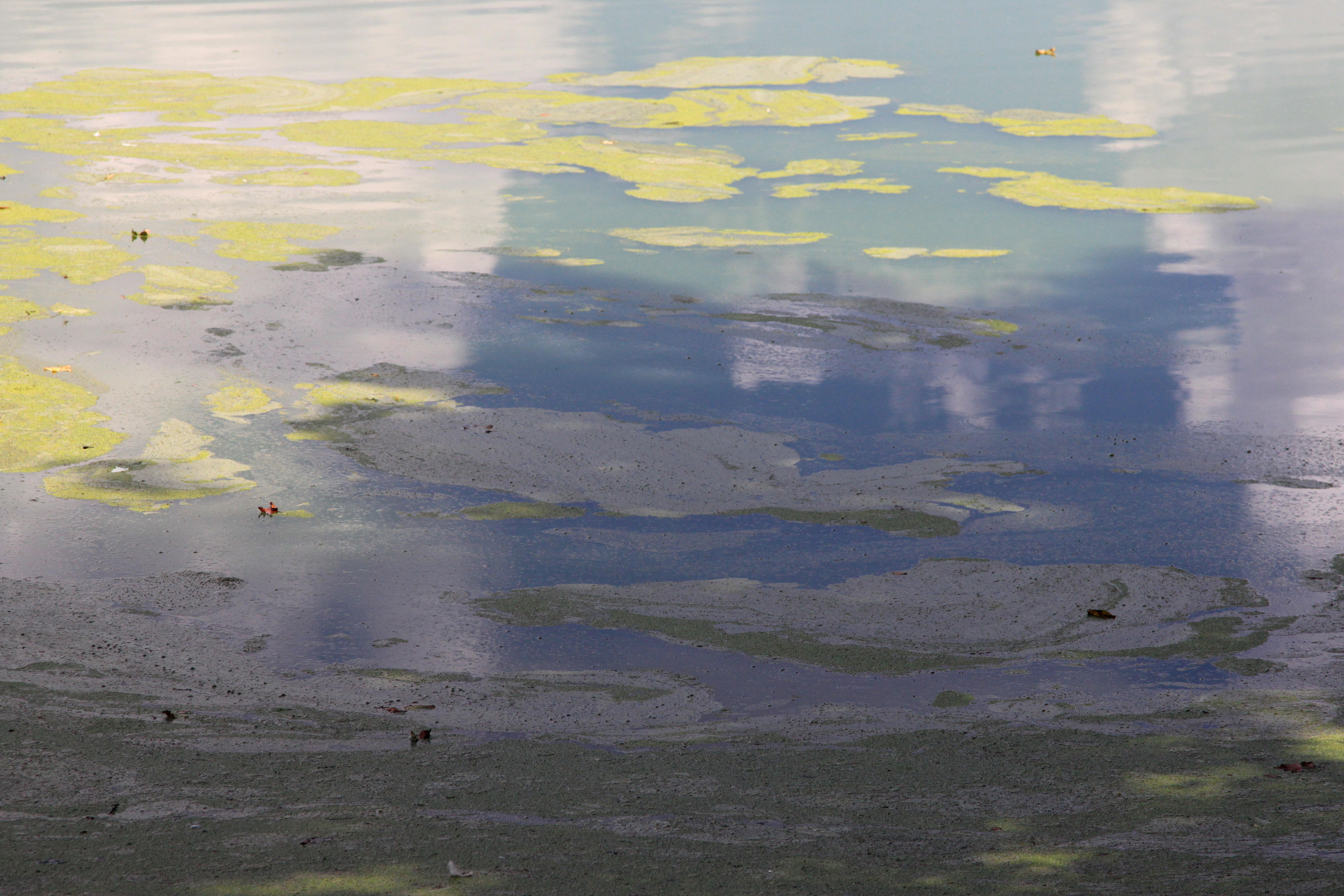
Still Lake with Clouds Photography by Lisa Ernst

Still Lake with Clouds
Photography by Lisa Ernst

Please join us at a beautiful rural site in West Nashville for a daylong meditation retreat. Forgiveness is not simple and it can’t be forced. At times, it may even seem impossible. Yet our ability to forgive allows us to access equanimity in our hearts and minds. We learn to meet our suffering as well as the suffering of others with kindness and compassion. In this retreat, we will deepen our capacity to find forgiveness and compassion for ourselves and for others.

Led by meditation teacher Lisa Ernst, this silent retreat is suitable for newer and more experienced meditators. It will include periods of sitting and walking meditation, practice instructions and dharma talk.

Retreat fee is $50 and is due by Friday, July 25. A reduced fee spot is available, please inquire through the email address below. Paypal is here. If paying by check, make it out to One Dharma Nashville and send to 12 South Dharma Center, c/o One Dharma Nashville, 2301 12th Avenue South, Suite 202, Nashville, TN 37204. Please include your email address. There will be a separate opportunity at the retreat to make a dana offering (donation) to the teacher.

For questions, contact onedharmaretreat@gmail.com.

Bridging the Gap: When Compassion Starts Here

As with many spiritual traditions, Buddhism emphasizes cultivating compassion as vital to a spiritual life. Most of us want to be compassionate at heart yet at times we may struggle to manifest it skillfully in daily life. What happens when we see a homeless person on an empty street and we recoil rather than feeling a warm prod to reach out and help? Maybe a family member needs our support but we’ve had a long history of conflicts and misunderstandings and we struggle to extend a hand. Perhaps a co-worker who always seems aloof or combative has a tragic loss. Instead of feeling a sense of caring and interconnection with their suffering, we feel neutral, detached.

At times like these our response to misfortune and suffering is misaligned with our ideals. When we see this gap, we may feel even more separate. This can easily turn into self judgment and criticism: “I’m not a very compassionate person;” “I don’t have the courage to help;” or even, “that person doesn’t deserve kindness.”

When our response doesn’t conform to our ideals, it helps to remember that compassion won’t blossom until we accept our immediate reaction. This is the gap—when our response and our ideals are out of sync. Instead of identifying only with our ideals, or judging ourselves for an unwanted response, we can learn to stay in the gap, the open place where we can experience our fear, our hurt or our frustration when our desire to help goes nowhere. This is where compassion begins. Returning to this place, our bodies, our hearts, what is truly arising at this moment?

If you’re walking down the street and encounter a homeless person, can you see the moment aversion arises and just experience it? It may not happen immediately, but once you’re aware of it, take a few breaths and stay in the midst of your experience. As you learn to do this, your conditioned response will begin to diminish, even dismantle. The contraction of fear will soften, the sense of separation, born of that fear, will also dissolve. As we lose identification with ourselves as a separate entity, we experience the homeless person’s suffering directly. We know its not different from our own, just another flavor made manifest. Maybe there’s nothing we can do in that moment to help. Sometimes the correct response is to distance ourselves if the situation seems unstable. But if there’s no immediate threat, perhaps simply a smile, an acknowledgement that we actually see this human being, is the kindest response. Longer term, we may seek out concrete ways to help if we feel moved in this direction.

The roots of suffering run deep. As we learn to stay in the gap, not turning away from our fear or aversion, a skillful and compassionate response is closer at hand. As Ajahn Chah puts it, “There are two kinds of suffering. There is the suffering you run away from, which follows you everywhere. And there is the suffering you face directly, and so become free.”

To Make Sense of The Suffering?

The unfolding immigration tragedy that has left children separated from their parents, detained in prison-like cages, has provoked one of the strongest outpourings I’ve seen of grief, despair, anger and confusion, along with fierce protests and calls to our politicians to end the practice immediately. Through these efforts we’ve seen some movement on this issue but know there’s much more to be done. Even in the midst of this energetic effort, I’m reminded that we also need to remember that there is no “other” out there, or anywhere, to hate. Otherwise, weariness and despair can easily overtake us. We can protest, speak out, call our politicians; we can also remember our interconnected nature at the deepest place in our hearts. We are capable of both. Recently  I was moved by a quote from Phillip Moffitt and want to share it here:

“The Buddha said, “Hate never yet dispelled hate. Only love dispels hate.” By holding the truth of our interdependency and refusing to participate in this endless cycle of hatred, you can help to heal the wound of the world. Jesus said, “If you love those who love you, what credit is that to you? Even sinners love those who love them. But if you love your enemies, do good to them, and lend to them without expecting to get anything back, then your reward will be great.’

No one can accuse Jesus or Buddha of being cowards in the face of injustice; therefore, their teachings are about how to hold the difficult in the heart. You have to decide if you share their beliefs, and if so, you practice living in this manner as a reflection of your deepest values. It is a proactive, courageous way to live. This does not mean responding passively when you encounter wrong action, for you should always act to stop those who harm others.”

This reflection on interdependency reminds me of an article I wrote a few years ago after I watched a movie about a woman who was stoned to death in Iran. As the movie ended, I was overwhelmed and struggled to get to sleep that night. During the next morning’s meditation, however, I gradually remembered that the mental creation of good and bad, enemies and friends just brought about separation that prevented my heart from bearing the pain of this act. In remembering the truth of interconnection, I found that I could open my heart to the stunning pain I felt at the stoned woman’s plight and to feel compassion for the great suffering of her entire community, even the perpetrators. To experience interdependency at this level in no way precludes wise action to stop suffering. While there was little I could do personally to stop the practice of stoning in Iran, there is much I can do in this country to help turn the tide away from cruelty. I can’t know if my efforts will succeed, but I know they are worth doing.

The One Who Casts the Stone and The One Who is Hit

by Lisa Ernst

Recently the impending stoning death of an Iranian woman made worldwide headlines and sparked international outrage. The pressure on the Iranian government to change her sentence has been immense. For most of us, it is incomprehensible that death by stoning is still a form of capital punishment in some parts of the world.

I was especially moved by the cause of this woman because I had recently watched a movie about the stoning death of another Iranian woman, “The Stoning of Soyora M.” The movie is based on a book of the same name, the true story of a woman falsely accused of adultery and stoned to death in her home town in the 1980s. This movie depicted the woman’s stoning in a very accurate, unflinching way and it was one of the hardest things I’ve ever watched on film. She was dressed in white and marched through the streets of her home town while men lined the way, rhythmically clapping stones together as a prelude to the execution. When she reached the stoning ground, her arms were bound to her sides and she was buried to her waist. A perimeter line was drawn, perhaps 20 feet away, behind which everyone in the town stood to stone her or to watch. A barrel of stones had been collected so the townsmen could all have their turn.

For a stoning execution, the stones are chosen for their size – not too large to kill the person immediately, but not too small as to do little harm. In Soroya’s case, I had hoped that her suffering would be brief, but stonings are deliberately stretched out over a period of time to create a gruesomely painful form of torture. The woman’s dignity was completely stripped away as her husband, her sons, and the men in her community threw stone after stone at her head, as she cried out in pain and disbelief, fell over to the ground, yet continually lifted herself back up with whatever strength she could muster. Slowly her white dress became completely stained with red. Finally, after perhaps an hour she was dead.

As the movie ended, I sat stunned and speechless, as tears spilled down my cheeks. It was just before bed and I wondered if I’d be able to sleep after witnessing such heinous torture. Somehow, I was able to fall into a restless sleep. The next morning I got up to meditate, having briefly forgotten what I had seen the night before. As I settled into meditation, the stillness of the morning and the sweet birdsong brought my heart fully awake. Then, in this place of stillness and open heartedness, the stoning images of the night before returned. There was great sadness in my heart, yet I didn’t close down or turn away. What I’ve learned through my practice is that when my  heart fully awake, it has the capacity to accommodate not only great love but great suffering. This is the “door of compassion” that Thich Nhat Hahn beautifully speaks of in this poem:

“Please Call Me by My True Names”
I am the 12 year old girl, refugee on a boat, who throws herself into the ocean after being raped by a sea pirate. And I am the pirate, my heart not yet capable of seeing and loving.

I am member of the politburo, with plenty of power in my hands, and I am the man who has to pay his “debt of blood” to my people, dying slowly in a forced labor camp.

My joy is like spring, so warm it makes flowers bloom in all walks of life.

My pain is like a river of tears, so full it fills up the four oceans.

Please call me by my true names, so I can hear all my cries and
my laughs at once, so I can see that my joy and pain are one.

Please call me by my true names so I can wake up,and so the door of my heart can open the door of compassion.
– Thich Nhat Hahn

Buddha taught that there is no inherent self separate from others; no self separate from all phenomena. This is called  emptiness. Through committed meditation practice, we gradually increase our capacity to experience emptiness.  We begin to understand at an experiential level that all of existence is none other than our own true nature. This insight is the basis for recognizing that all beings are Buddha, the awakened one. But what is often not stated, yet cannot be otherwise, is that we also are the pirate who rapes the 12 year old girl, and the man who stones his wife. If we selectively associate our understanding of non-separation with the highest of good, choosing to see only what we like and admire, we risk closing off our hearts to the often unspeakable suffering of our own humanity. Unconditional compassion and love can only arise when the heart is open to the full spectrum of experience, from great kindness to profound cruelty. This is true non-separation. Admittedly however, this kind of open- heartedness is not always easy;  there are times when we may see or experience suffering that is beyond our heart’s capacity to bear.  During these moments, some compassion for our own inevitable limits can soften the edges of our pain. At other times we may find the way to truly open our hearts and no longer look away:

You can hold back from
suffering of the world,
you have permission to do so,
and it is in accordance
with your nature,
but perhaps this very holding back
is the one suffering
you could have avoided
Franz Kafka

With a compassionate heart, we may weep at the inconceivable cruelty of this world and feel joyous when witnessing a deed of true kindness.  During the quiet of the morning when my heart touched the great suffering inherent in the act of stoning, for a few moments I could see without flinching the depths of  unkindness that is part of human nature. The same heart that fills with joy upon hearing a symphony of birds greeting the morning sun, also breaks for the woman who died the most unimaginable death at the hands of her own husband and community. They are all none other than me.

The Good Buddhist Trap

by Lisa Ernst

“Where you stumble and fall, there you will find gold” – Joseph Campbell

Many of us in the West grew up surrounded by well meaning family, teachers and friends who stressed the importance of adhering to society-based standards of achievement and success. There’s nothing inherently wrong with challenging ourselves and working toward goals such as a college degree, a stimulating career and a rewarding family life. Unfortunately, many of us also learned to interpret any unrealized goals as character deficits, inadequate talent, lack of motivation and worse. By the time we reach adulthood, our own internal voices may have developed into the harshest critics of all.

Numerous people bring this mindset into their Buddhist practice, often unconsciously. Eastern dharma teachers have observed in western students a strong tendency toward self-criticism and low self-esteem. The tougher practice methods these teachers may use with students in their own countries are often watered down or even eliminated, replaced with a kind and grandmotherly approach intended to counteract the severe inner voices of so many students.

When we begin to study Buddha’s teachings on sila (ethics), right speech, non-harming, compassion and equanimity, most of us are inspired to cultivate these qualities in ourselves. Perhaps we wish to speak more kindly to a loved one who gets on our nerves, cultivate patience during trying times and extend compassion to those less fortunate than us. All of these intentions are worthwhile and necessary for awakening our hearts, but if we’re not careful our Buddhist intentions can become yet another inner exhortation to do better, be wiser and try harder. We may trap ourselves in a tangle of the “correct” and “incorrect” way to think and act, which suppresses what is actually arising. This repression takes us further away from sincerely manifesting our good intentions.

For example, most people on the dharma path want to cultivate genuine compassion toward the homeless.  This is a popular topic among students when I lead group discussions on lovingkindness and compassion. Many students report that they  experience aversion around the homeless rather than compassion.  They feel guilty because they are not manifesting their ideal Buddhist response. Even many long term meditators struggle with this. They forget that aversion, when met openly, is a gateway into compassion rather than something to repress or feel ashamed of.

At a deep level, I believe humans inherently know that all beings are interconnected. When another being suffers, you and I can feel their pain. Often we aren’t even conscious of this and our immediate response to a homeless person may be aversion, judgment and even intense fear. We may simply look away as quickly as possible. He or she becomes “the other” and this shields our intuition that this homeless person is actually none other than you and me. In the midst of this response, yet another layer of separation arises if we reprimand ourselves for being a bad Buddhist, short on compassion. Soon we’re so caught in our reaction to our aversion that any awareness of present-moment experience is far, far away.

But the remedy is actually close at hand. The first step is to pause long enough to  hear those critical voices; simply notice them and refrain from following their stories. Next, begin to accept and investigate the aversion, actually feel the distaste just as it is. Don’t strive to change it into compassion. As you directly experience your aversion and fear, your heart begins to open. An open and aware heart is a compassionate heart.

Begin with yourself; feel compassion for your own fear and sense of separation. As you do this, slowly your heart can open further, to embrace the suffering of other beings, including the homeless person. You may feel genuine sadness or grief for the travails of this person, the unknown circumstances that led him or her to such a vulnerable place in life. Once your heart can accommodate these feelings, compassion naturally arises, a kind and loving embrace that recognizes that all beings, high or low, good or bad, clean or dirty, are all of the same true nature and not the distant other. Sometimes your compassion may translate into action, an engaged response to suffering. At other times you may recognize there is no immediate deed that will help. Either way, you’ve discovered genuine lovingkindness, the heart of a good Buddhist.